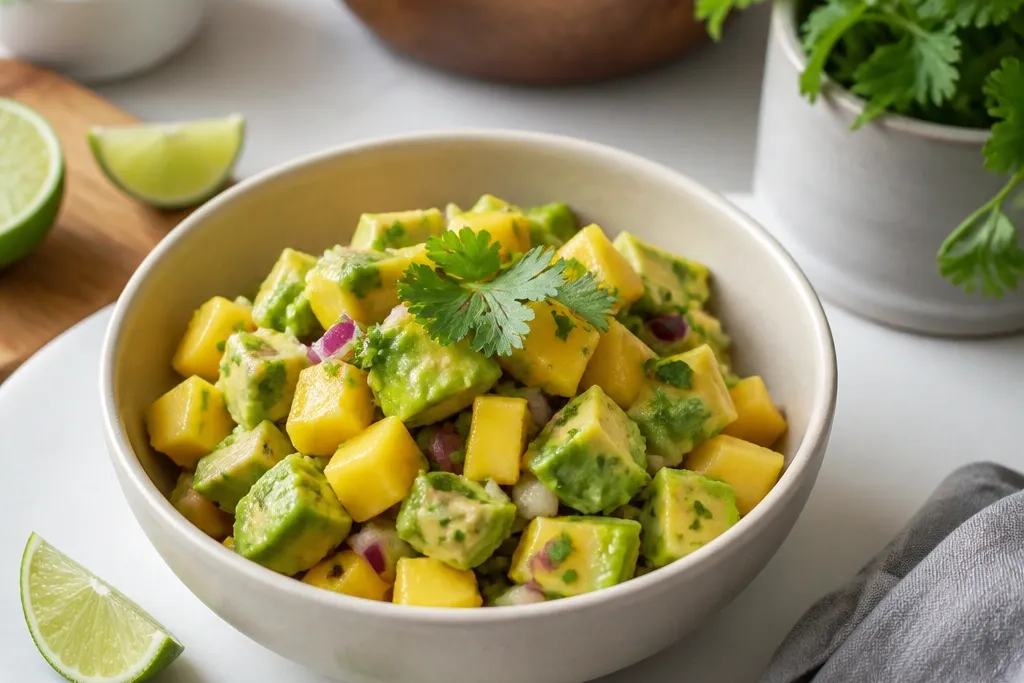
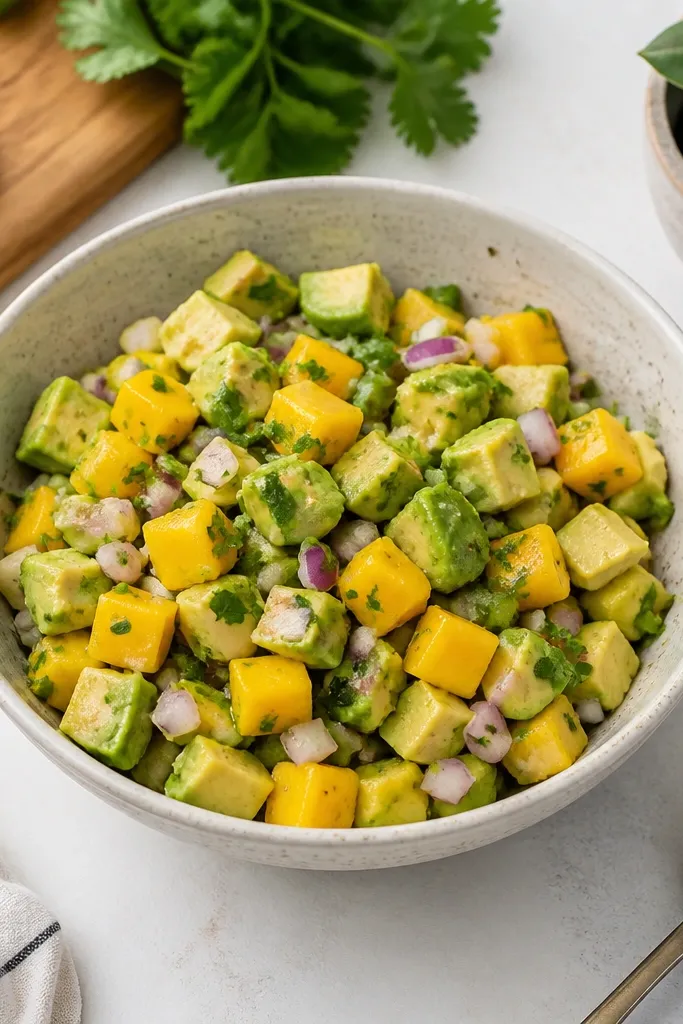
1. Sunset Mango Cubes with Creamy Avocado Cradles
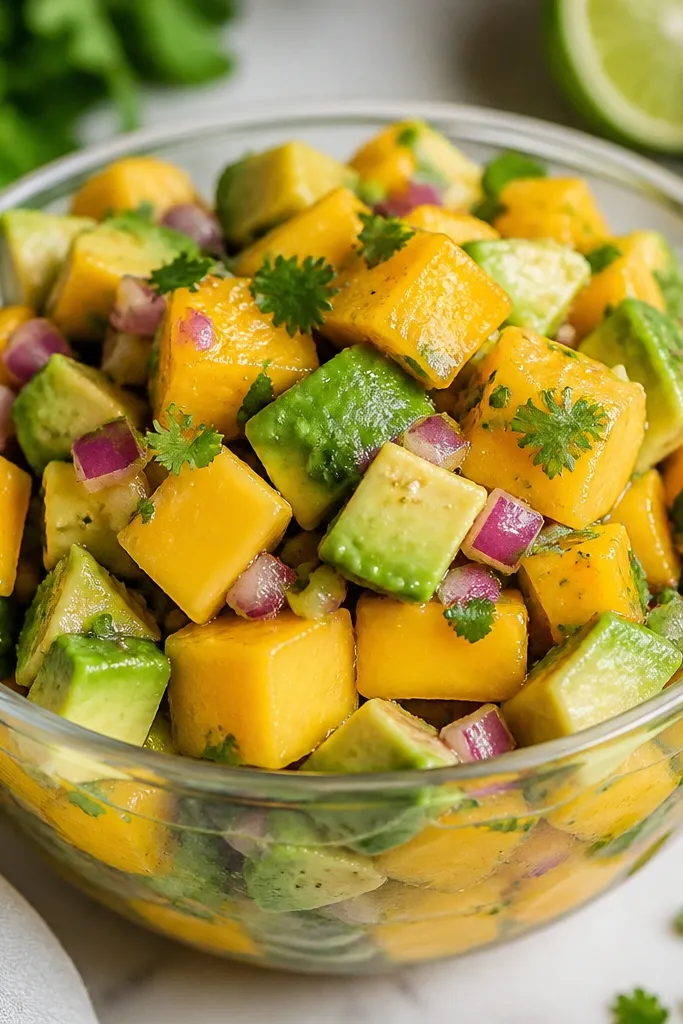
This look comes from keeping the mango diced and the avocado chunked, not mashed. The orange and pale green contrast makes the salsa look fresh even in indoor light. Red onion flecks add a small pop of color that reads "crunch" at a glance. Lime coats the surface so it looks juicy instead of dry.
Dice mango into pieces about 1/4-inch. Cut avocado into similar-size chunks and fold in gently so you don't break the cubes. Use a small handful of chopped cilantro (about 2 tablespoons) so it shows on top.
Try thisStir once, then stop. Overmixing turns the avocado creamy in a dull way and you lose the cube contrast.
One warningSkipping lime or going heavy on onion makes it look flat and uneven.
2. Deep Green Jalapeno Specks (for the spicy-lucky look)
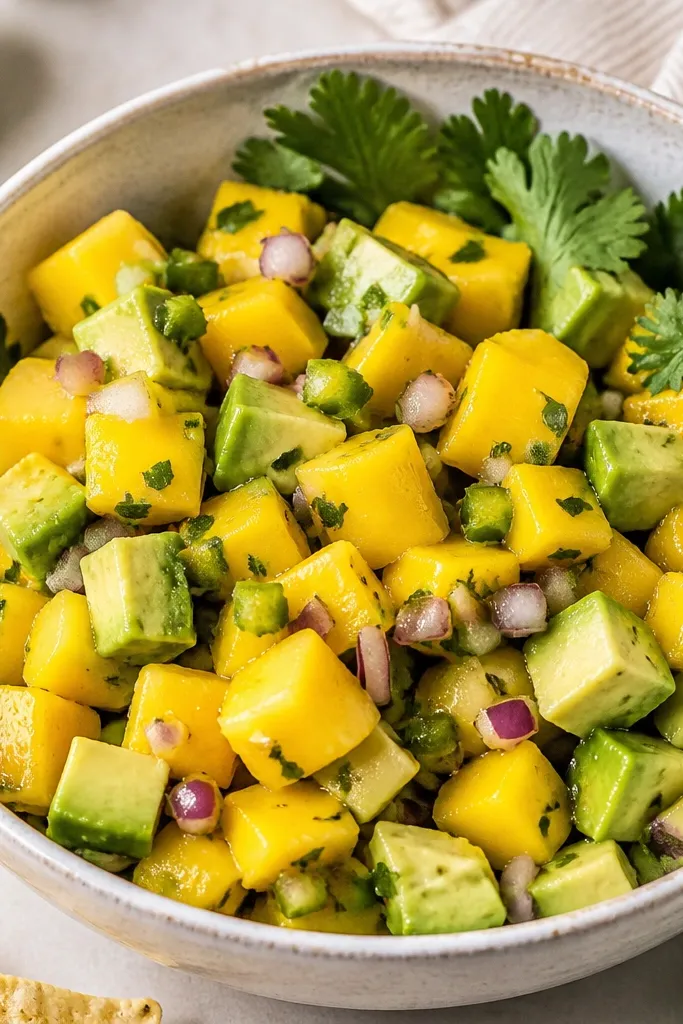
Jalapeno adds visual texture. Tiny bits look intentional, while big slices look like "one random pepper" and throw off the bite. The dark green against mango orange makes the bowl look more dramatic. When you remove seeds, the heat stays controlled and the color stays deep.
Use 1/2 jalapeno for a small-space batch. Mince it very fine and mix it in after the first stir so you can distribute evenly. Keep cilantro chopped, not whole - whole leaves float and hide the speckles.
Try thisIf you want heat without color change, remove most seeds and keep the ribs - you get flavor and a calmer look.
One warningUsing jalapeno rings or large chunks makes it look messy and uneven.
3. Rosey Red Onion Confetti
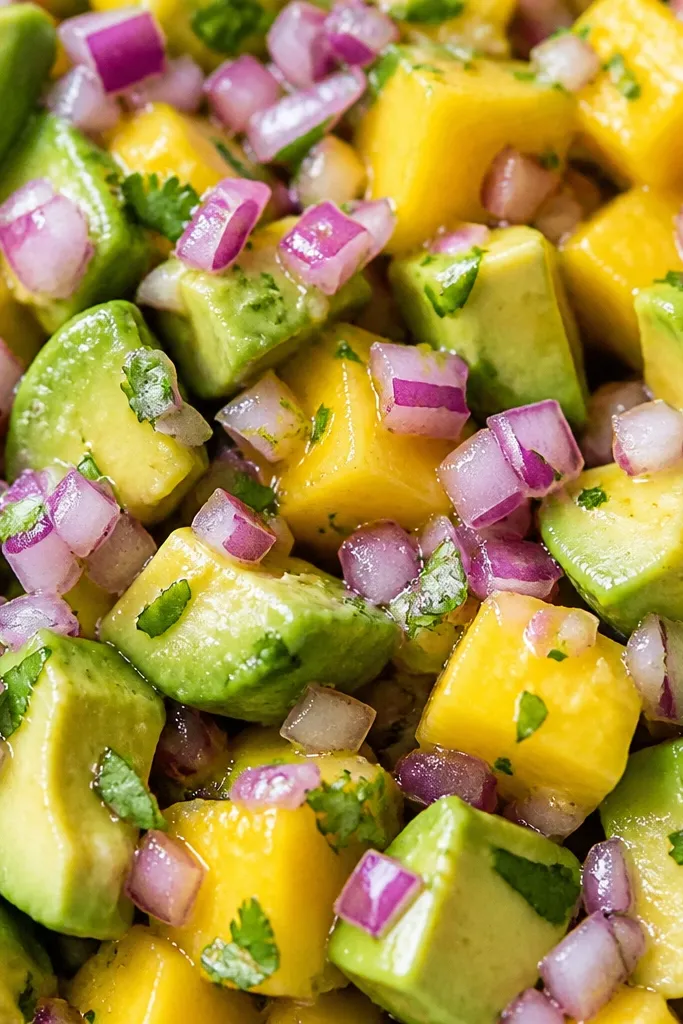
Fine onion confetti gives you crunch without big bites. It also spreads color through the whole bowl, so you don't get a concentrated red patch at the bottom. I like it for small space serving because it looks "finished" even if you're using a plain container.
Chop onion so pieces are around 1/16 to 1/8-inch. If your onion is sharp, soak the chopped bits in cold water for 5 minutes, then dry well - you keep the color without the sting.
Try thisAdd onion last and fold just enough to distribute; that keeps the crunch intact.
One warningUsing thick chunks makes the salsa look like chopped salad, not salsa.
4. Cilantro Crown on Top
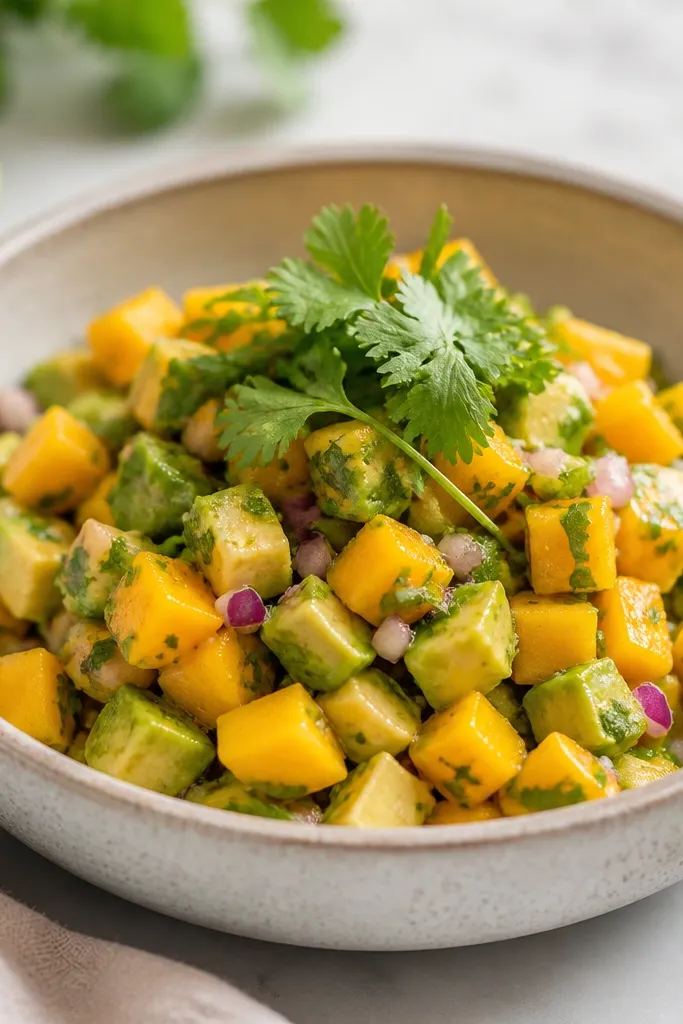
A visible cilantro crown makes the bowl look freshly made, even if you prepped earlier. Leaves also catch light and signal freshness. This is the easiest aesthetic trick that doesn't change flavor much - you just control where the herb lands.
Mix everything except half the cilantro. Spoon salsa into a serving bowl, then scatter the remaining cilantro on top. Chop the leaves coarsely so they look airy instead of chopped into dust.
Try thisPat cilantro dry with a paper towel before chopping so it doesn't bleed water into the salsa.
One warningAdding all cilantro into the mix can make the color turn dull-green.
5. Lime Gloss Finish
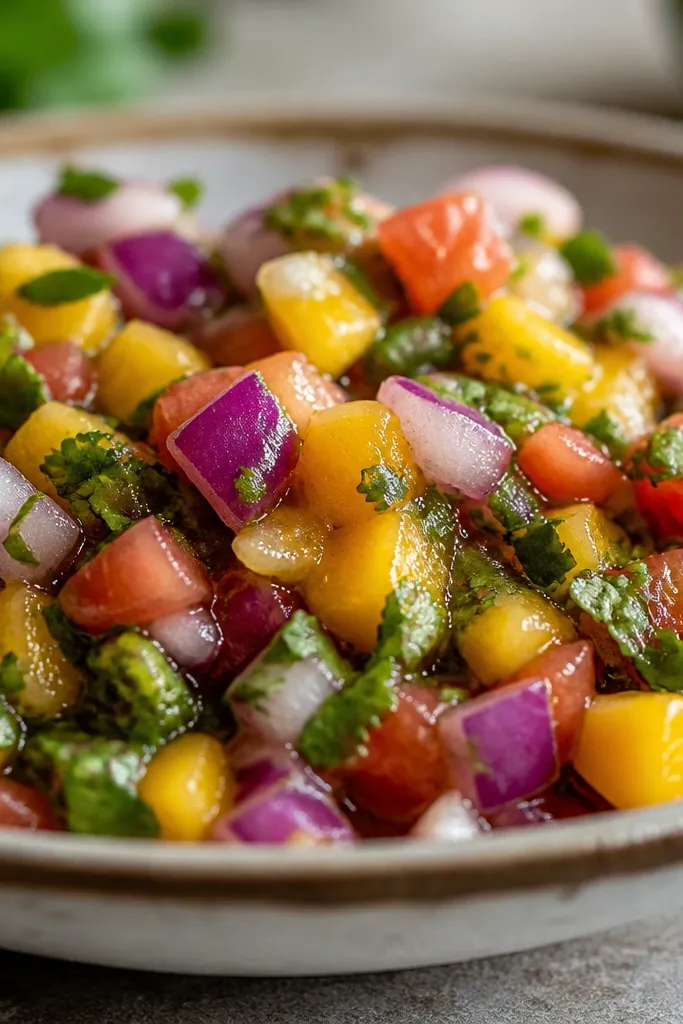
That glossy surface is what makes it look appetizing. Lime juice helps the fruit taste brighter, and it coats the avocado so the bowl looks moist, not chunky-dry. When you add lime after mixing, you get shine without breaking the avocado.
Squeeze 1 to 2 tablespoons fresh lime juice, then stir slowly. Let it sit 10 minutes, then taste and add another pinch of salt if needed. If it looks too wet, you can add a spoon of extra diced mango.
Try thisUse fresh lime, not bottled - bottled reads flat and the surface doesn't look the same.
One warningPouring lime in all at once can pool it and make the bottom look watery.
6. Salt-and-Pepper Speckle (the "restaurant" look)
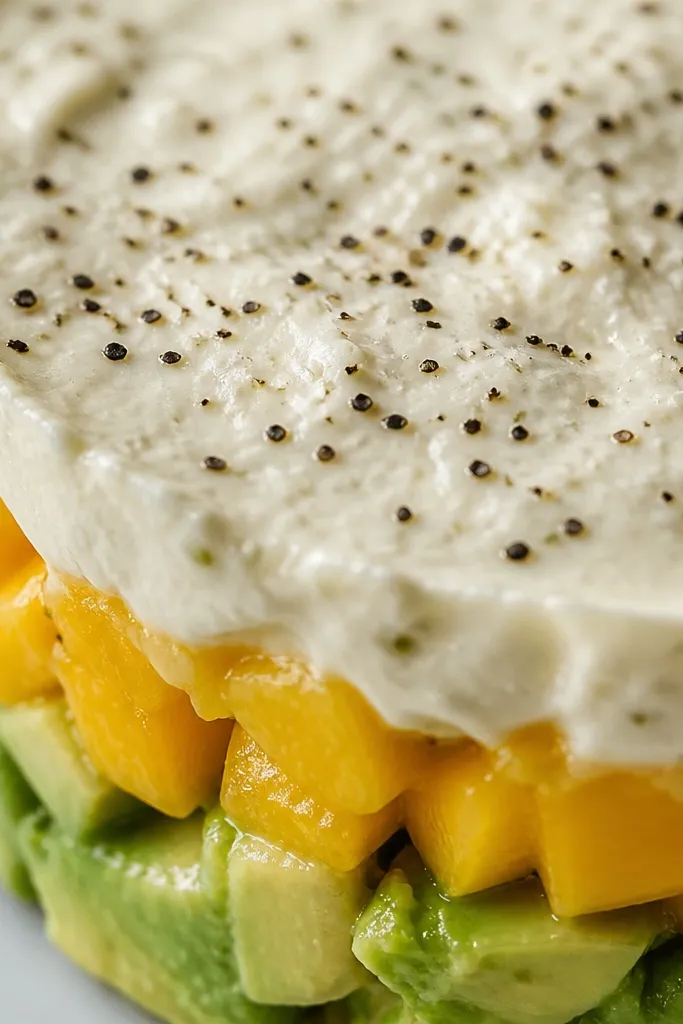
Pepper specks give a subtle texture that photographs well. Salt crystals show you seasoned it, and visually it looks "complete." This style is great for a small batch because you can control the distribution with a pinch.
After the first mix, sprinkle 1/4 teaspoon kosher salt in small pinches while stirring. Add freshly cracked black pepper, about 1/8 teaspoon total. Don't overdo - you want specks, not dark streaks.
Try thisCrack pepper over the bowl at arm's length so it falls in fine dust.
One warningUsing pre-ground pepper makes the specks look dull and clumpy.
7. No-Mess Serving in a Mason Jar
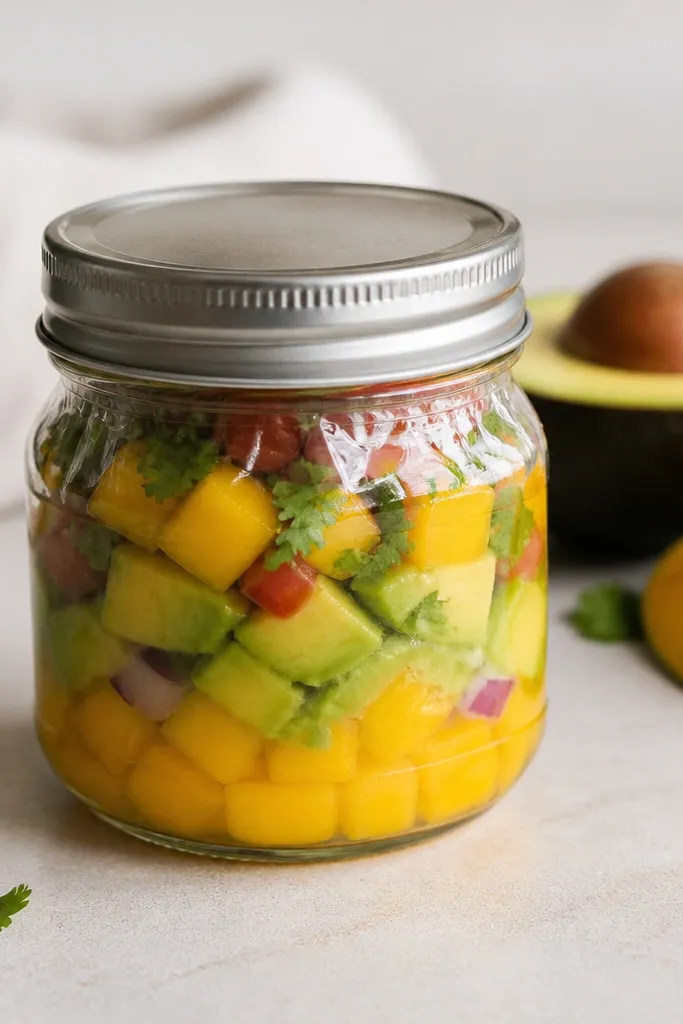
Layered jars look neat when your space is tiny. Pressing plastic wrap directly on the surface reduces browning and keeps the top looking bright. The jar also keeps the salsa contained for a table or picnic without spills.
Pack salsa into a 16-ounce jar. Press it down lightly, then cover the top with a piece of plastic wrap cut to jar size before screwing on the lid. Keep it chilled if it's going to sit more than 30 minutes.
Try thisServe from the jar with a spoon and scrape the top layer first for the prettiest contrast.
One warningStoring in an open container makes the top brown and watery.
8. Mini Bowl Plating with Tortilla Chip Edge
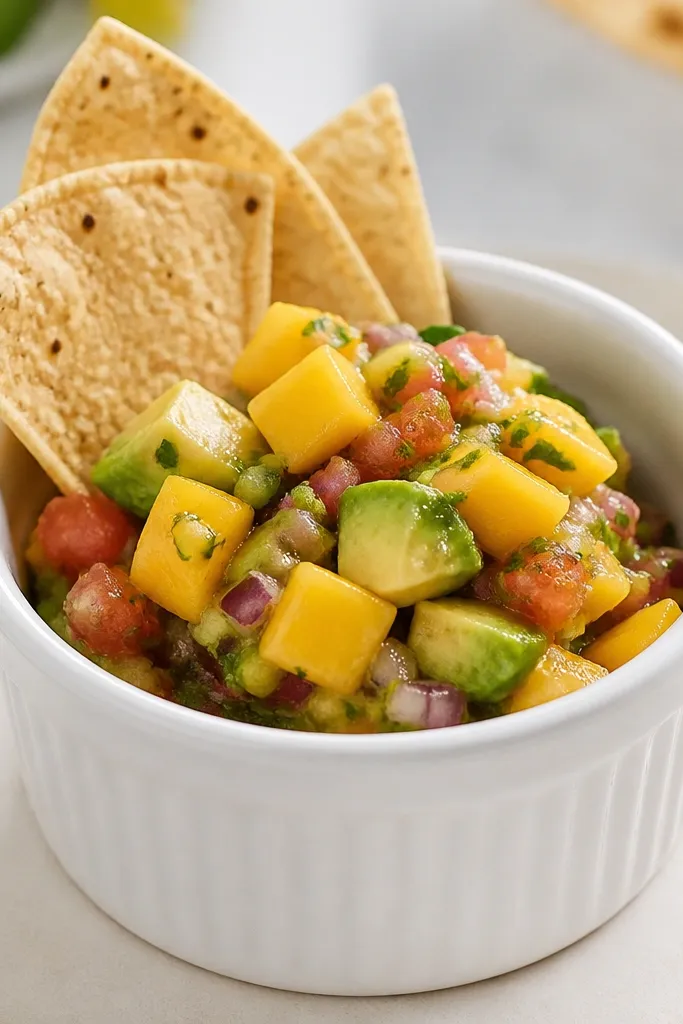
A ramekin frames the salsa and makes it look intentional. Chips leaning on the rim creates instant height and color without extra garnish. I like this setup for small spaces because it reduces the mess compared to a big shared bowl.
Spoon salsa into a 10-ounce ramekin. Arrange 6 to 8 chips around the rim so they touch the bowl lightly. Add a tiny sprinkle of cilantro on top so the center looks fresh.
Try thisWarm chips for 2 minutes in a dry skillet so they stay crisp next to the fruit.
One warningUsing stale chips makes the whole presentation look soggy even if the salsa is perfect.
9. Charred Corn Crunch on the Side
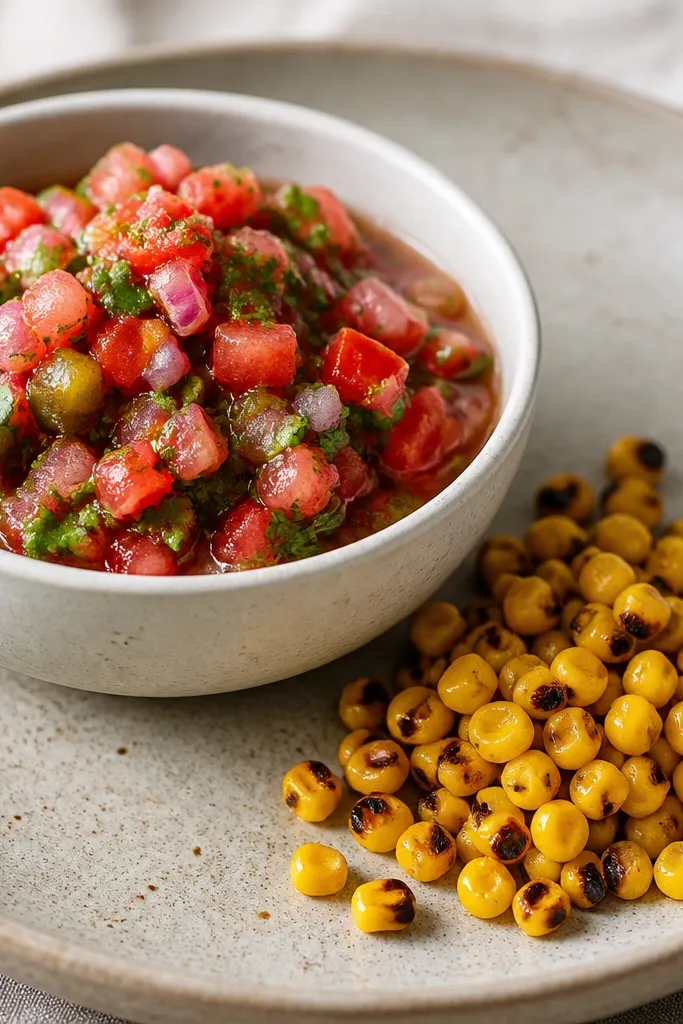
Charred corn adds a smoky color contrast that makes mango salsa look more "complete." I keep the corn separate so it doesn't bleed juice into the avocado. The result tastes more layered without adding another sauce.
Char corn in a hot skillet for 3 to 4 minutes, stirring once or twice. Cool slightly, then fold in only if you're eating right away. For small space prep, use frozen corn straight from the bag and pat dry first.
Try thisAdd corn right before serving so the kernels stay crisp.
One warningMixing hot corn into the whole bowl makes the avocado look dull and can thin it out.
10. Red Pepper Rings as a Color Accent
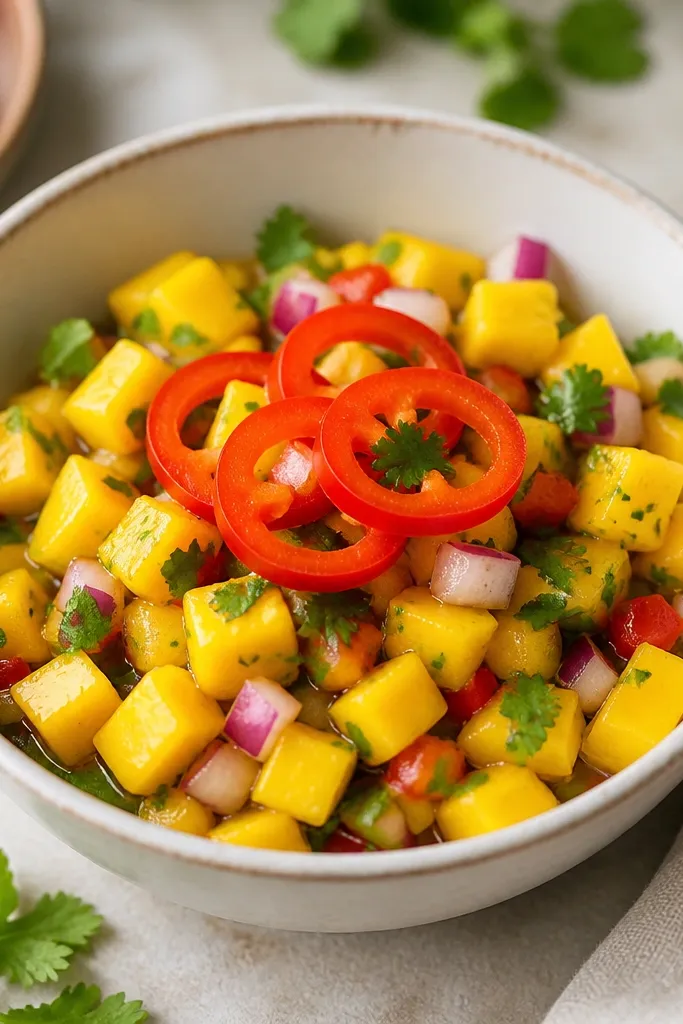
Red bell pepper rings add a clean, graphic color note. It also adds crunch that doesn't compete with the fruit. This garnish makes the bowl look styled without fancy tools.
Cut a red bell pepper into thin rings, then pat dry. Place 3 to 5 rings on top - don't stir them in. If you're keeping it for later, add the rings at the last minute.
Try thisUse very thin slices so the pepper stays crisp and doesn't dominate the bite.
One warningStirring bell pepper in early can make the salsa watery.