1. Sunset Mango Cubes in a Clear Glass Bowl
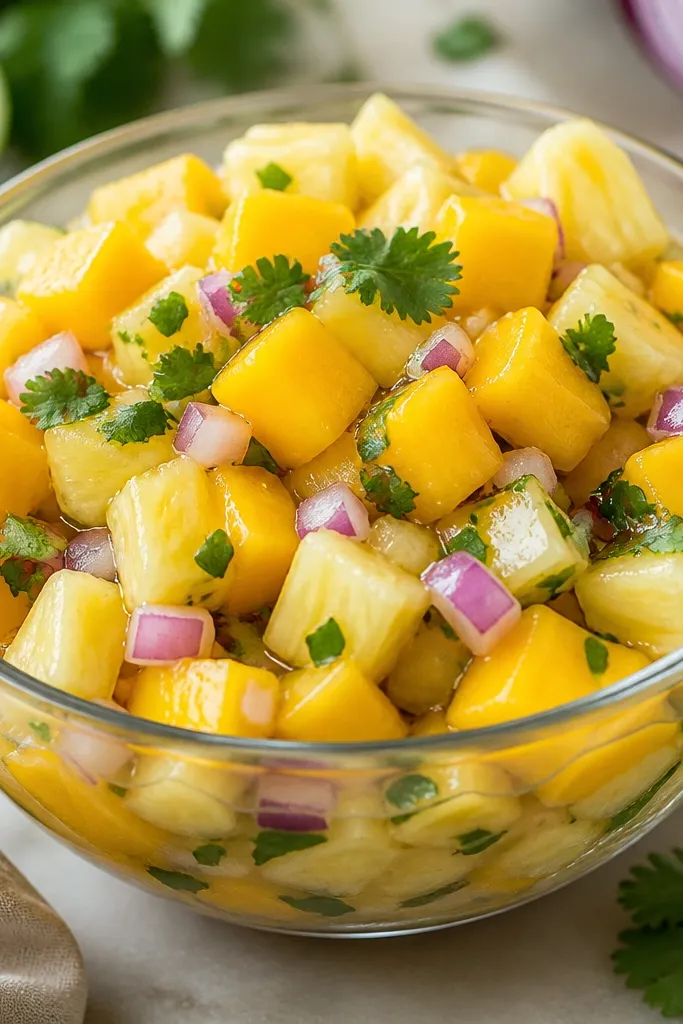
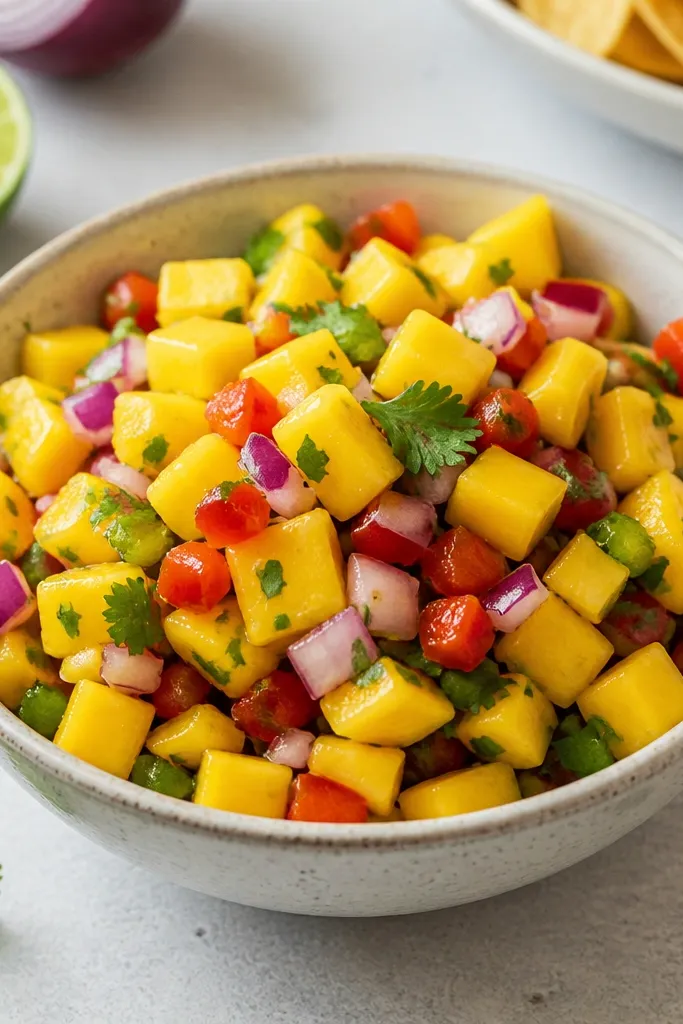
This look is all about contrast. Golden mango and pale pineapple give you two bright tones, and the red onion adds a punch of color that stands out even from across the table. A clear bowl makes the layers visible so people can see texture - that's the whole aesthetic of a salsa bowl.
Use a bowl that's transparent or at least light-colored so the fruit colors read cleanly. Cut both fruits to roughly the same 1/4-inch size so the bowl looks uniform, not messy. Keep the cilantro light - a few green flecks are prettier than a heavy blanket.
Try thisChill the bowl 10 minutes before you plate so the salsa looks freshly mixed, not glossy and warm.
One warningDon't drown it in extra lime - too much liquid makes the fruit look dull and the bowl looks messy.
2. Two-Tone Heat with Jalapeño Seeds Removed
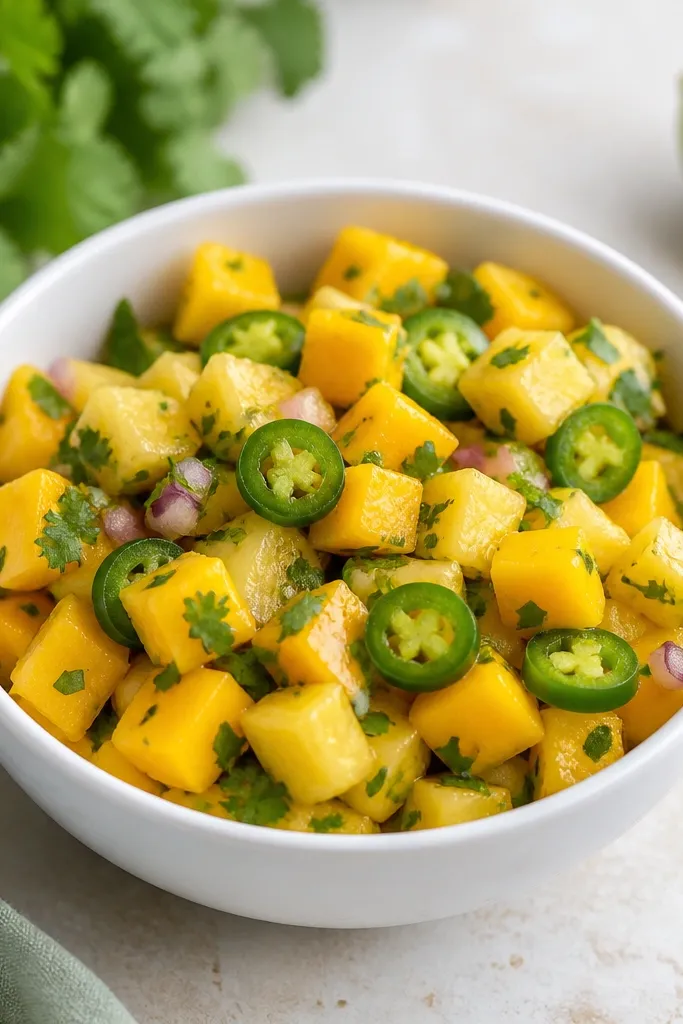
If you remove the seeds, the jalapeño adds aroma and color without turning the salsa into a red-orange blur. The tiny pale bits look intentional, like confetti, and they help the whole bowl look balanced rather than chaotic.
Slice jalapeño thin, then cut out the seed ribs with the tip of a knife. Add about 1 to 2 teaspoons of chopped jalapeño depending on how spicy your crowd is. Stir gently so the jalapeño stays visible on top.
Try thisIf you're serving kids or spice-avoidant friends, keep the jalapeño on the side for the first round.
One warningSkip mincing jalapeño into paste - it disappears into the salsa and makes the color look uneven.
3. Red Onion Sparkle After a Quick Salt Drain
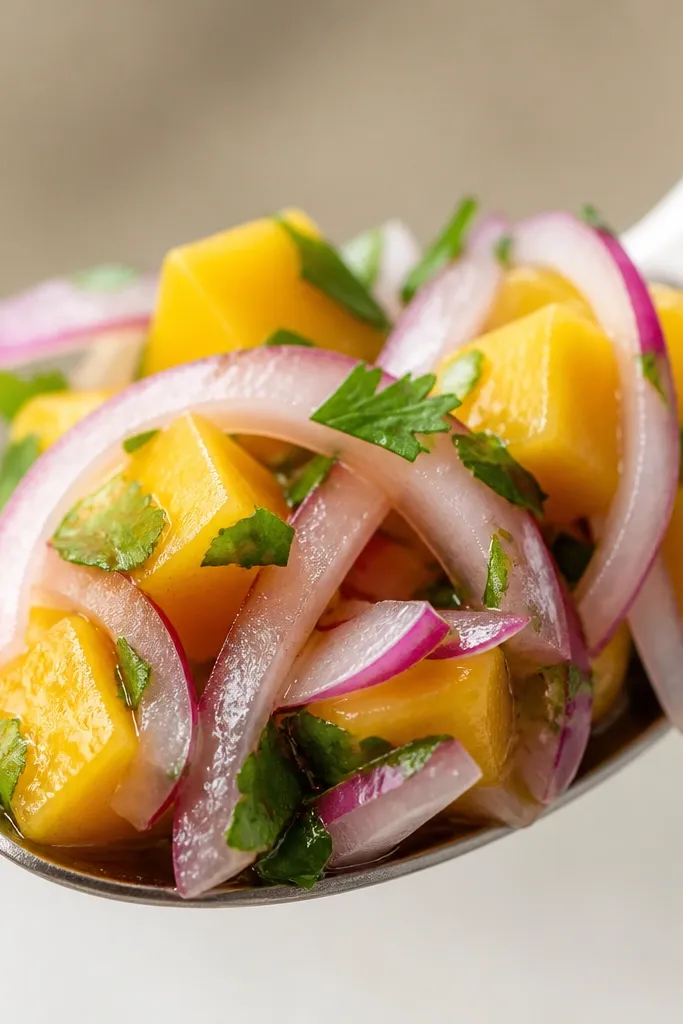
Salt-drawn onion looks glossy and semi-translucent, and it gives you that "sparkly" bite without raw onion harshness. This method also prevents the salsa from pooling, which is what makes it look restaurant-clean.
Toss sliced red onion with a pinch of salt and let it sit 5 minutes. Drain in a fine mesh sieve, then squeeze out excess water with clean hands. Mix the drained onion in right before serving.
Try thisUse a timer. 5 minutes is enough - longer onion turns limp and loses that fresh crunch.
One warningDon't skip draining. Undrained onion makes the salsa watery within an hour.
4. Cilantro Flecks Like Confetti
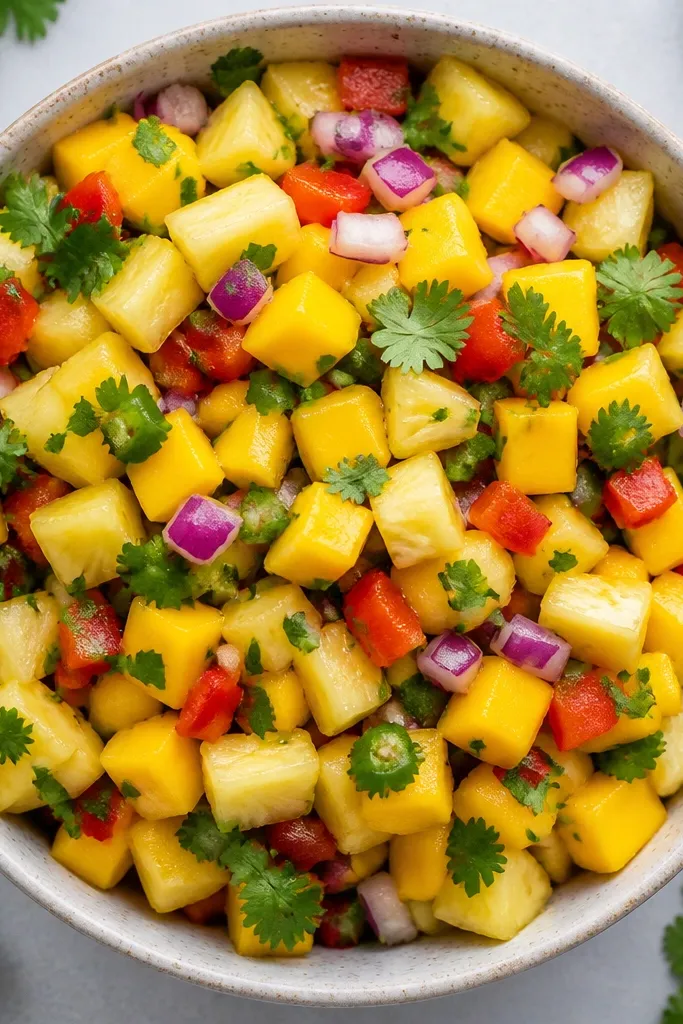
Cilantro looks best when it's cut small and added at the end. You get bright green specks that pop against gold and pale yellow. It also tastes fresher because you're not cooking it down with time.
Chop cilantro with stems included, but keep pieces tiny - about 1/8-inch. Add it after the salsa has chilled for at least 20 minutes. Stir once, then plate so the cilantro doesn't bruise.
Try thisIf cilantro tastes soapy to anyone in your group, swap in finely chopped mint for one bowl and keep the rest the same.
One warningDon't add cilantro right away and walk away - it darkens and the salsa looks tired.
5. Lime Zest Specks for a Fresh-Cut Look
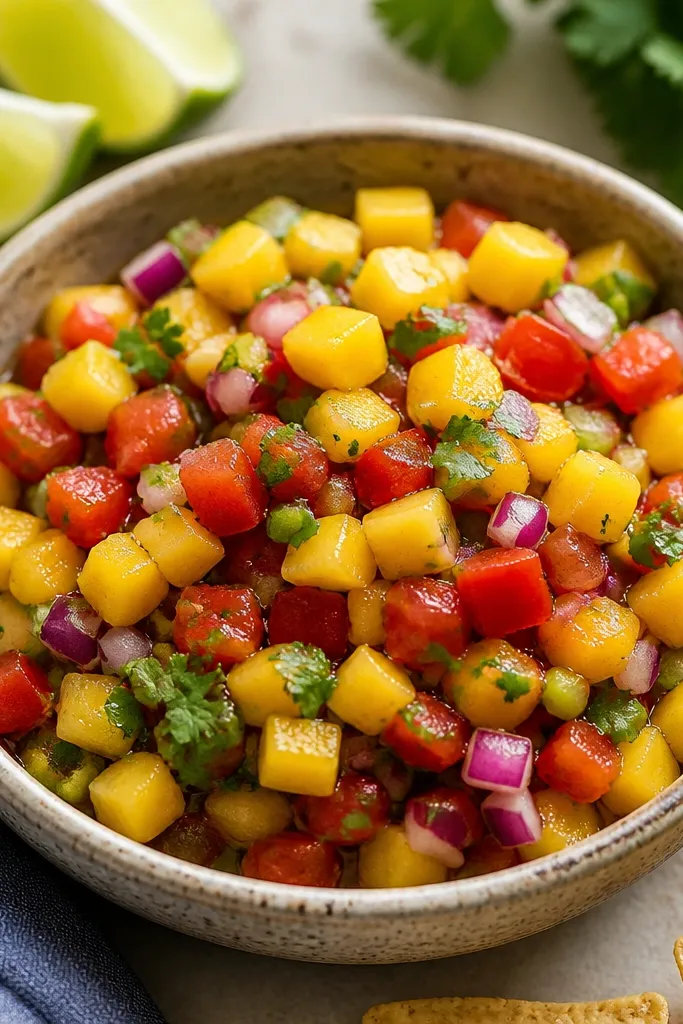
Lime zest adds tiny aromatic specks that make the salsa look freshly cut, even after it chills. Visually, those flecks bridge the gap between the gold mango and the green herbs. Flavor-wise, zest tastes brighter than extra juice.
Zest one lime directly over the bowl, then juice the lime separately. Add half the juice first, mix, chill 20 minutes, then add the rest at the end. This keeps the bite from turning harsh.
Try thisZest first, then juice. If you juice first, you'll end up zesting around wet hands and it's harder to get consistent flecks.
One warningSkip bottled lime juice - it tastes flat and makes the whole bowl look less alive.
6. Chopped Mango with a Clean, Glossy Surface
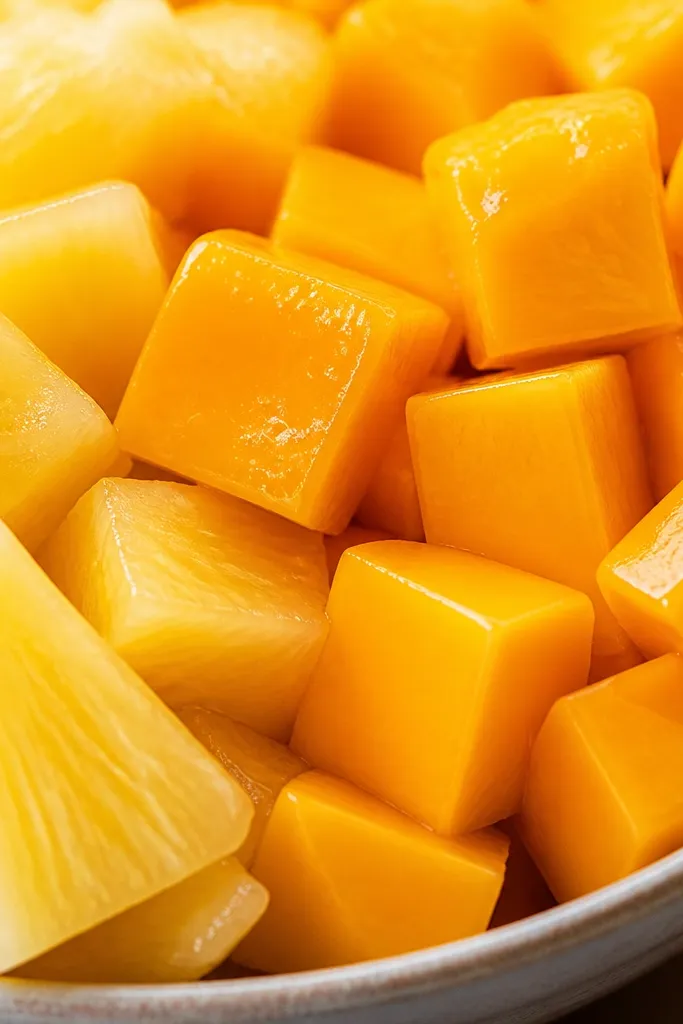
Sharp-edged cubes hold their shape and look appetizing. When mango is cut too big, it dominates; when it's cut too small, it turns cloudy and blurs the colors. Clean mango pieces also help the salsa stay thick instead of runny.
Slice mango off the pit first, then cut into 1/4-inch cubes. If your mango is very ripe, pat the cubes with a paper towel before mixing to reduce extra juice. Fold gently so the edges stay defined.
Try thisIf mango is stringy, stop and use a spoon to scoop it into smaller chunks instead of forcing cubes.
One warningDon't mash mango while mixing - that's the fastest way to make salsa look like baby food.
7. Pineapple Bite with Thin Slices, Then Dice
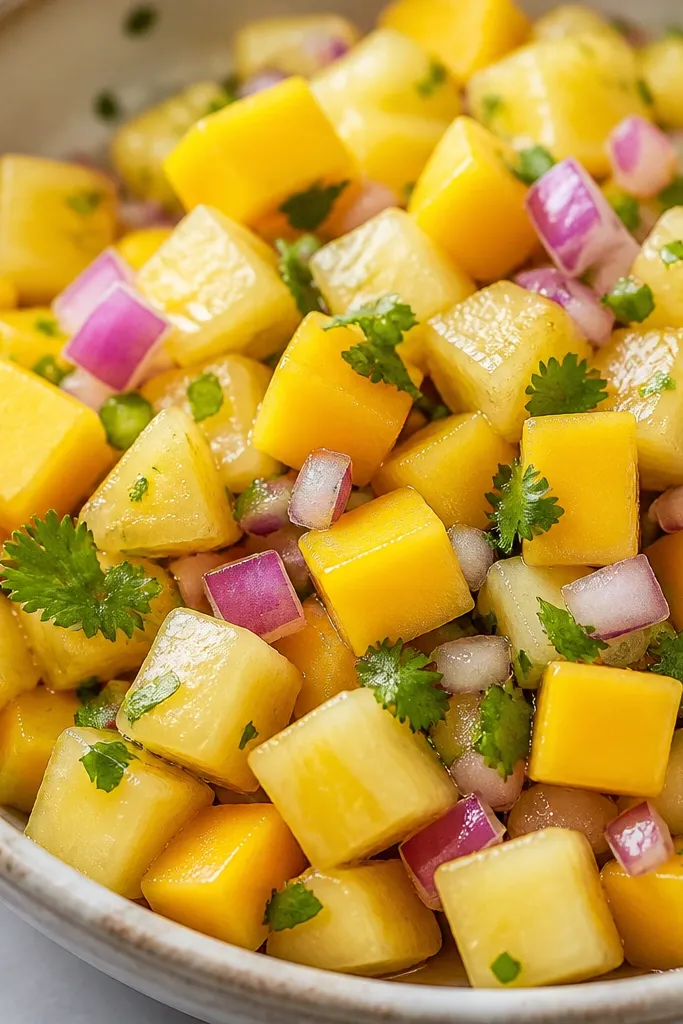
Pineapple tastes best when it has a little structure. If you dice it too fine, it releases juice and the salsa turns wet. A controlled dice keeps the pineapple bite present and makes the bowl look lighter.
Cut pineapple into thin planks, then dice into 1/4-inch pieces. If using fresh pineapple, remove the core and cut around the fibrous center. If using canned pineapple, drain very well and pat dry.
Try thisAdd pineapple after mixing other ingredients, then fold once. Overmixing breaks pineapple down.
One warningDon't use pineapple chunks straight from the can without draining - the syrup ruins the flavor.
8. Summer-Style Bowl with Optional Diced Bell Pepper
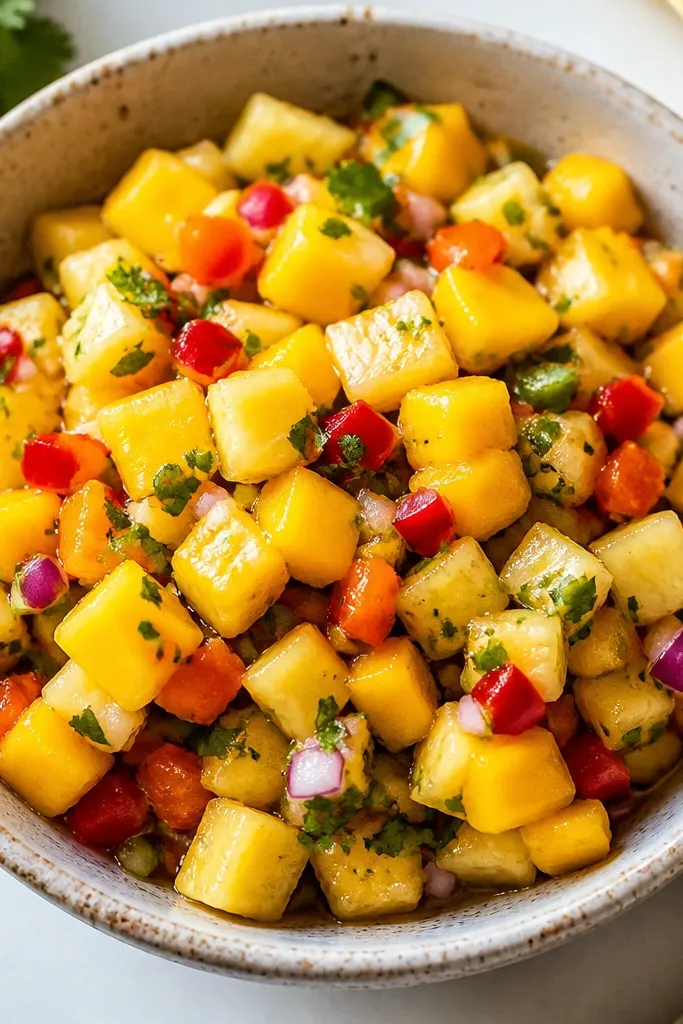
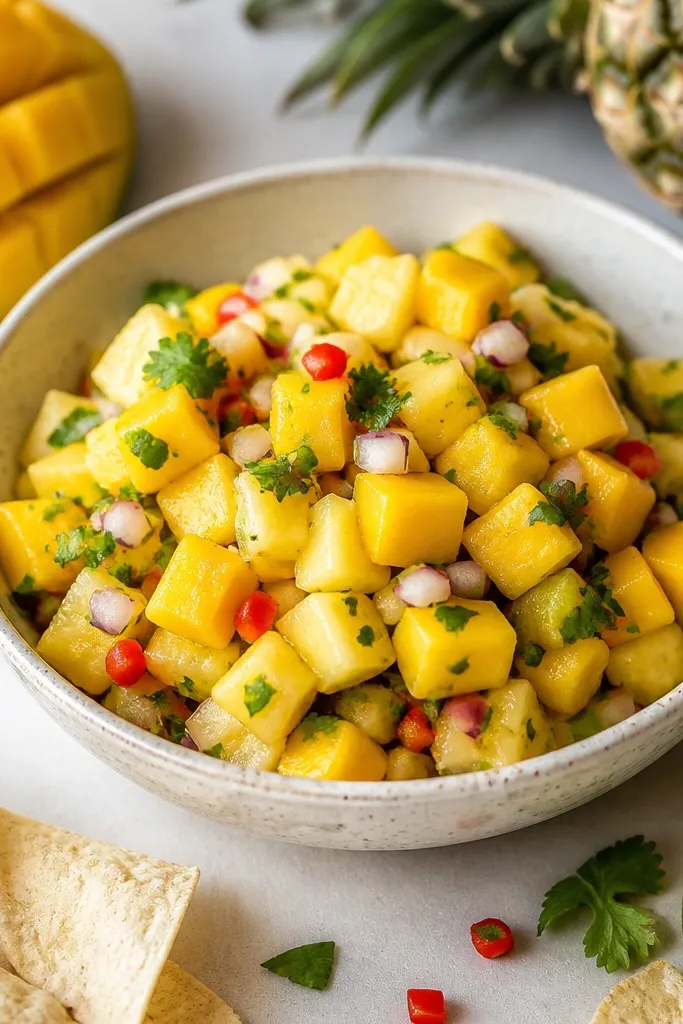
Bell pepper adds a sweet crunch that reads "fresh" even when fruit isn't at peak. It also makes the salsa look fuller because you have more color blocks. I use it when I'm serving with tortilla chips because it stands up to scooping.
Dice bell pepper into 1/8 to 1/4-inch pieces and add about 1/3 cup per 2 cups fruit. Keep it raw, not roasted, so the crunch stays. Stir in at the same time as onion.
Try thisChoose red or orange bell pepper for the best color match with mango.
One warningDon't add too much pepper - it can drown out the pineapple and lime.
9. Serving Spoon and Lime Wedge Garnish
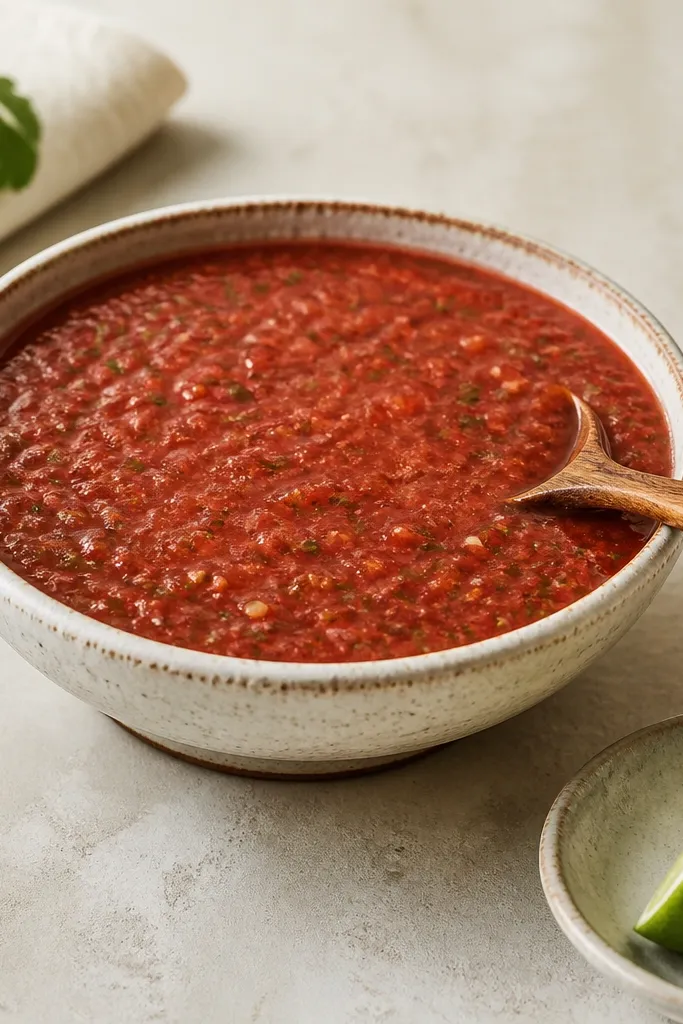
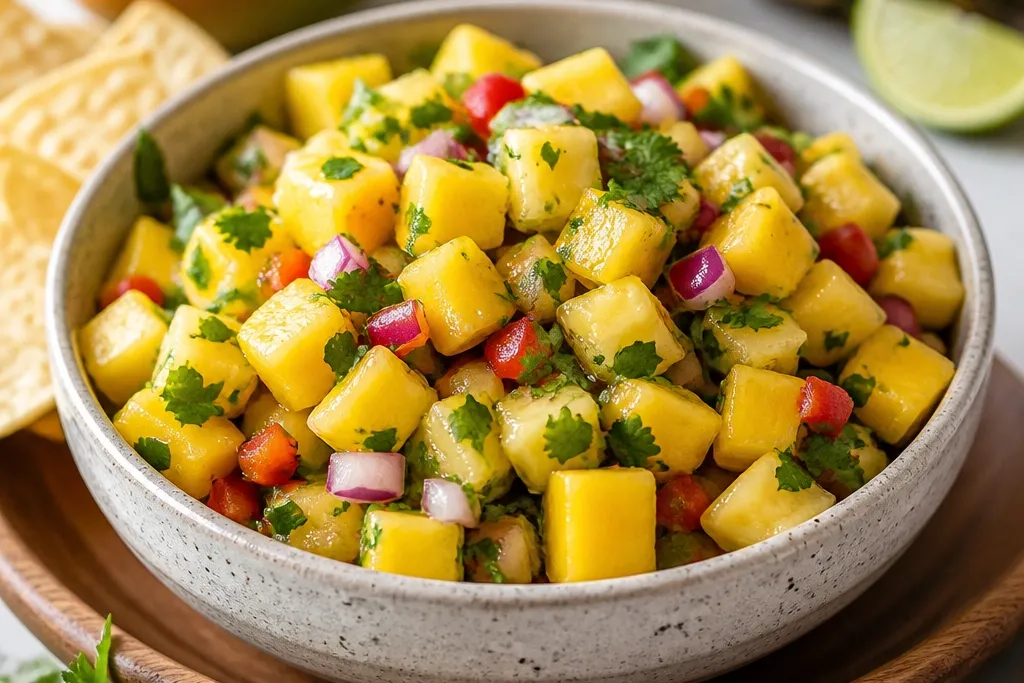
This garnish makes the salsa feel intentional and ready to eat. Lime wedge color is bright and helps the viewer connect the lime flavor to the fruit. A real serving spoon also makes the bowl look like a prepared dish, not a mixing bowl.
Use a wide spoon so scoops lift fruit without dragging liquid. Place a lime wedge on the side plate, not on top of the salsa, to avoid juice running into the bowl. Wipe any drips on the bowl rim so it stays clean.
Try thisSqueeze lime over individual scoops at the table if you want a "fresh" aroma right before eating.
One warningDon't stack garnishes on top - it hides the fruit texture that makes people want a second scoop.
10. Year-Round Evergreen Version with Thawed Mango
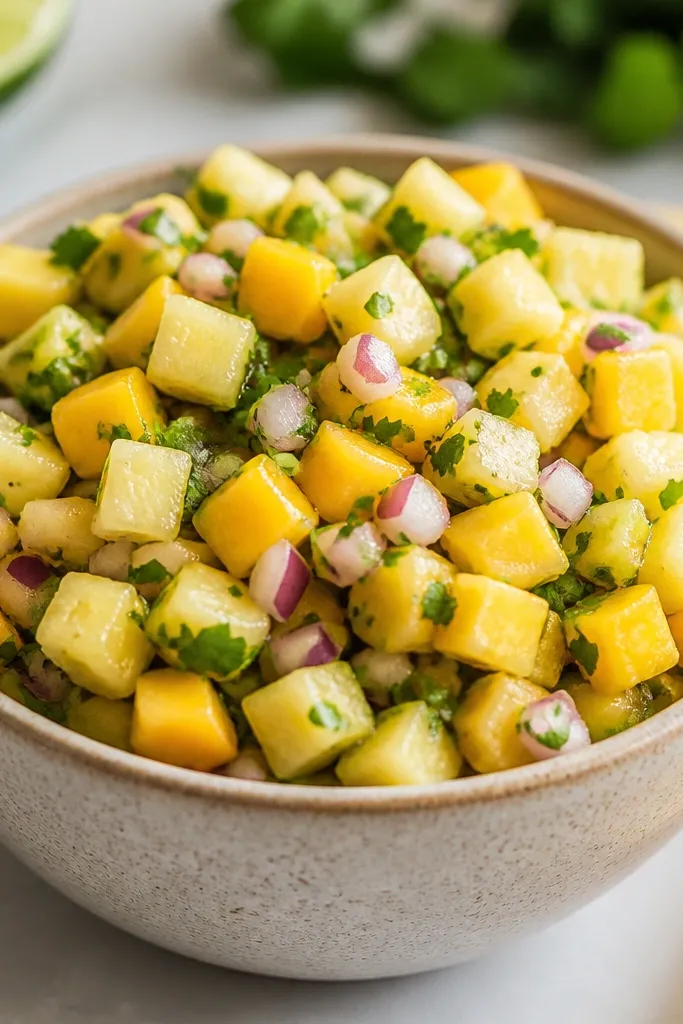
Frozen mango can still look good when you treat it right. Thawing and pat-drying keeps the cubes from turning mushy and watery, so the salsa stays thick. The color may be a touch lighter, but lime and onion bring it back.
Thaw frozen mango in the fridge overnight, then pat dry with paper towels. Cut into 1/4-inch pieces if needed, then mix with lime and salt. Use fresh pineapple for the best bite and visual contrast.
Try thisIf your mango is very juicy after thawing, wait 10 minutes after mixing and drain any extra liquid before adding cilantro.
One warningDon't microwave mango for speed - it softens unevenly and the salsa turns uneven.