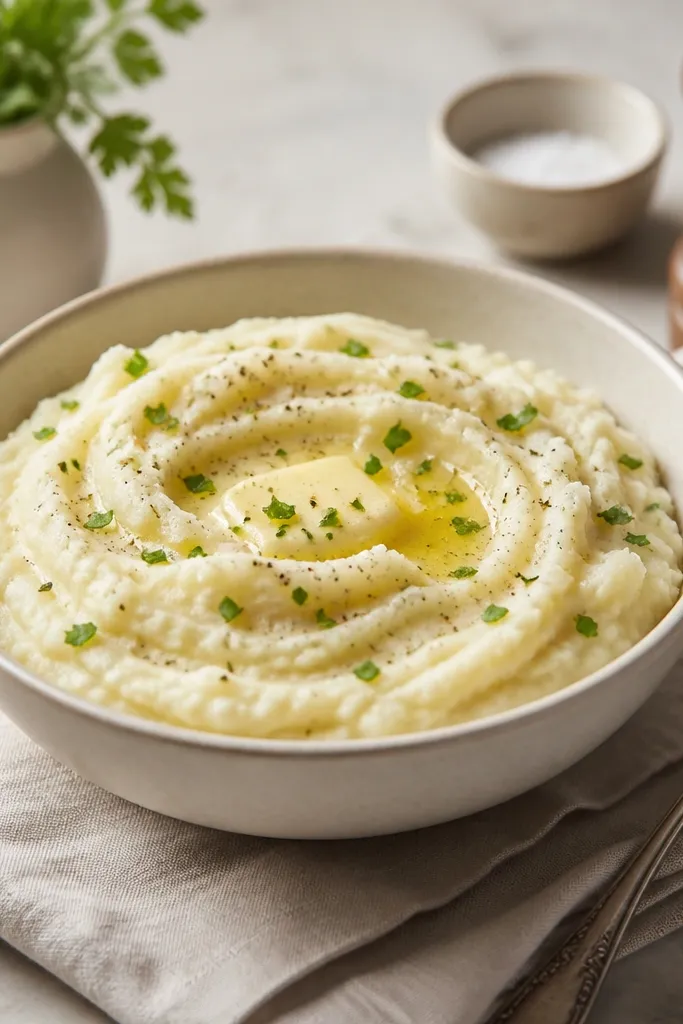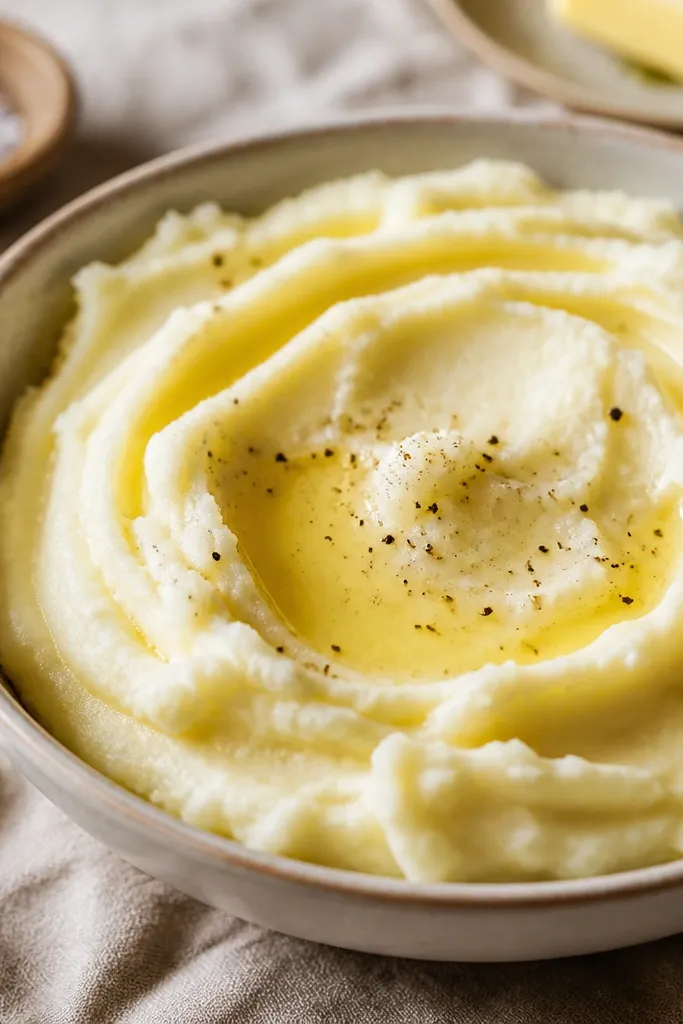
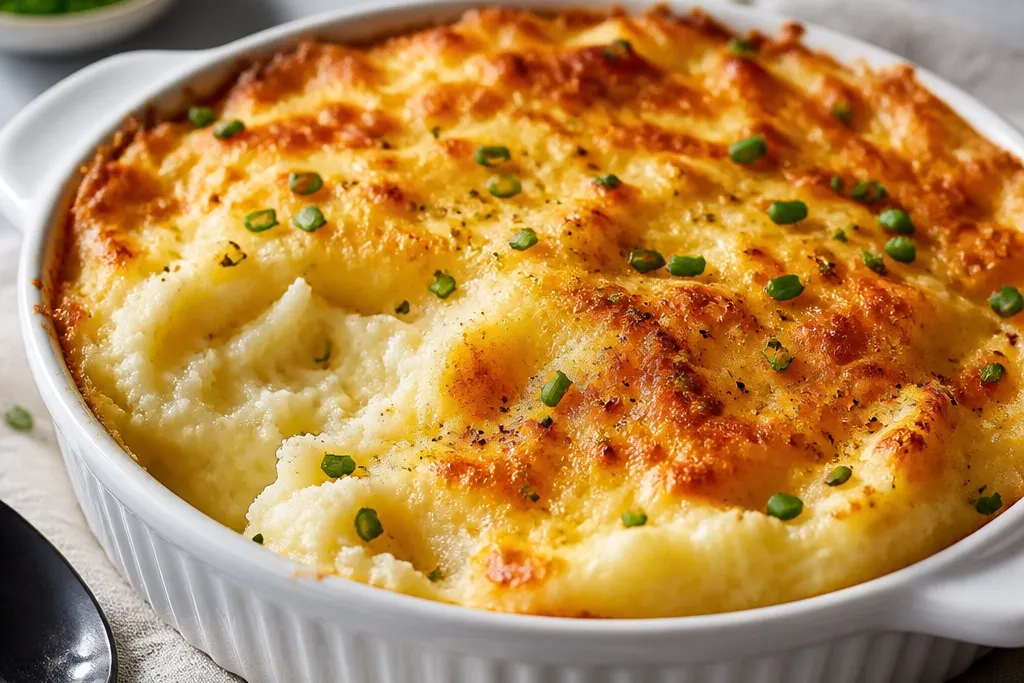
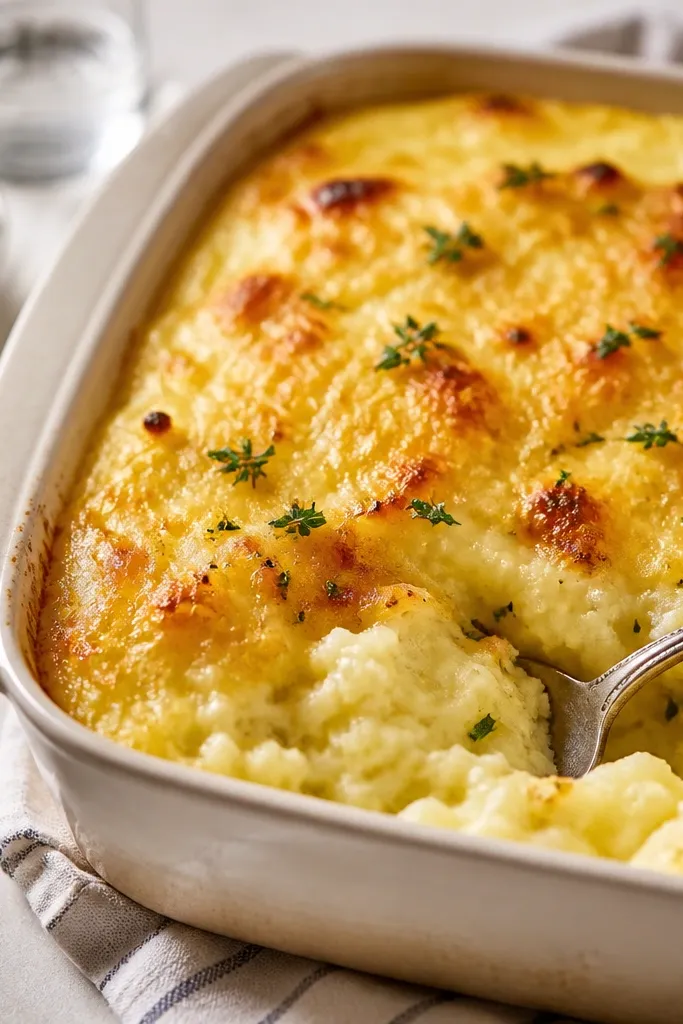
1. Golden cheddar + Parmesan dome top
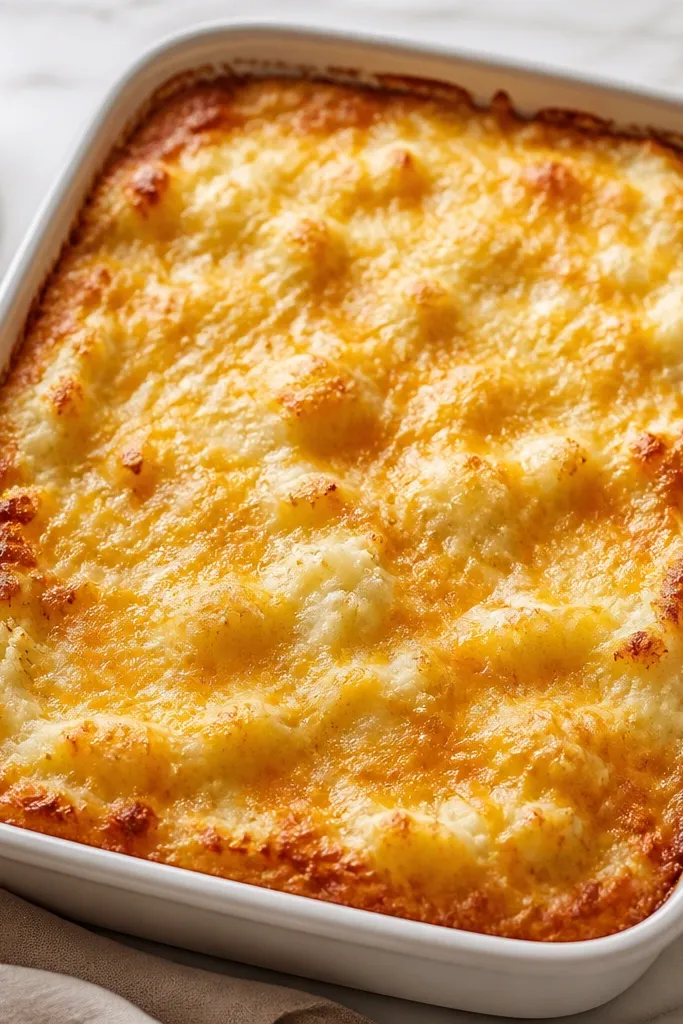
This look comes from two cheeses with different behavior. Cheddar melts into a glossy blanket, while Parmesan browns in little browned spots and adds a dry, crisp finish. When you bake uncovered at 425°F, the top loses moisture quickly, so it turns golden instead of steaming and going bland.
Spread the mash about 1.5 inches thick in the corners and 1 inch in the center. Sprinkle 1 cup shredded cheddar plus 1/3 cup Parmesan over the top, then tap it down lightly with your spatula so it sticks. Bake on the middle rack so the top browns without burning the bottom.
Try thisFor extra color, finish with 1 tablespoon extra Parmesan halfway through baking at the 15-minute mark.
One warningSkipping Parmesan makes the top look flat and more orange-brown than crisp-golden.
2. Crisp edge ring with thicker corners
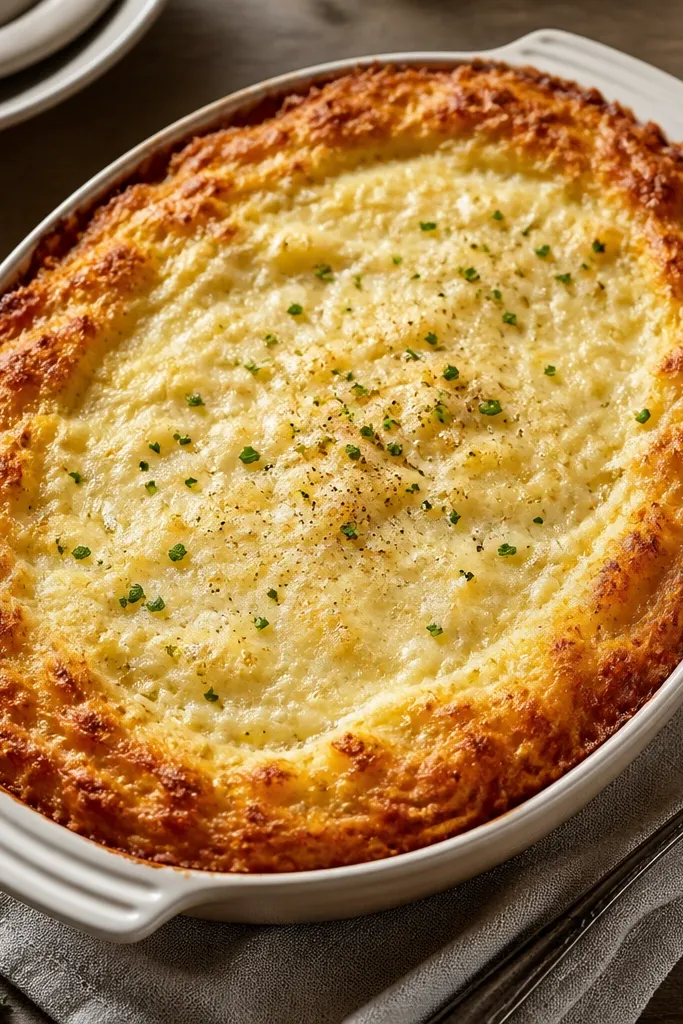
Crisp edges happen because the outer layer is thinner at the surface and dries faster. When you intentionally build thicker corners, the center stays creamy while the perimeter browns into a stronger crust. This is also the easiest way to make it look "fancy" without fancy tools.
Use a 9x13 inch dish or equivalent. Spoon mash into the corners first, then level the center. Keep the cheese layer even, but avoid piling extra cheese in the middle - it will bubble up and blur the edge definition.
Try thisRight before baking, run a fork lightly through the top in a few lines so moisture escapes and the crust sets with a defined texture.
One warningPouring mash all at once and flattening it makes the whole dish bake at the same pace and you lose the crisp ring.
3. Browned butter drip spots
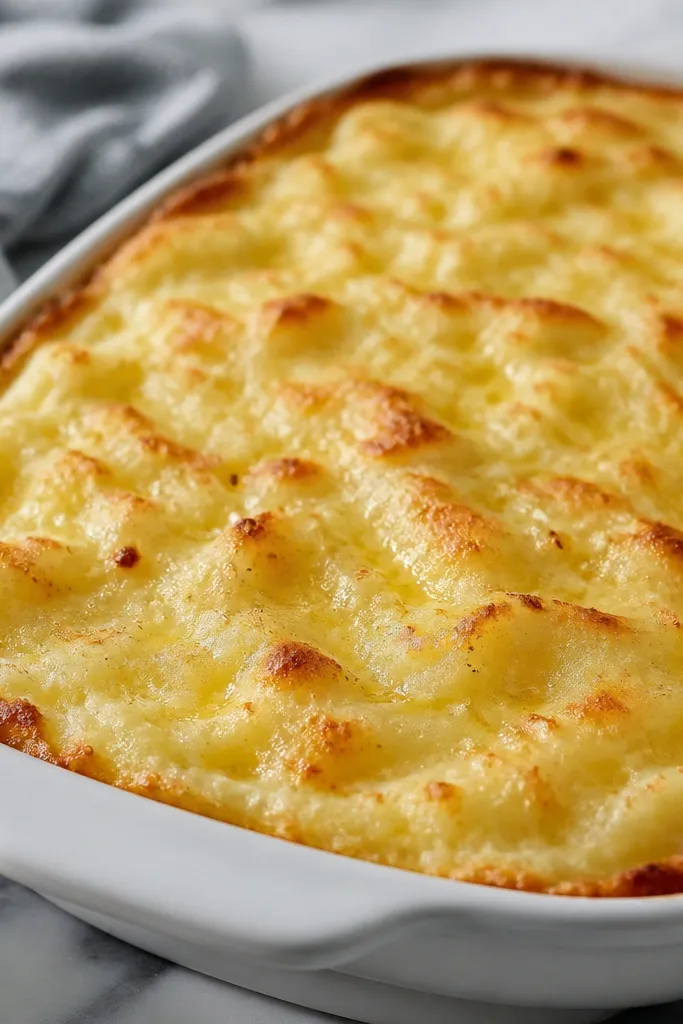
A little browned butter adds a nutty aroma and creates darker, freckled spots once it hits heat. Those spots look like "restaurant finish" because they're uneven - not a uniform orange blanket. The crust still needs cheese, but butter makes it taste richer without adding sogginess.
Melt 4 tablespoons butter in a small pan until it smells nutty and turns light amber. Drizzle in thin ribbons over the cheese layer, then bake immediately. Keep the drizzle light; too much liquid butter makes the crust greasy and soft.
Try thisUse a spoon to drizzle from close to the dish so you get small drip dots instead of one broad puddle.
One warningAdding melted butter after baking - it slides around and turns the crust oily.
4. Garlic-herb crust with green specks
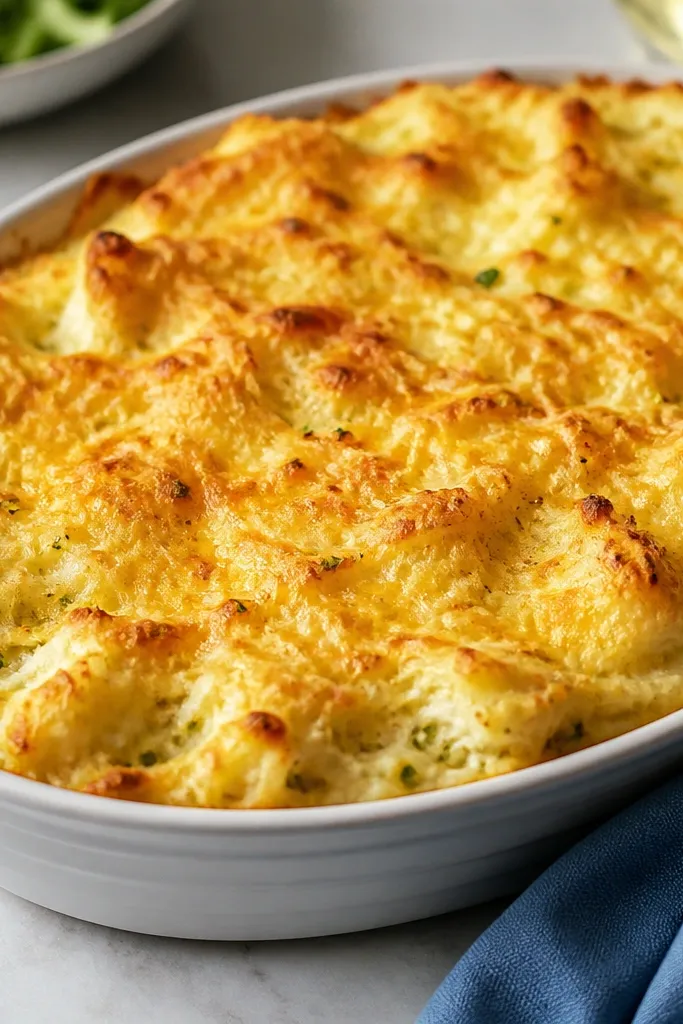
Herbs add contrast against the golden crust. Chopped parsley or chives sprinkled before baking gives green specks that cling to melted cheese. Garlic powder keeps flavor baked-in without burning like fresh garlic can.
Mix 2 tablespoons chopped parsley (or chives) into the cheese before sprinkling. Add 1/2 teaspoon garlic powder to the cheddar-Parmesan mix. Bake at 425°F uncovered; the herbs dry and stay bright rather than turning dark and bitter.
Try thisIf your herbs are wet from washing, dry them hard with paper towels first so they don't steam the surface.
One warningUsing raw onion pieces on top - they release water and smear the crust color.
5. Smoked paprika top for a warm red-brown shade
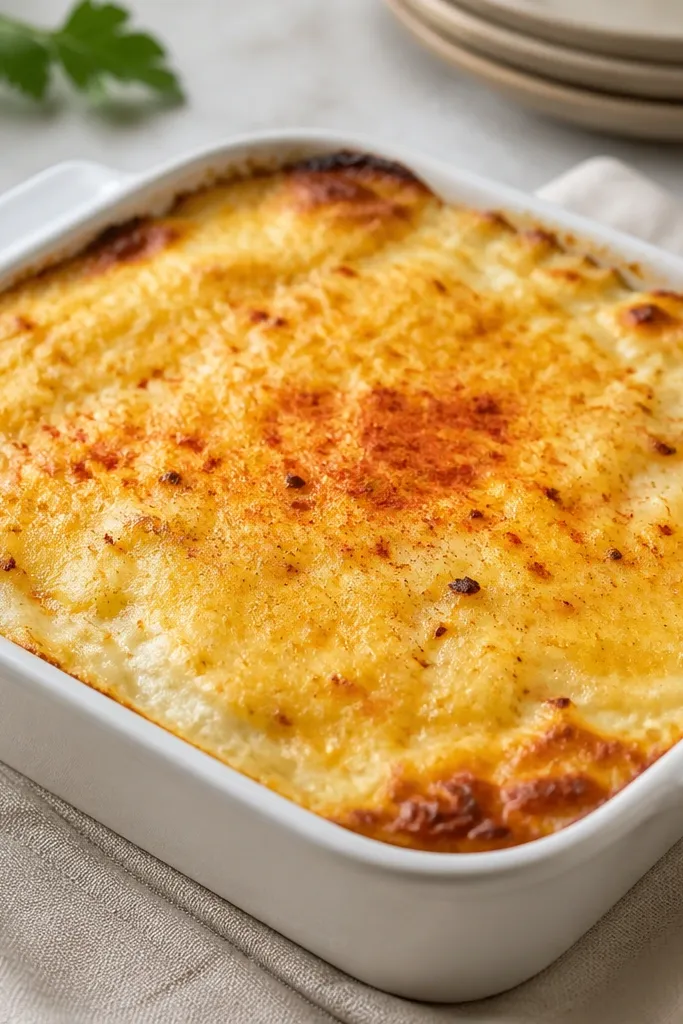
Smoked paprika changes the crust color from plain gold to warm red-brown. It also brings a subtle campfire aroma that reads "comfort food" instantly. Because it's a dry powder, it stays on the surface instead of soaking into the mash.
After sprinkling cheddar and Parmesan, dust 1 to 1 1/2 teaspoons smoked paprika over the top. Bake uncovered at 425°F. If you want it more subtle, start with 1 teaspoon and check after 15 minutes.
Try thisUse a fine-mesh sieve to dust; it spreads evenly and avoids patchy dark spots.
One warningUsing hot chili powder - it's too sharp and can taste harsh against the creamy potatoes.
6. Cheese + sour cream swirl pockets
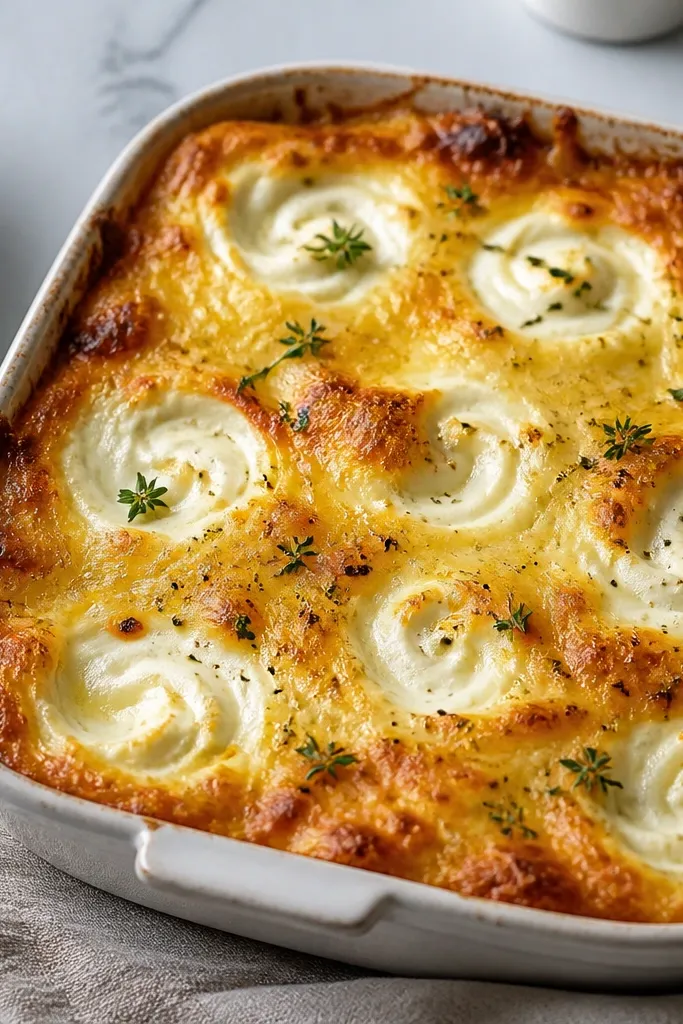
This look comes from breaking up the uniform cheese layer. Sour cream adds tang and those white pockets keep the top visually interesting even before you dig in. The trick is to swirl it lightly so it doesn't disappear into a single melted layer.
Before baking, drop 1/2 cup sour cream in 8 to 10 small spoonfuls across the top. Use the back of a spoon to swirl each spot 1 to 2 inches wide. Then sprinkle 3/4 cup shredded cheddar over everything so it melts and frames the white swirls.
Try thisChill the assembled dish for 20 minutes before baking so the sour cream sets in place.
One warningMixing sour cream into the entire mash - it makes the center looser and the crust less crisp.
7. Crisp ridged top from a fork pattern
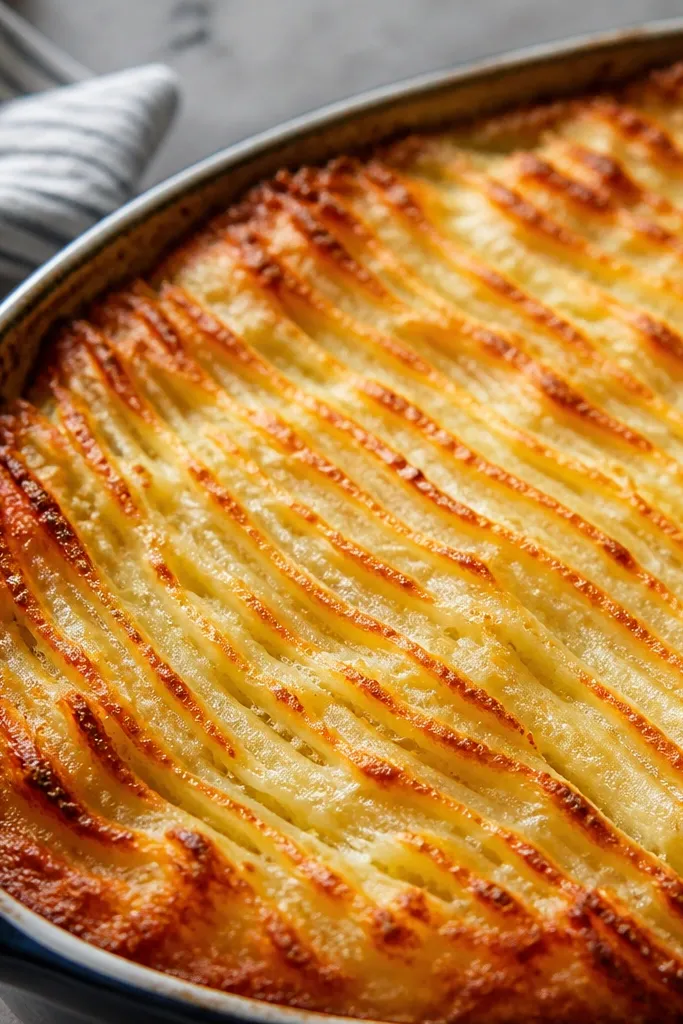
Ridged surfaces dry differently than smooth ones. Grooves hold cheese and dry faster, so you get darker toasted lines that look intentional. It also helps the crust crack into pieces instead of turning into one flat sheet.
After spreading mash and cheese, press a fork gently across the top in one direction, then repeat at a slight angle to make a grid. Don't press hard enough to scrape to the dish. Bake uncovered at 425°F until the ridges look deeply golden, about 20-25 minutes.
Try thisLet the dish rest 5 minutes before serving so the ridges set and don't slump.
One warningMaking ridges too deep - you'll see bare mash and the edges burn.
8. Two-tone top with a lighter center layer
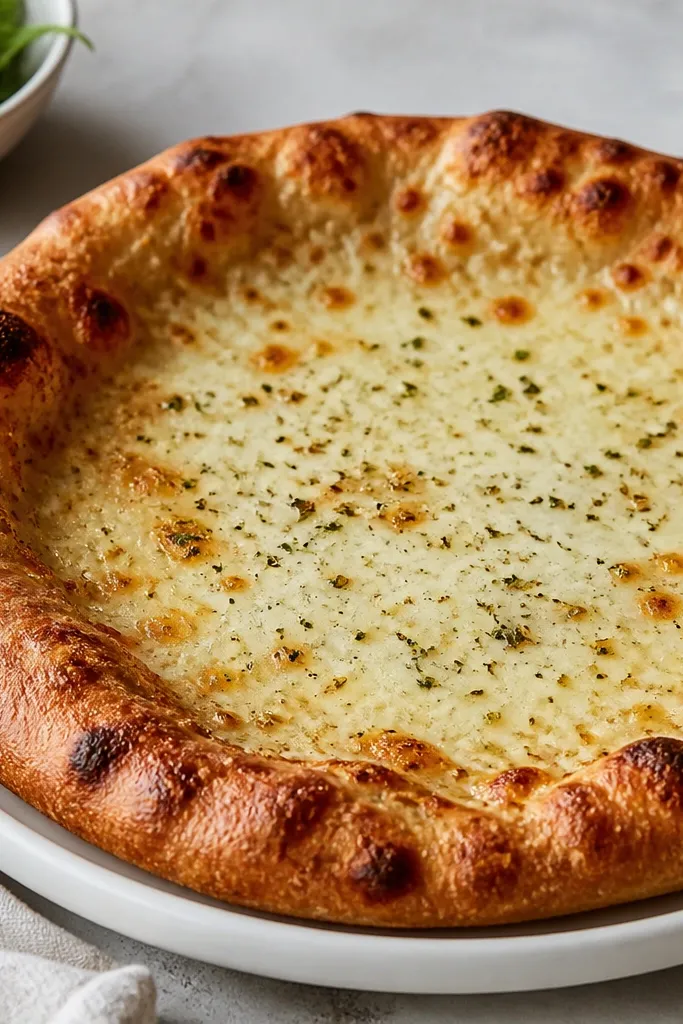
Two-tone looks good because it guides the eye. You get a more dramatic crust where you want it - around the edges - while the center stays creamy under a thinner cheese blanket. This also helps prevent the top from over-browning before the center is hot.
Use slightly more cheese at the edges: sprinkle about 1/2 cup cheddar-Parmesan mix around the perimeter, then only 1/4 cup in the center. Keep the mash level so the center heats evenly. Bake at 425°F and check after 18 minutes; pull when the edges are deep gold, not when the center is dark.
Try thisIf your oven runs hot, bake at 415°F and add 5 minutes so the center doesn't dry out.
One warningPutting the same cheese thickness everywhere - you get one uniform top and it browns unevenly.
9. Crunchy breadcrumb topping on top of cheese
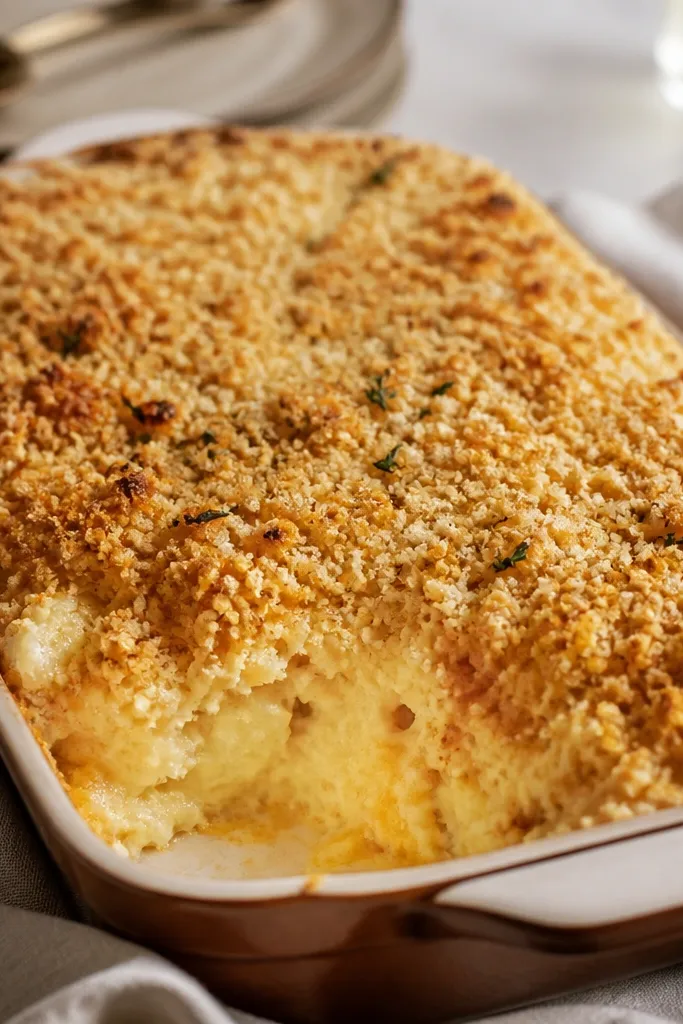
Breadcrumbs add a second texture layer: crackly crunch instead of just melted cheese. I like this when I'm feeding people who expect "crisp top" like scalloped potatoes. The breadcrumbs toast on the surface while the cheese holds them in place.
Mix 1/2 cup panko breadcrumbs with 2 tablespoons melted butter and a pinch of salt. Sprinkle on top after the cheddar-Parmesan goes down. Bake uncovered at 425°F until crumbs are deep golden, usually 18-22 minutes.
Try thisStir the panko in butter while it's warm so it coats evenly; clumps toast faster and burn.
One warningSkipping butter - dry breadcrumbs won't stick and they fall off when you serve.
10. Caramelized onion powder crust
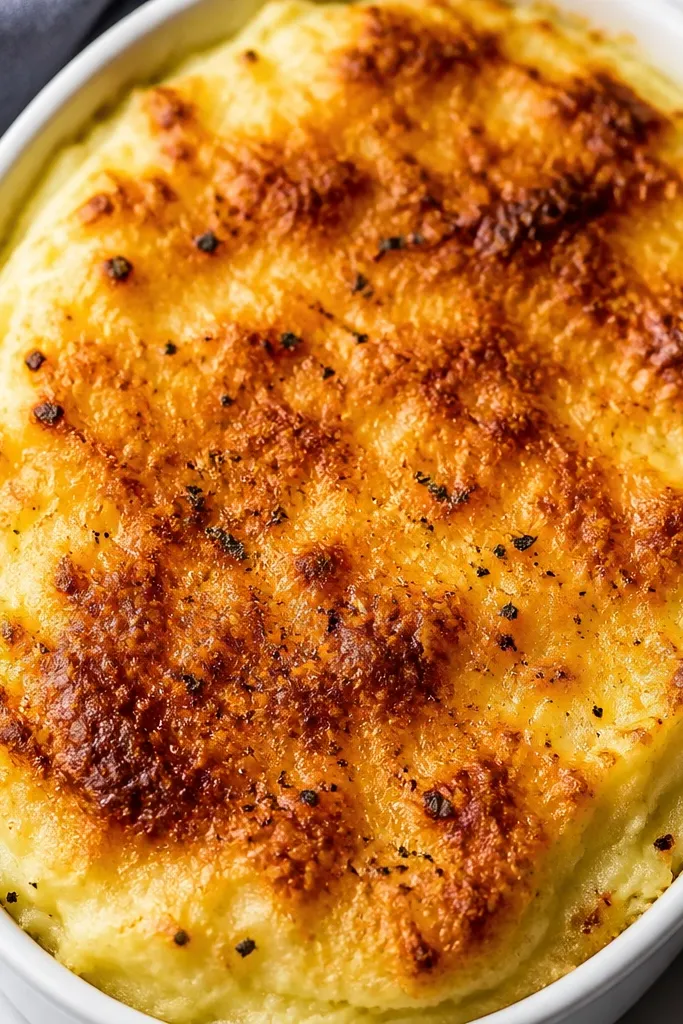
Caramelized onion powder adds a sweet-savory crust note without adding moisture like chopped onions do. It colors the top and makes the baked potatoes smell like they've been roasting. The crust still needs to brown from heat, and this seasoning just pushes it into a deeper flavor profile.
Sprinkle 1 teaspoon caramelized onion powder over the cheese mix before baking. Keep the cheese layer thin enough that the top can dry - about 1/2 to 3/4 cup total cheese for a 9x13 dish. Bake uncovered at 425°F and watch for darker specks at 15 minutes.
Try thisUse a light hand at first. Onion powder is strong and you want it as a background note, not the main flavor.
One warningAdding wet onion relish or fresh onion - it steams the crust and turns it dull.