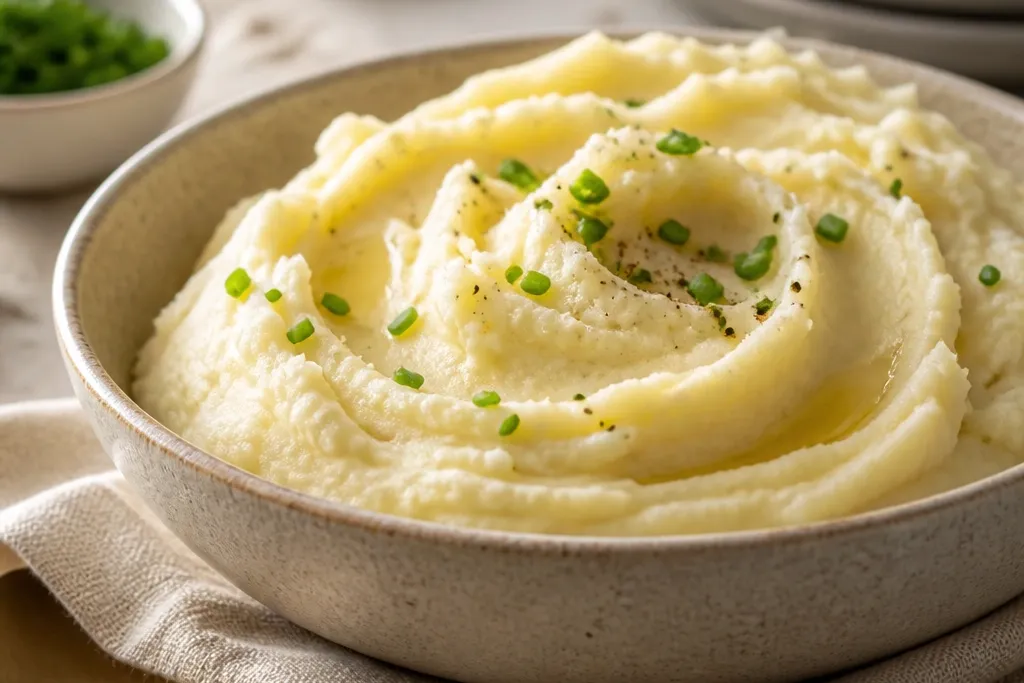
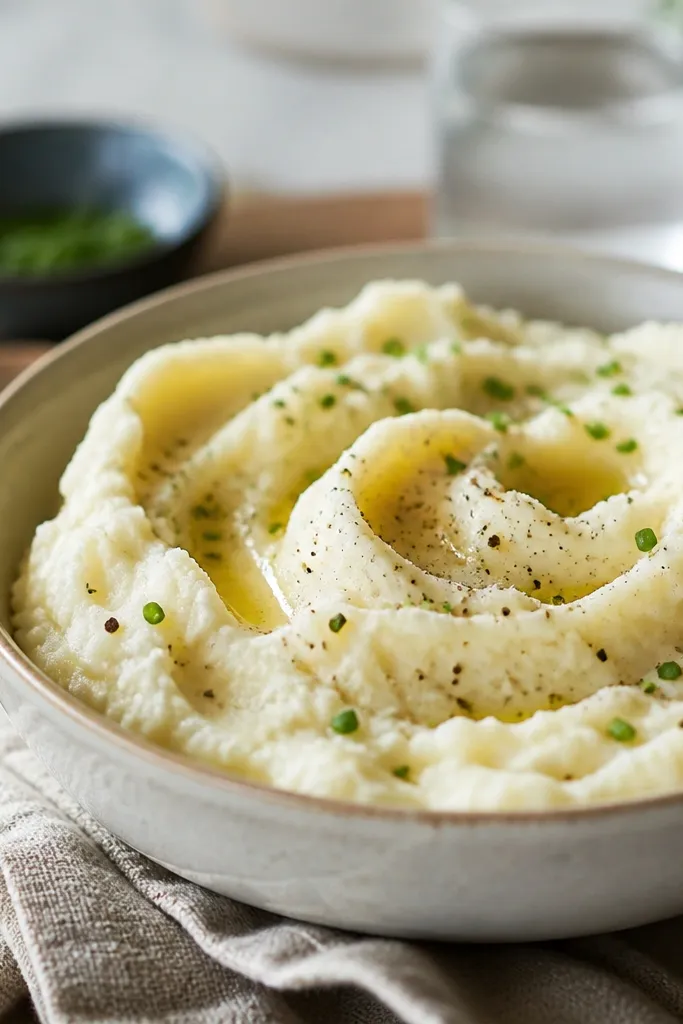
1. Glossy "Buttery" Swirl with Olive Oil + Roasted Garlic
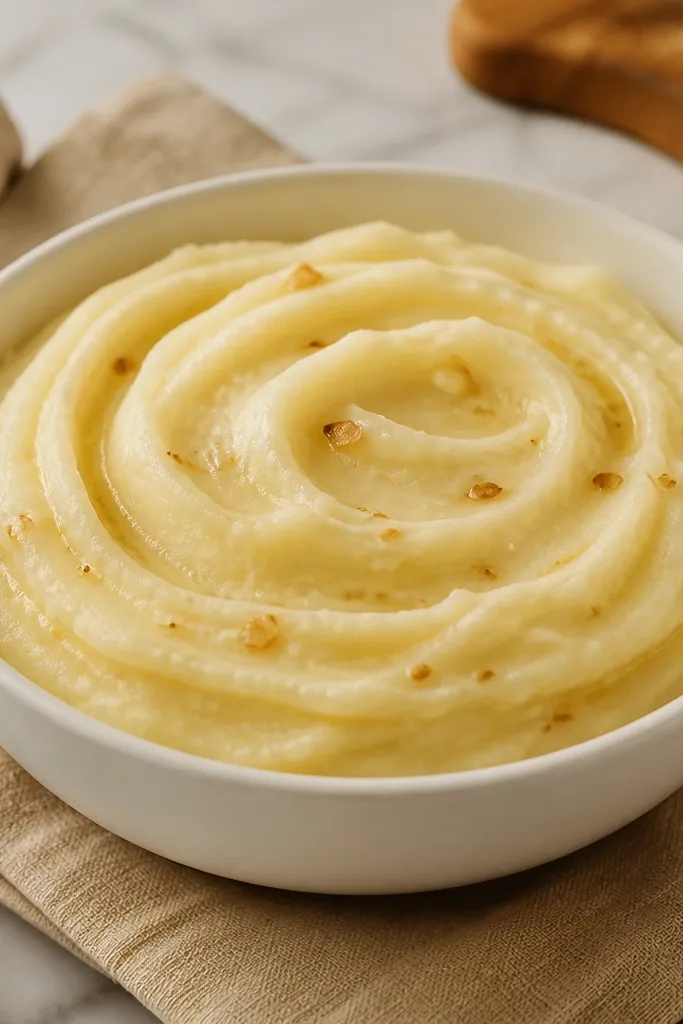
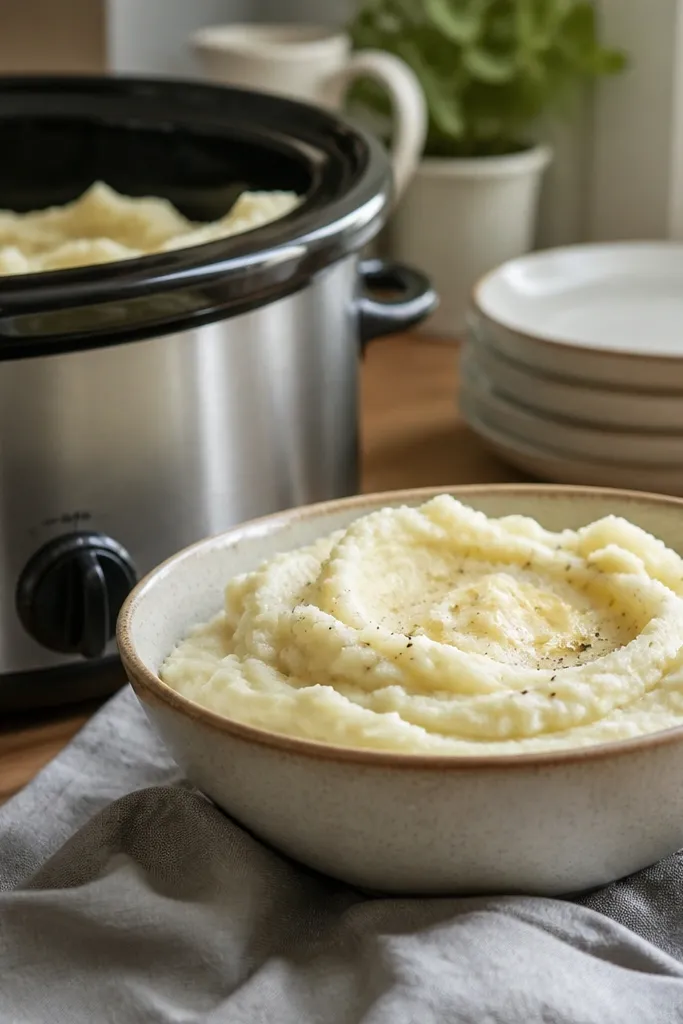
This look comes from adding a fat that coats the mash instead of soaking in. Olive oil gives a reflective gloss, and roasted garlic adds golden specks that distract from the fact that there's no dairy. The swirl matters too - you want ridges that catch light, not a flat, sleepy mound.
Mash hot potatoes through a ricer for fine texture, then stir in 2 to 3 tablespoons olive oil per 2 pounds potatoes. Mix in 1 to 2 tablespoons roasted garlic paste, starting small so the flavor stays sweet, not sharp. Season with salt while the mash is still warm so it blooms.
Try thisTo make the swirl look "restaurant," spoon the mash into the bowl, then drag the back of a spoon in tight circles and stop when it looks glossy - overmixing dulls the sheen.
One warningSkipping the ricer and mashing aggressively makes the mash look uneven and loses that clean, glossy finish.
2. Cloudy White Mash with Oat Creamer + Potato Water
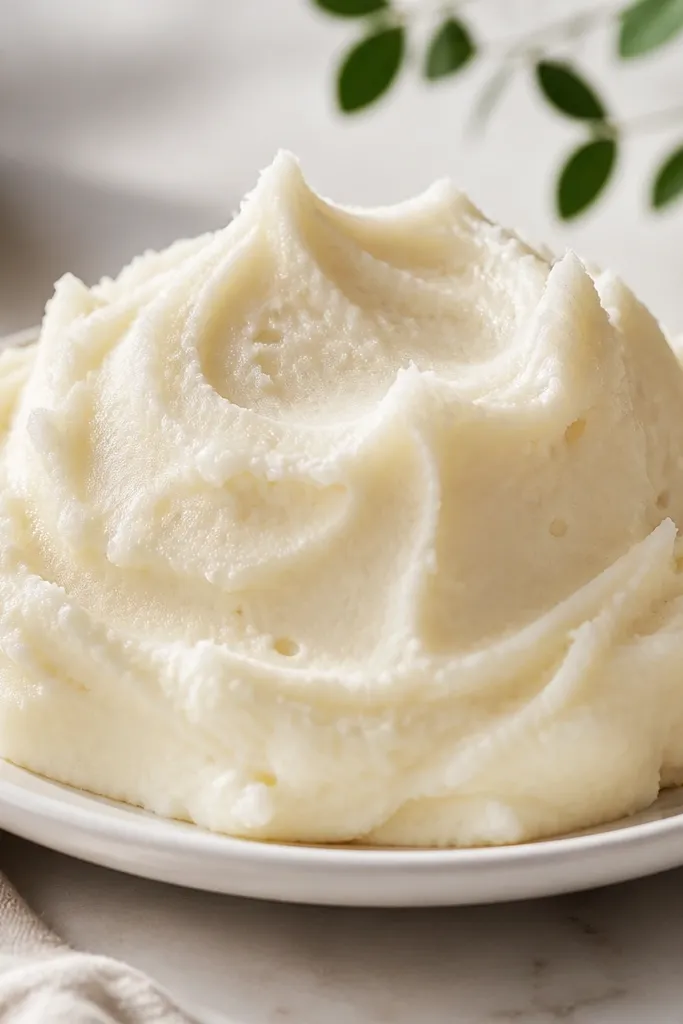
This is the "no one will question it" look because the color stays bright and the texture turns airy. Oat creamer thickens without thinning out the mash, and using potato water brings back natural starch so it clings. The result is light, not glossy, and it photographs well against darker plates.
After boiling, reserve 1 cup potato water. Mash and then add 1/2 cup oat creamer warmed in a small pot, followed by potato water by the tablespoon until it loosens. Stop mixing as soon as you see soft peaks - the mash sets fast as it cools.
Try thisWarm everything first - cold oat creamer makes the mash look grainy and less uniform.
One warningAdding all the liquid at once turns the mash pasty and makes it look like glue.
3. Whipped Texture with Vegan Butter + Miso Depth
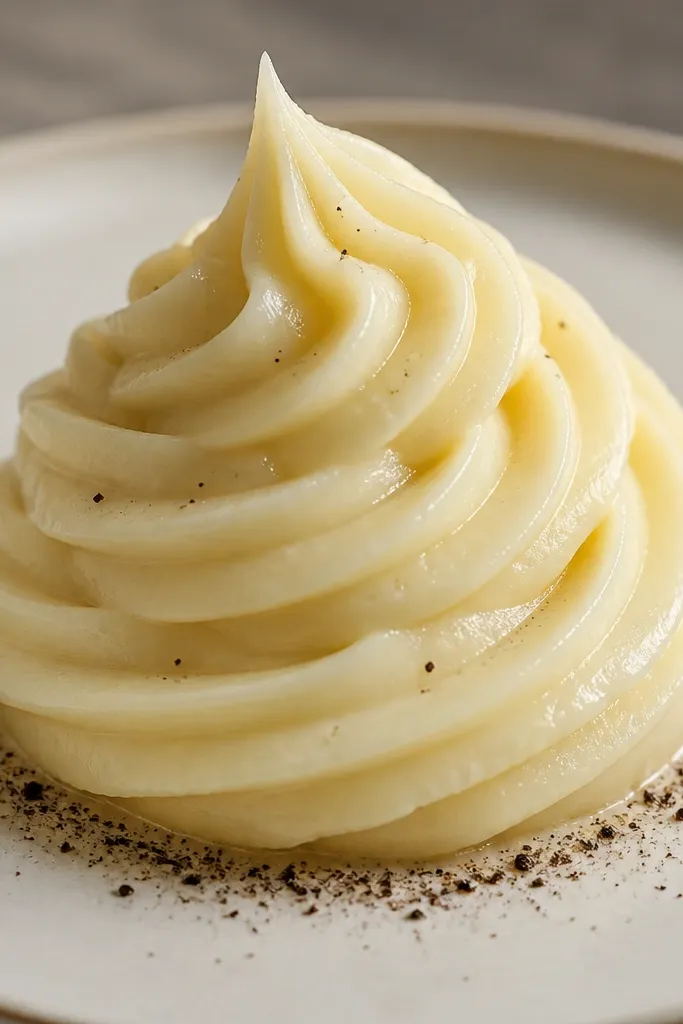
Vegan butter gives that familiar richness, and white miso adds the salty, savory depth you'd normally get from butter and milk. Piping makes the potatoes look intentional and neat, like a plated side dish instead of a bowl of leftovers. The ridges catch light and make it look smoother than it is.
Use about 3 tablespoons vegan butter per 2 pounds potatoes. Add 1 teaspoon white miso mixed into 2 tablespoons warm water, then whip with a hand mixer for 20 to 30 seconds max. Pipe onto plates or into a casserole dish with a spatula and smooth the top.
Try thisIf the mash tastes flat, add salt in 1/4 teaspoon steps - miso isn't a salt replacement, it just adds depth.
One warningWhipping too long makes the potatoes dense and can make the texture look gummy.
4. Golden Top Bake with Broiled Edges
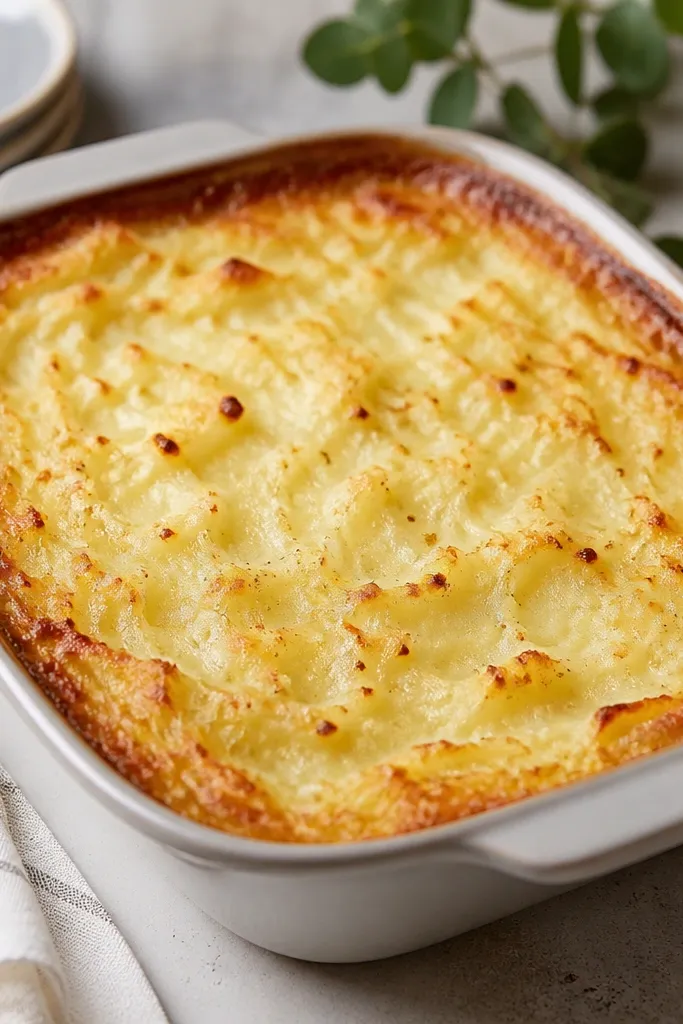
Baking dries the surface so it browns, and broiling gives you those crisp edges that look like butter caramelization. I use a thin layer so the crust forms quickly without drying the interior. The golden top makes people assume it's made with dairy, even when it's not.
Spread mashed potatoes about 3/4 inch thick in a greased dish. Brush the top lightly with melted vegan butter or olive oil, then bake at 425°F for 15 minutes. Broil for 1 to 2 minutes to set the crust - watch closely.
Try thisFor extra browning, sprinkle a little nutritional yeast over the top before baking.
One warningThick layers stay pale and wet in the middle, so the top never looks "baked," just steamed.
5. Herb-Fleck Mash with Chive Oil
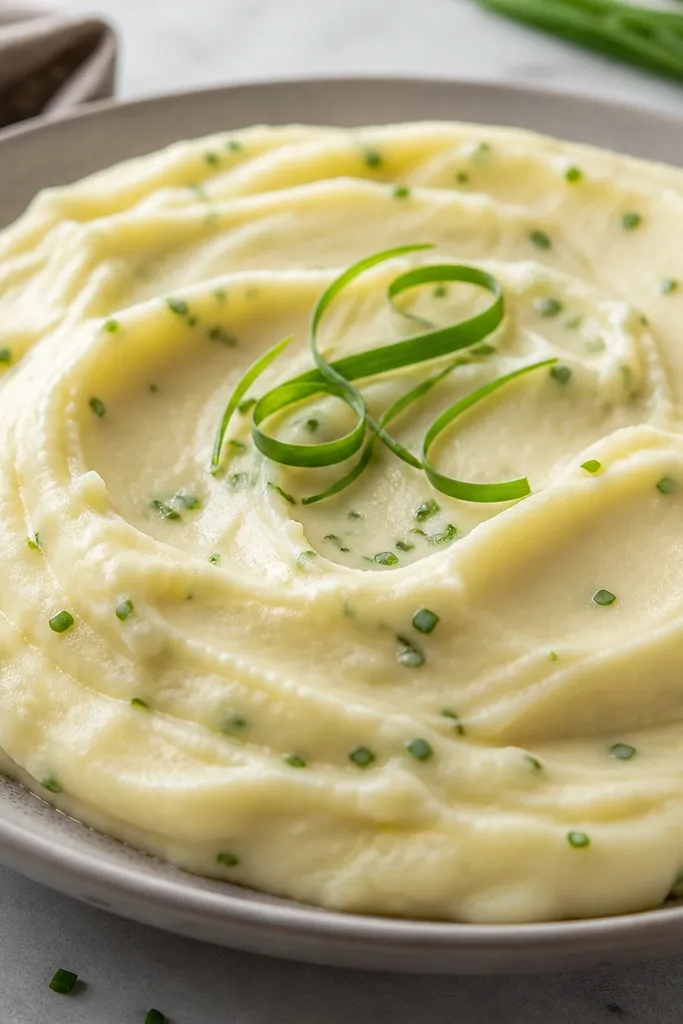
Green flecks make the dish feel fresh and intentional, and they hide the slight color differences dairy-free mash can have. Chive oil adds aroma without changing the potato base too much. The mash stays smooth, but the herbs give it that "made tonight" look.
Stir 1 to 2 tablespoons finely chopped chives into the mash at the end. For the oil, blend 2 tablespoons olive oil with 1/4 cup chives, then strain if you want a cleaner look. Drizzle a teaspoon over each serving.
Try thisUse fresh chives - dried herbs look dusty and dull on pale mash.
One warningAdding herbs early makes them darken and can turn the mash into a gray-green mess.
6. Peppery Creamy Bowl with Black Garlic Butter-Style Flavor
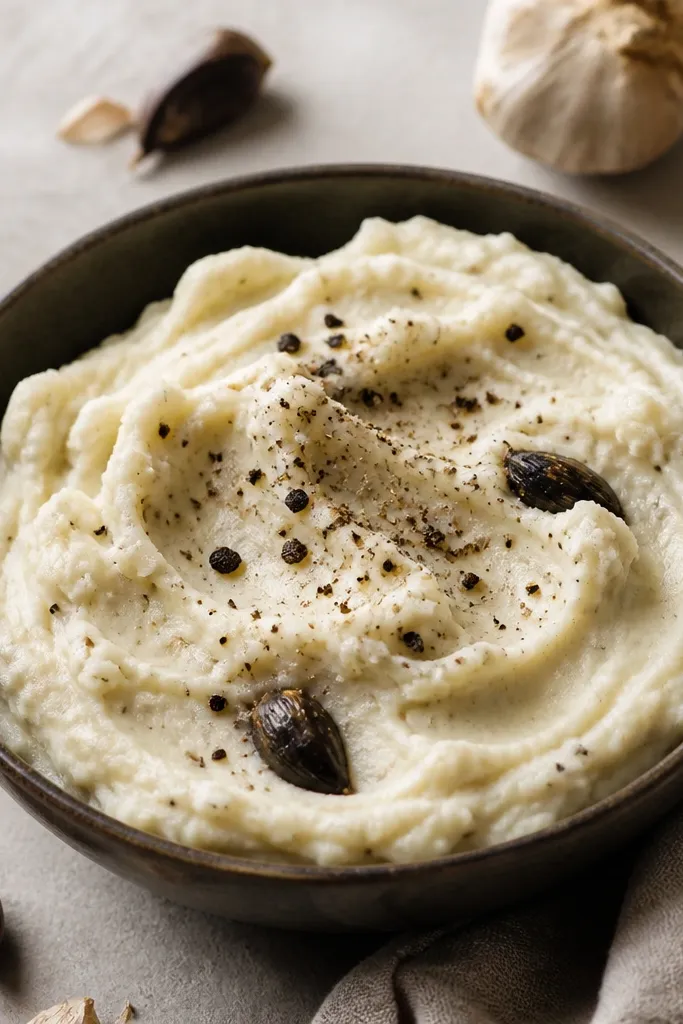
Black garlic gives a buttery, sweet-savory flavor without any dairy. The mash stays creamy, but the pepper and black specks make it look richer and more complex than plain mash. This is my go-to when serving picky eaters.
Mash potatoes, then add 2 tablespoons olive oil or vegan butter plus 1 to 2 teaspoons mashed black garlic. Season with salt and a lot of cracked black pepper right before serving so it looks fresh. Keep the surface glossy by stirring just until smooth.
Try thisCrack pepper at the last second - pre-ground pepper fades to gray fast.
One warningOver-seasoning with salt early makes the mash taste harsh once it cools.
7. Crisp Rim Look in a Skillet
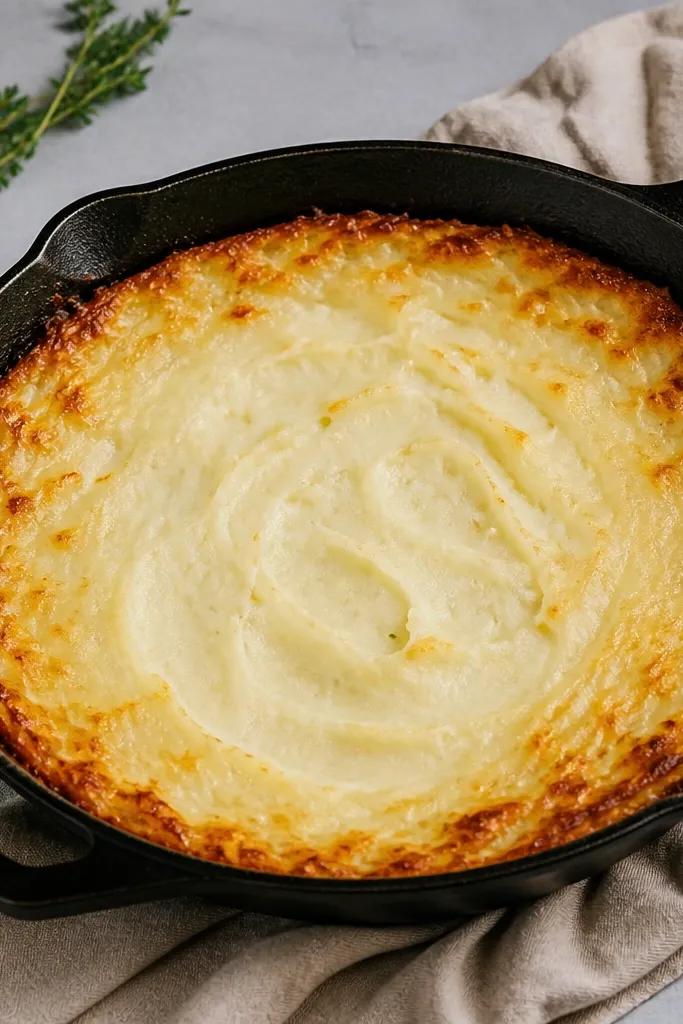
Pressing mash into a skillet creates a thin edge layer that browns while the center stays soft. The contrast looks fancy and hides any slight dryness that can happen with dairy-free swaps. It also lets you serve neat slices instead of scoops.
Cook potatoes until very tender, then mash with ricer. Press into a preheated, lightly oiled skillet, about 1/2 inch thick. Cook on medium-low for 6 to 8 minutes, then flip in sections or serve as is with a spatula.
Try thisUse a cast iron skillet if you have one - it browns faster and gives cleaner edges.
One warningSkipping preheating makes the mash steam instead of brown.
8. Lighter Whip with Aquafaba for Airy Serving
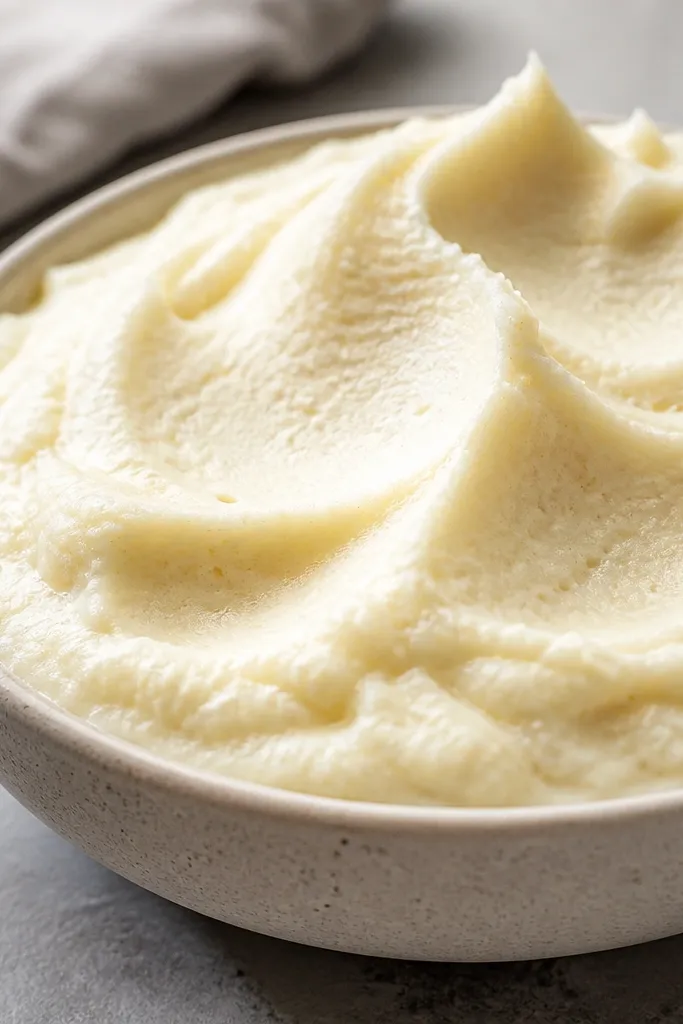
Aquafaba whips up and adds lift, so the mash looks cloud-like even without dairy. I use it when I want a wow texture for holidays or photo-heavy meals. You still need fat and salt, but the aquafaba gives the "butteriness" vibe through mouthfeel and lightness.
Whip 3 tablespoons aquafaba with a pinch of salt to soft peaks. Mash potatoes, then fold in the whipped aquafaba slowly so you keep air pockets. Add warmed olive oil or vegan butter 1 tablespoon at a time until it tastes rich.
Try thisFold gently - if you overmix, the peaks collapse and the mash turns dense.
One warningUsing aquafaba without enough fat makes the mash taste flat even if it looks fluffy.
9. Creamy White Bowl with Lemon-Zest Brightness
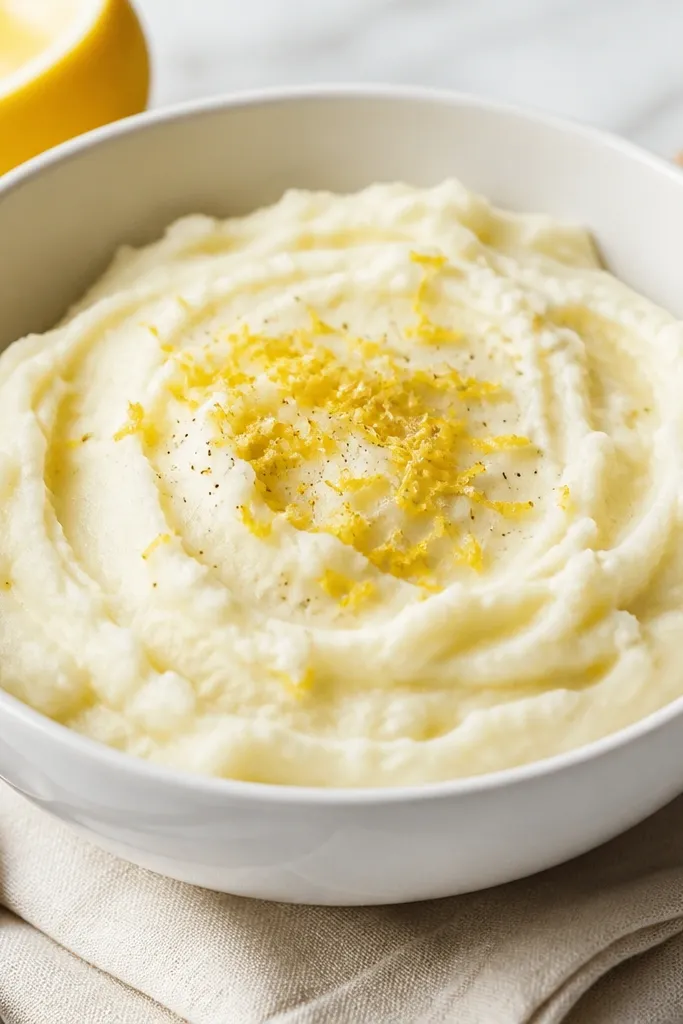
A tiny amount of lemon zest makes dairy-free mash taste less "starchy" and more like a complete dish. It brightens the flavor so it reads as rich even when the fat is plant-based. The look is clean and modern, especially on white plates.
Add 1 to 2 teaspoons lemon zest after you mash and season. Stir in warmed oat creamer or olive oil for creaminess, then taste and adjust salt. Keep the zest fine so it doesn't look like garnish flakes.
Try thisZest a whole lemon directly over the bowl - it smells strong and fresh right when you serve.
One warningAdding lemon juice instead of zest can thin the mash and dull the creamy texture.
10. Roasted Potato Mash with Browned Butter-Style Notes (No Dairy)
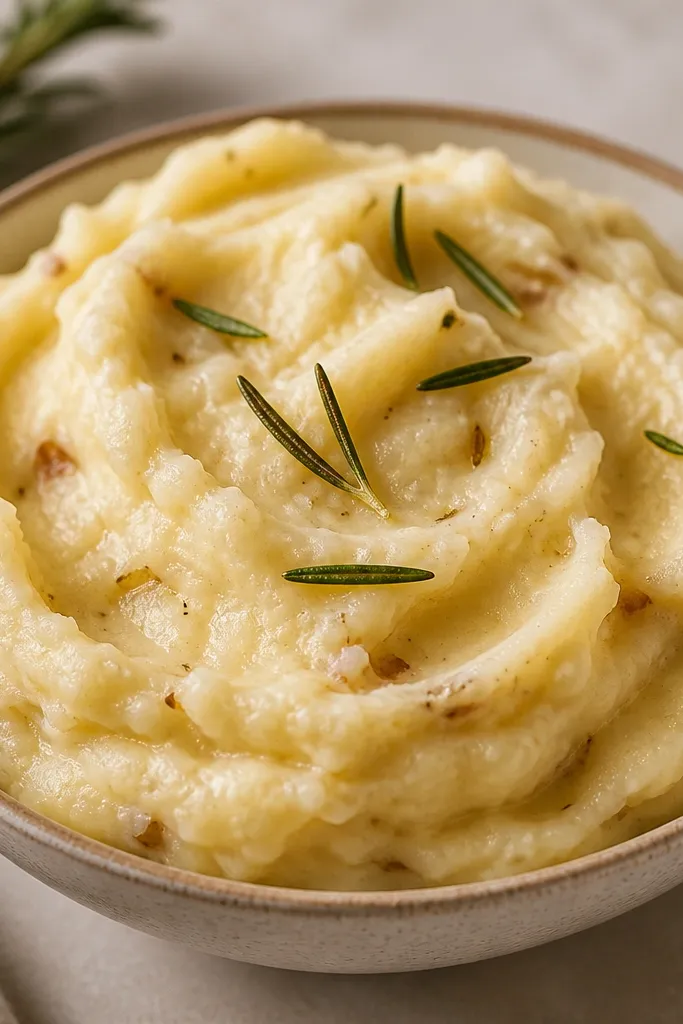
Roasting parts of the potatoes before mashing creates browned notes that mimic the vibe of browned butter. Even without dairy, that caramelized flavor keeps the mash from tasting like a bland base. The warm ivory color also looks more appetizing than stark white.
Cube potatoes, toss with olive oil, and roast at 425°F for 20 to 25 minutes until edges are browned. Boil any remaining chunks until tender, then mash everything together with roasted bits. Add vegan butter or olive oil and a pinch of rosemary.
Try thisMash roasted potatoes with a ricer so the browned bits stay suspended, not sunk.
One warningChopping roasted bits too large makes the mash look chunky and uneven.