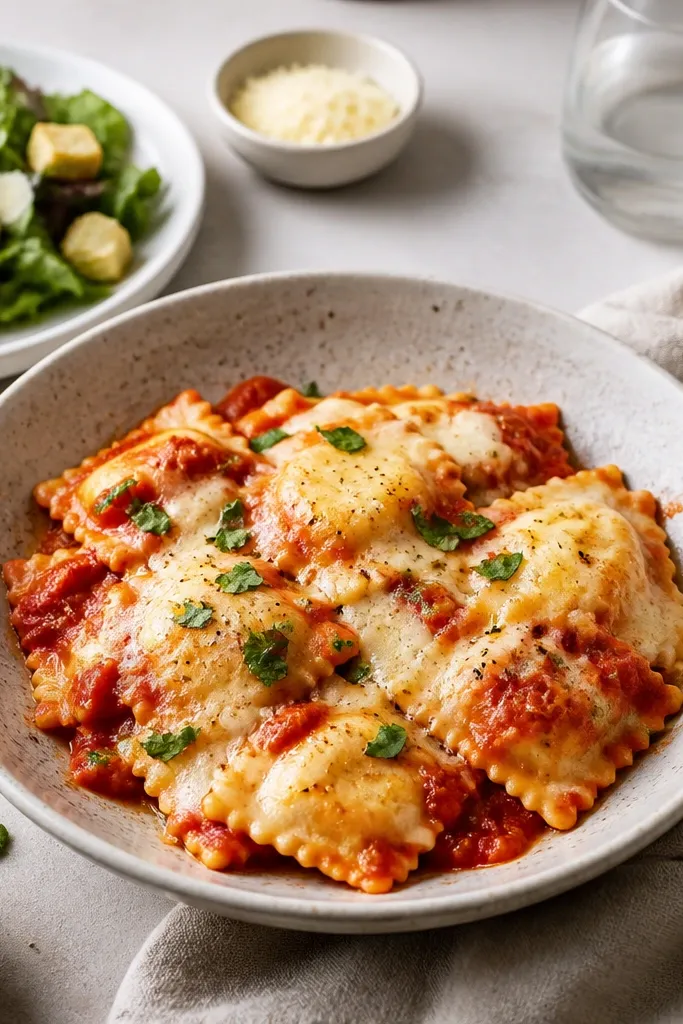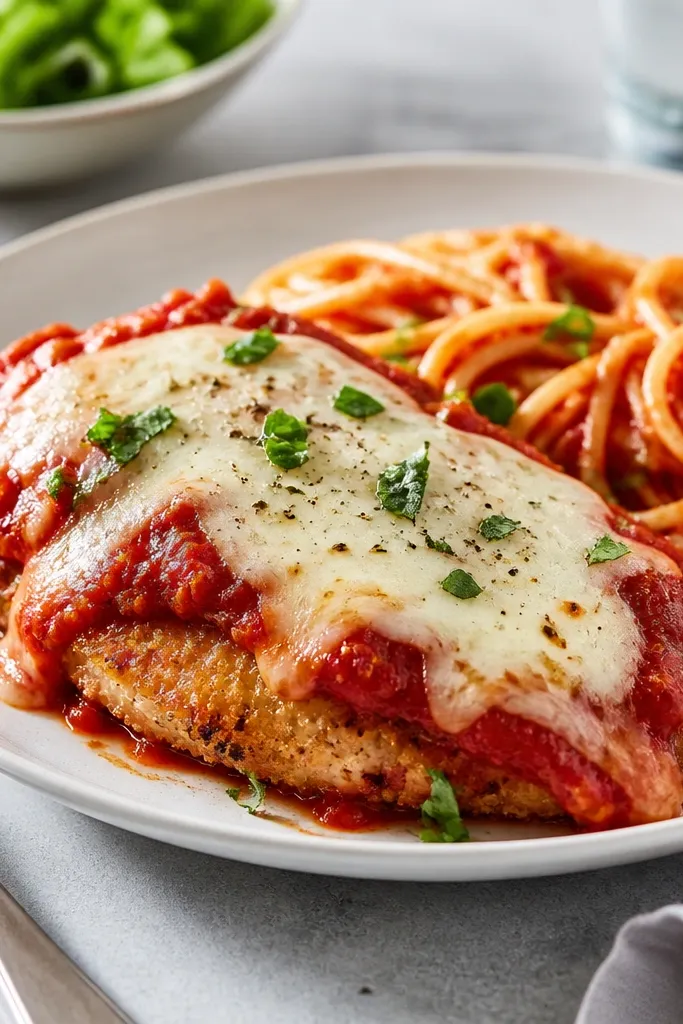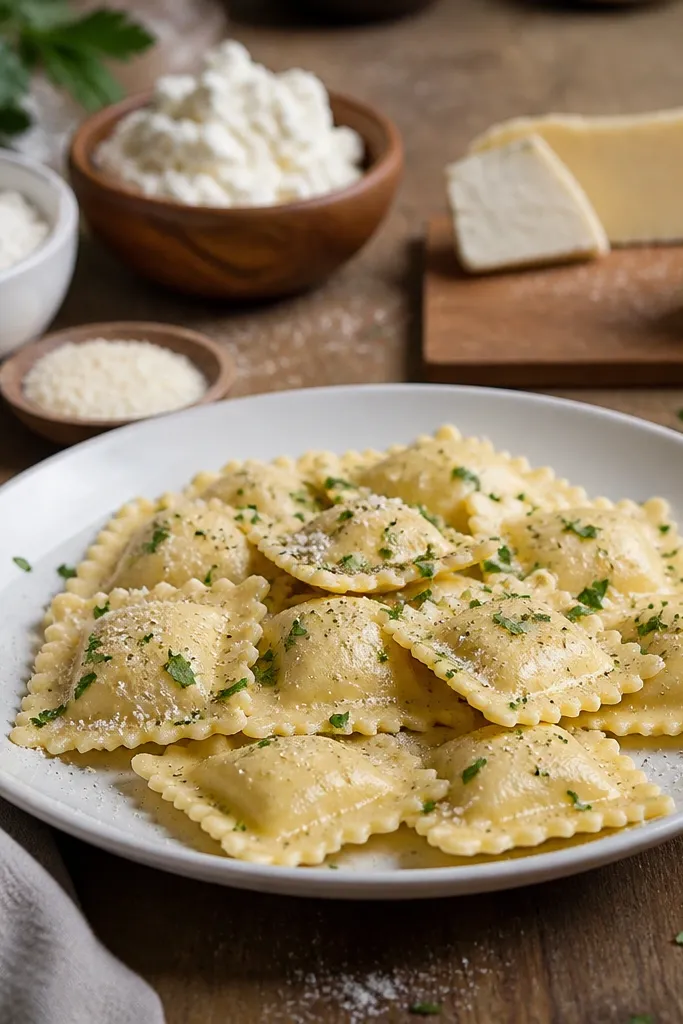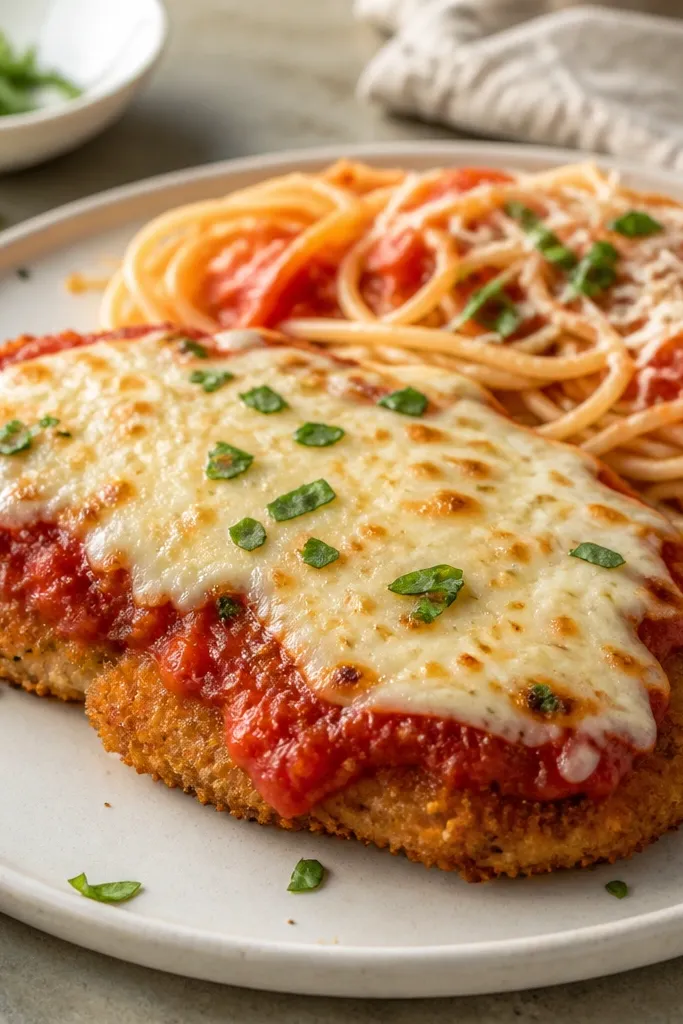
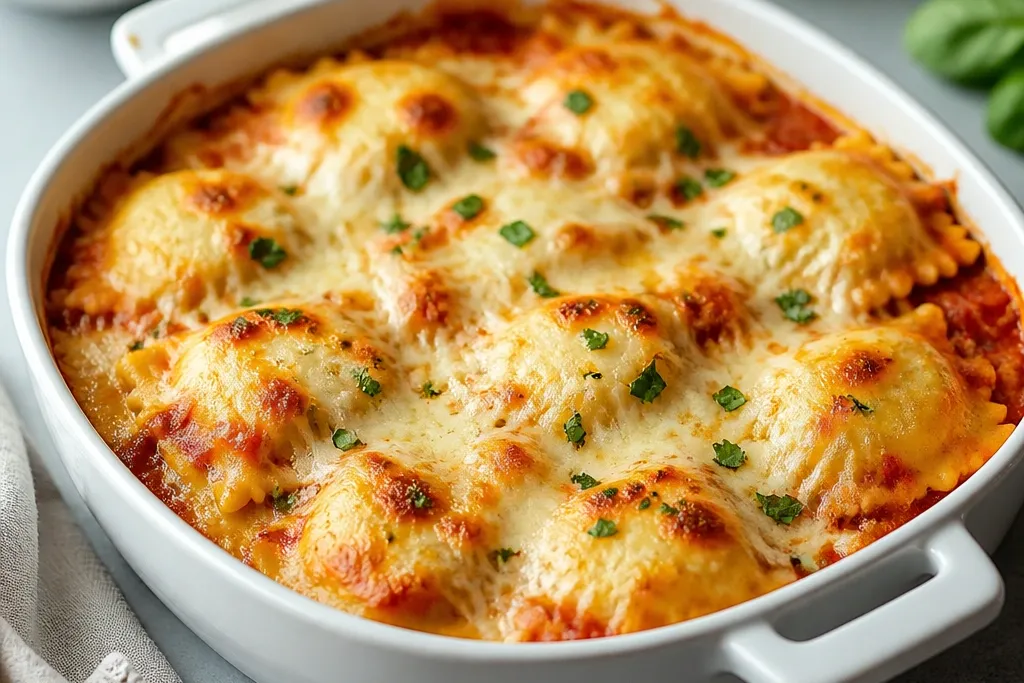
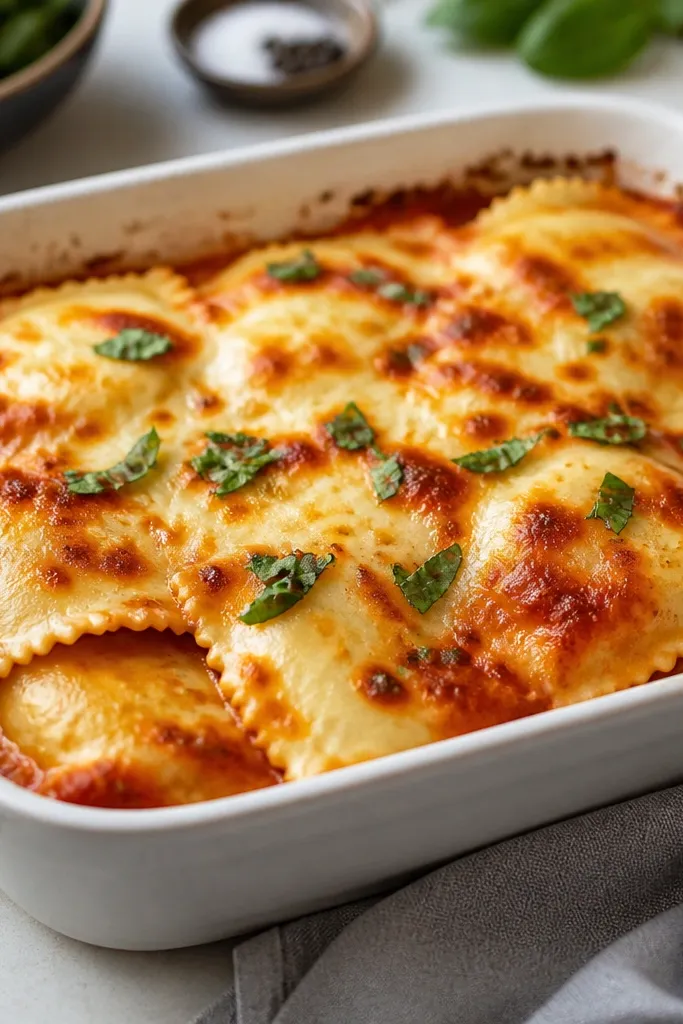
1. Golden cheese crust with blistered edges
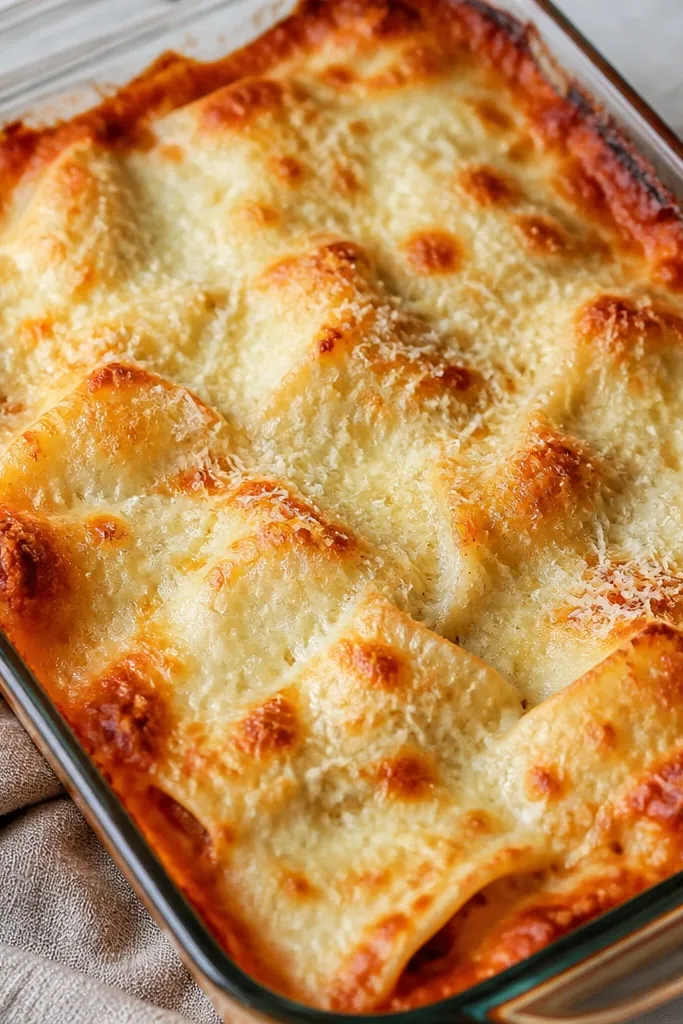
This look comes from a cheese layer that's thick enough to melt but thin enough to brown. I aim for a mottled surface - not a uniform sheet - because the browned bits taste stronger and look more "restaurant." Mozzarella gives stretch, while parmesan or pecorino gives the dry, crackly gold spots. The browned edges are a sign your oven is hot and the sauce layer is not too wet.
Spread about 1/2 cup thick marinara in the bottom of a 9x13. Arrange ravioli in one layer and cover with another thin sauce coat. Sprinkle 1 to 1 1/2 cups shredded mozzarella mixed with 1/3 to 1/2 cup grated parmesan, then bake uncovered.
Try thisBroil for 60-90 seconds at the end and watch the color like you would toast - it goes from blonde to brown fast.
One warningSkip covering the dish for the entire bake - it steams the top and kills the golden crust.
2. Red sauce peeking through the cheese
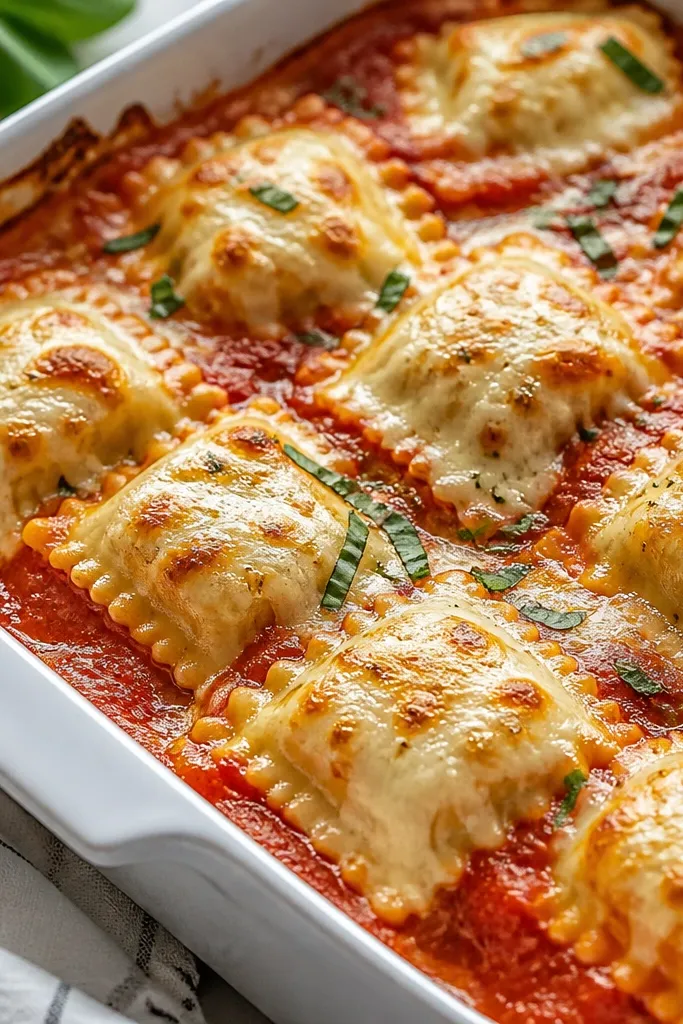
This is the "layered" look that makes the dish feel intentional. When sauce is thick and you place ravioli with small gaps, the sauce rises just enough to show through the cheese. It also helps flavor because each ravioli gets a little sauce contact without drowning. The contrast - red sauce against pale-gold cheese - reads appetizing in photos.
Use a thick marinara and keep it to a thin coat under and over the ravioli - about 3/4 to 1 cup total for a single layer in a 9x13. After baking 18-22 minutes, add a final 1/4 cup parmesan before broiling so the top stays gold where sauce peeks through.
Try thisIf your sauce is runny, simmer it in a pot for 5-7 minutes before using. You want it to coat a spoon.
One warningDon't pour extra sauce after baking - it turns the cheese glossy and soft instead of crisp.
3. Two-tone top from parmesan snow
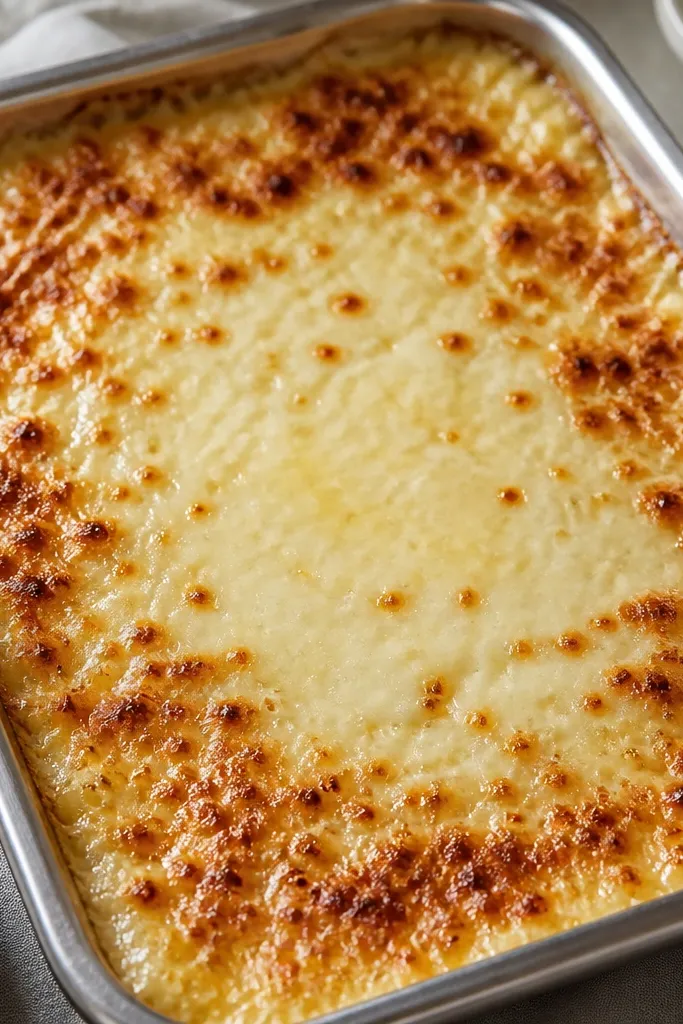
This effect is from timing the parmesan. If you mix all the parmesan into the cheese layer, it browns more evenly but less dramatically. If you sprinkle some as a "snow" in the last few minutes, you get crunchy speckles that look handmade. It also boosts browning without adding extra grease.
Bake the ravioli with mozzarella on top for 18 minutes. Pull it out, sprinkle 1/4 to 1/3 cup parmesan over the surface, then broil 60-90 seconds. Keep the dish close enough to the broiler that the parmesan freckles quickly.
Try thisUse finely grated parmesan for snow - it melts and freckles instead of forming big salty clumps.
One warningAvoid bagged, coarse parmesan shreds - they don't melt into dots and can taste chalky.
4. Bubbly saucy border around the pan
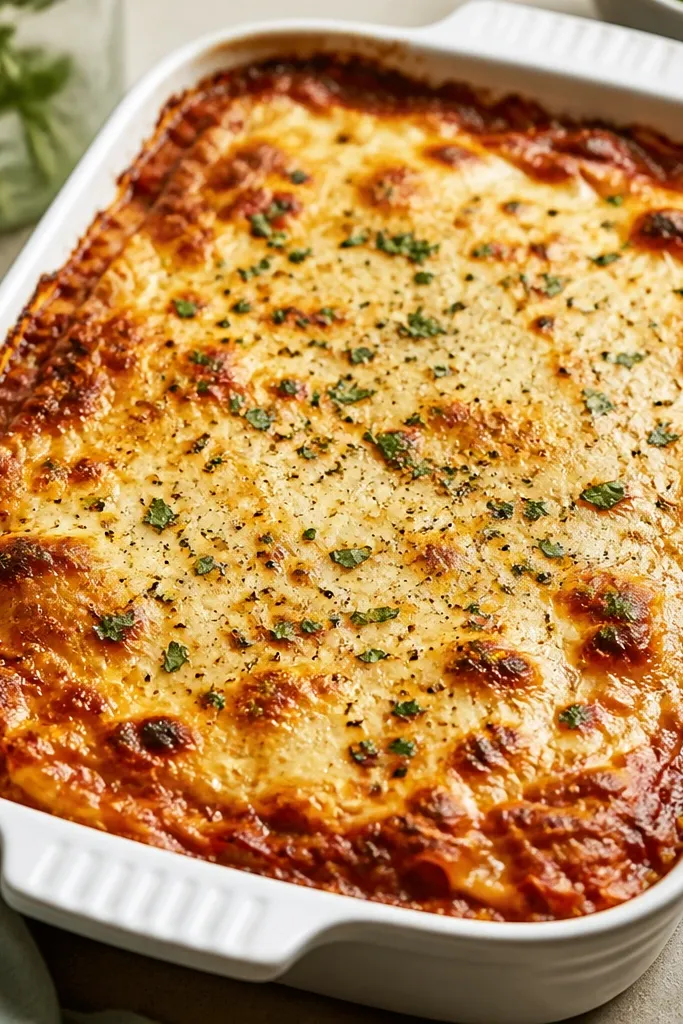
That rim bubbling happens when the bottom sauce layer is just right and the oven is hot enough to boil off surface moisture. The edges get hotter first, so the cheese bubbles and the sauce thickens into a glossy border. It looks cozy because it signals the dish is hot and ready. This is the "family dinner" look that still photographs well.
Use a metal or glass 9x13 and preheat it empty for 5 minutes if you want extra edge bubbling. Keep the ravioli in a single layer so the rim is exposed. Don't overfill; too many layers trap steam and flatten the rim.
Try thisIf you like a stronger rim, add an extra tablespoon of sauce right at the edge before the final broil.
One warningDon't use a deep, covered casserole - the rim won't brown and the top stays uniform.
5. Crisp cheese islands over sauced pockets
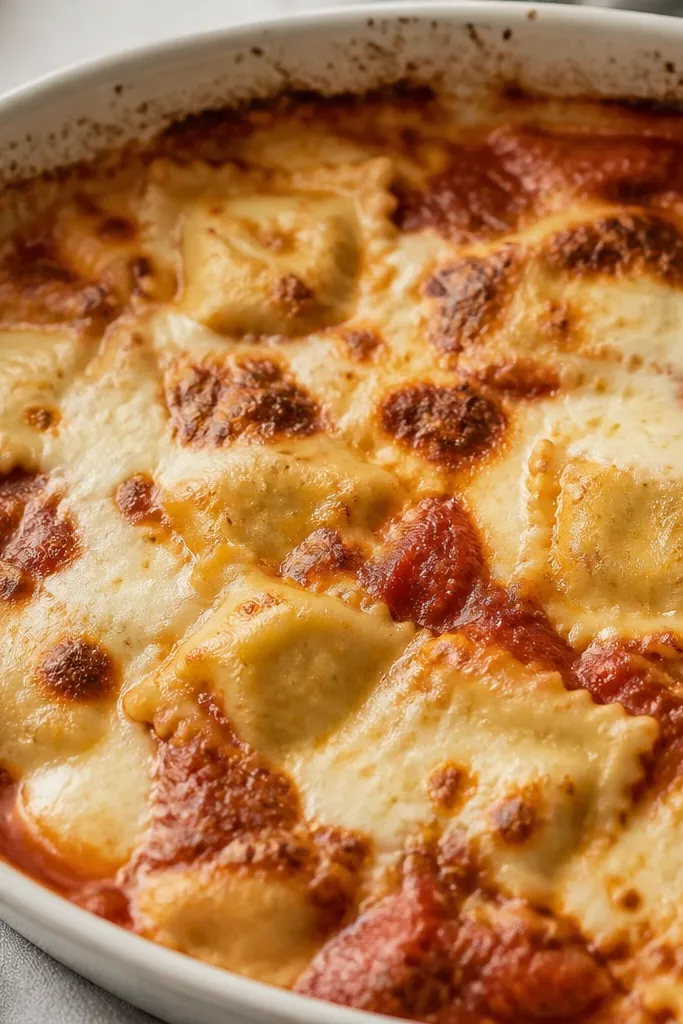
Islands happen when you don't fully bury the cheese. If you sprinkle cheese in two passes and leave tiny gaps, steam vents through and the top dries in spots. Those dry spots brown into crisp islands. It tastes better too because browned cheese has a stronger roasted flavor than just melted cheese.
First sprinkle mozzarella lightly right after you add sauce. Bake 12-15 minutes, then add a second sprinkle of mozzarella plus parmesan. Finish with 1-2 minutes broil for crisping.
Try thisPress cheese gently with your palm once - it helps it contact the surface so it crisps instead of sitting on top.
One warningAvoid a thick, wet cheese blanket - it turns into a single greasy layer.
6. Creamy center with set edges
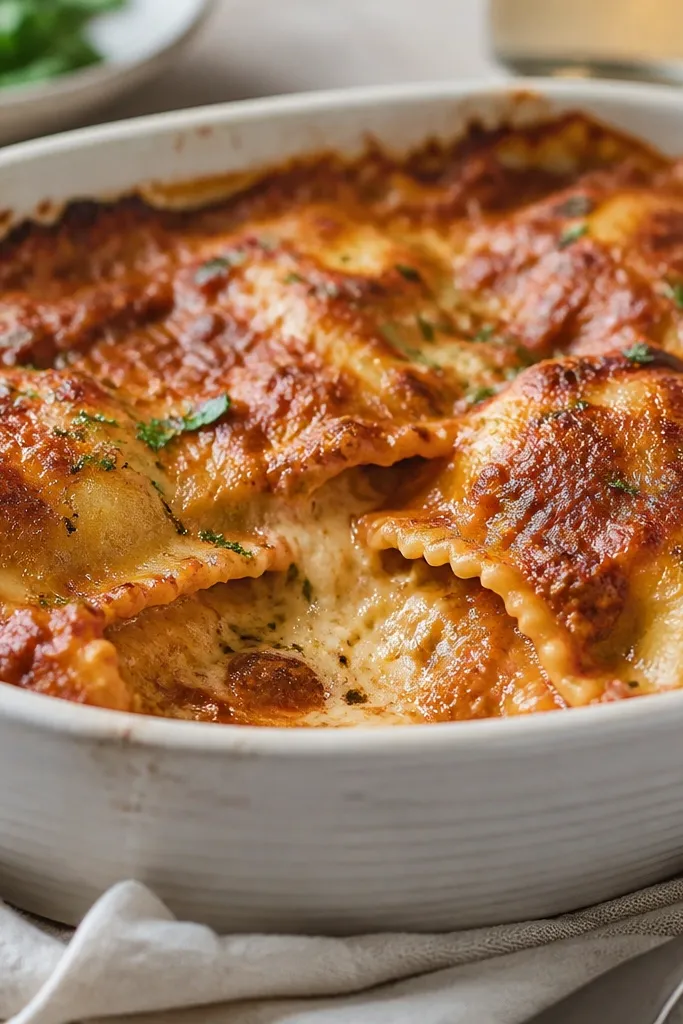
This is what you get when you bake long enough for the filling to heat through but stop before the pasta dries out. The center stays creamy because the sauce layer is thin and the cheese melts into it. The edges set more because they get more direct heat. It gives clean slices when you serve.
Bake 18-22 minutes at 425°F, then broil briefly. Rest 5 minutes before cutting so the cheese firms up. Use a wider spatula and lift from underneath so the center stays intact.
Try thisIf the edges brown faster than the center, loosely tent with foil for the first 10 minutes, then uncover for the final 8-12.
One warningDon't broil for 5-6 minutes - it dries the center and makes the pasta taste overdone.
7. Herb-flecked golden top
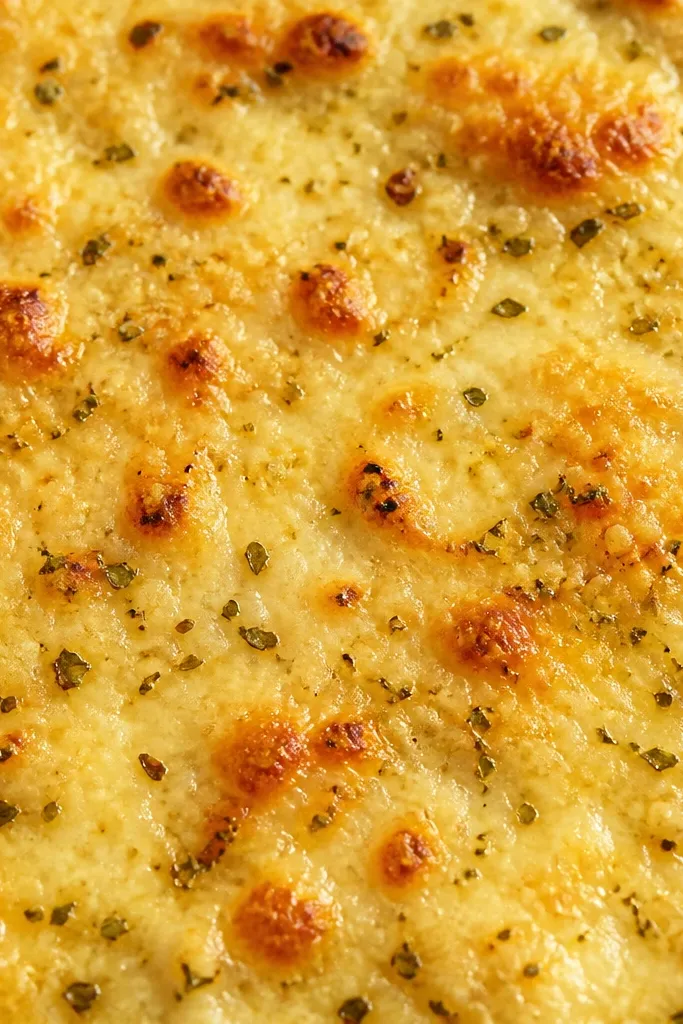
Herb flecks show up when you add dried herbs to the cheese mix instead of sprinkling fresh herbs after baking. Dried oregano browns and looks speckled, and garlic powder gives light golden spots. It makes the dish look more "finished" without adding extra steps. The smell while it bakes is strong and savory.
Mix 1 cup shredded mozzarella with 1/3 cup grated parmesan, then stir in 1/2 teaspoon dried oregano and 1/4 teaspoon garlic powder. Sprinkle over sauce and broil at the end. Keep herbs dry - wet herbs can darken unevenly.
Try thisCrush oregano between your fingers before mixing so the flecks taste brighter.
One warningAvoid fresh basil on top before baking - it turns black and looks messy.
8. Cheese pull shine
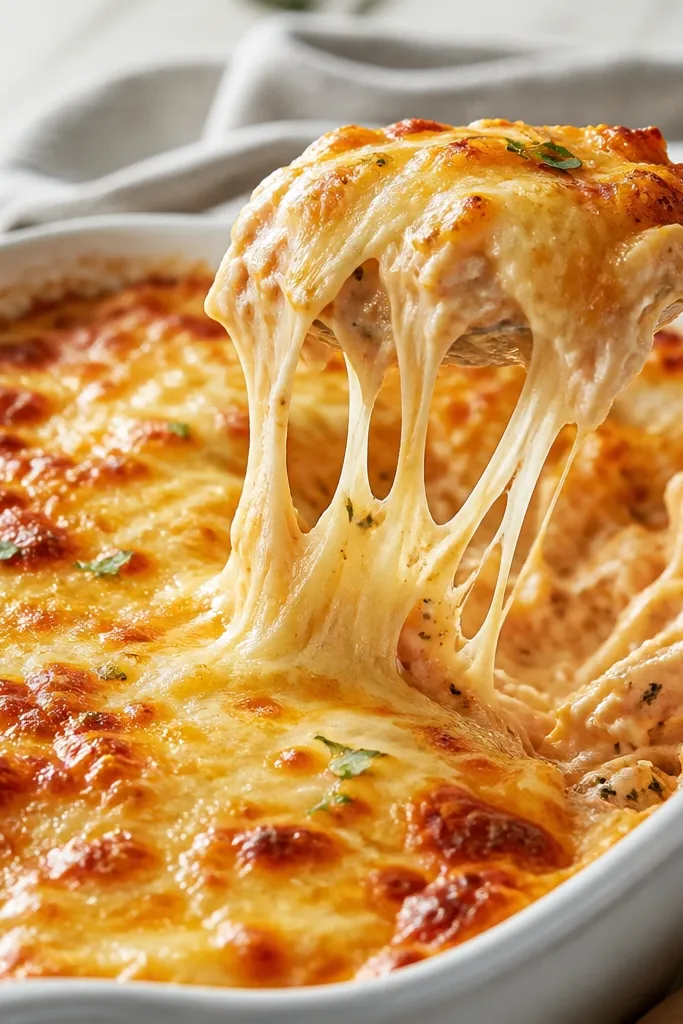
Shine and stretch come from mozzarella dominance and a short broil rather than long baking. When the cheese layer is mostly mozzarella, it melts into a stretchy surface. The parmesan adds browning but doesn't overpower the pull. This look is perfect for serving photos because it shows texture immediately.
Use 1 1/2 cups mozzarella for a 9x13 single layer, and keep parmesan at 1/3 to 1/2 cup. Broil only 60-90 seconds to brown the top without cooking the cheese too far. Serve right after a 5-minute rest so it stretches.
Try thisIf the cheese won't pull, your dish was too wet. Next time reduce sauce or simmer it down first.
One warningDon't let it sit 20 minutes before serving - the cheese sets and turns matte.
9. Browned cheese edge crown
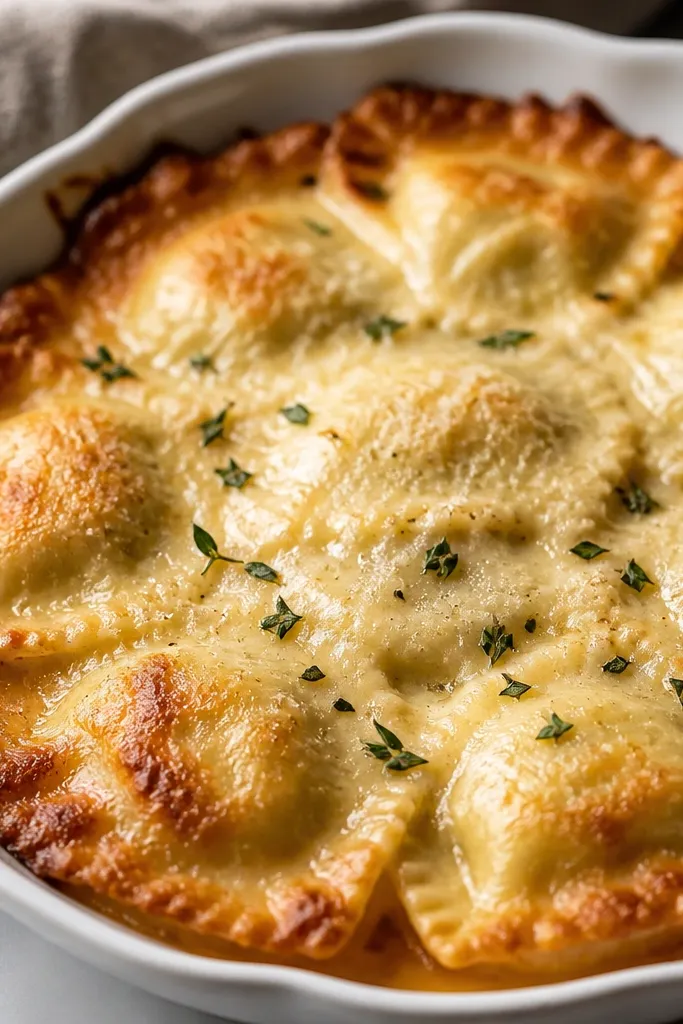
A raised edge happens when ravioli pieces sit slightly apart and sauce stays thin. Steam escapes through the gaps, and the cheese dries and browns at the edges first. It looks like a crust you'd get from a baked lasagna, but it's on ravioli. The deeper gold color reads richer in daylight.
Arrange ravioli with 1/2 inch spacing. Use a spoon to place sauce between pieces instead of smearing it flat. Add cheese over the whole surface, then broil at the end.
Try thisIf you want even spacing, lay ravioli like tiles and rotate each piece so corners don't line up.
One warningAvoid stacking ravioli - it creates steam pockets and flattens the crust.
10. Extra crisp top with a glassy blister finish
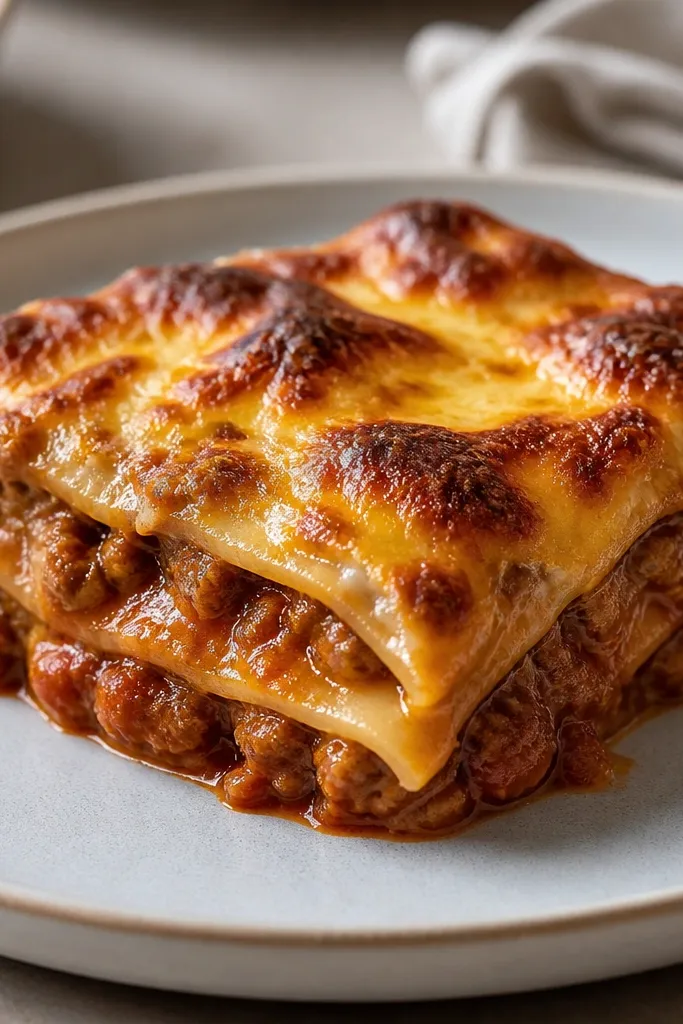
This finish is from higher heat and a dry top layer. When the oven is truly at 425°F and the dish is uncovered, moisture escapes and the cheese surface dries just enough to blister. Parmesan helps it go crisp instead of only melting. It tastes deeper because the top has roasted edges.
Preheat the oven fully and bake uncovered. After 18 minutes, increase broiler intensity if your oven allows, and broil 60 seconds - stop early. Let it rest 5 minutes so the crisp layer firms instead of collapsing.
Try thisIf your oven runs cool, add 2 minutes to bake time but keep broil under 2 minutes.
One warningAvoid foil at the end - it traps moisture and softens the blisters.