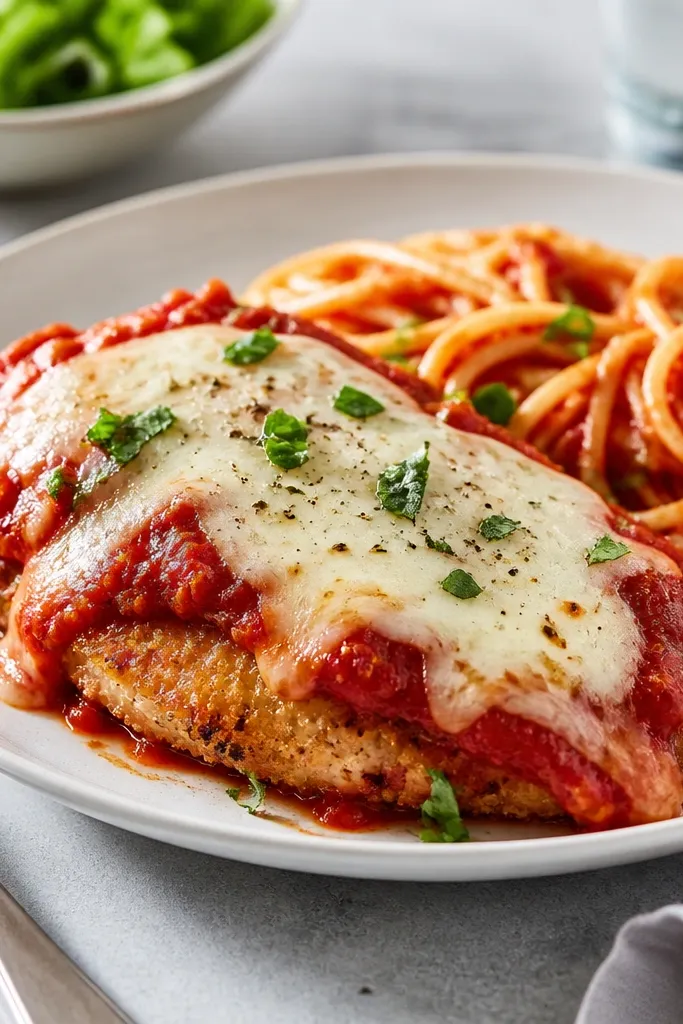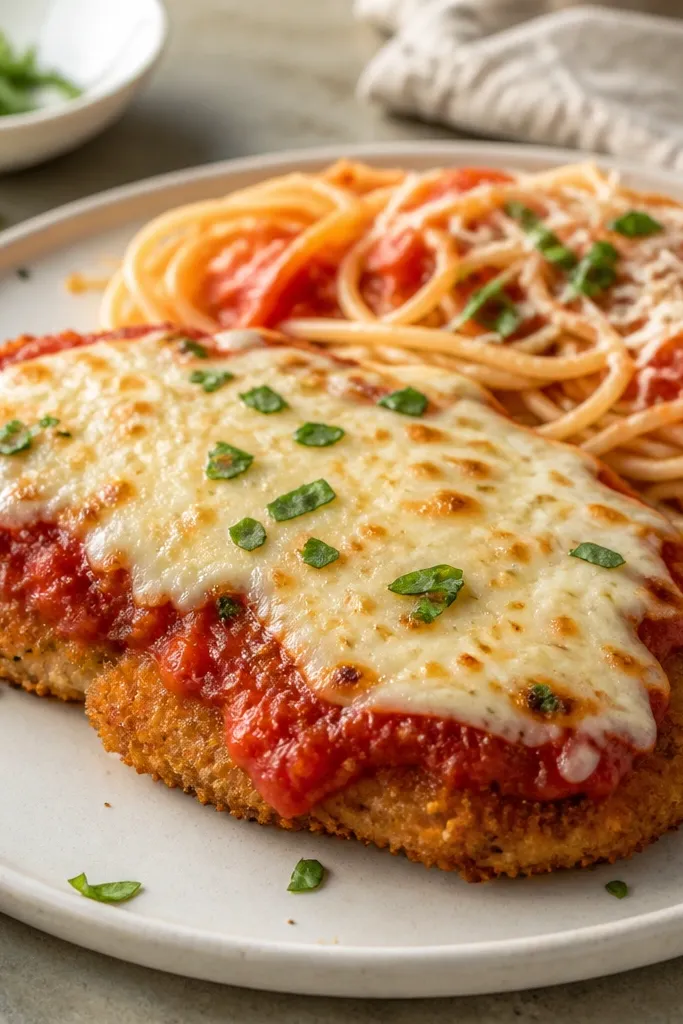
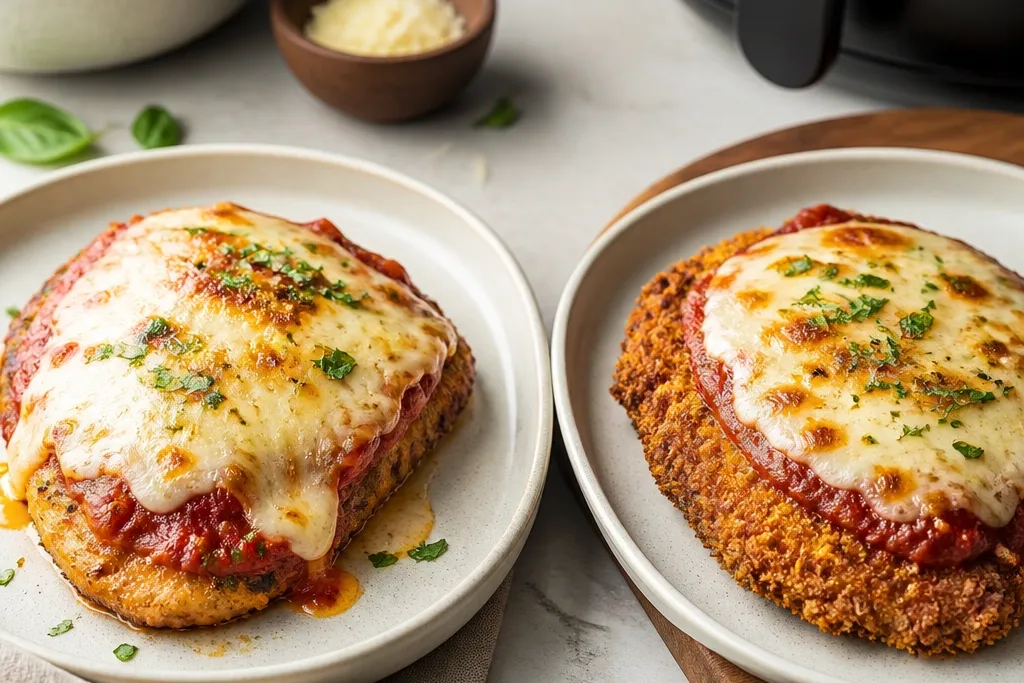
1. Oven-baked parm with browned mozzarella freckles
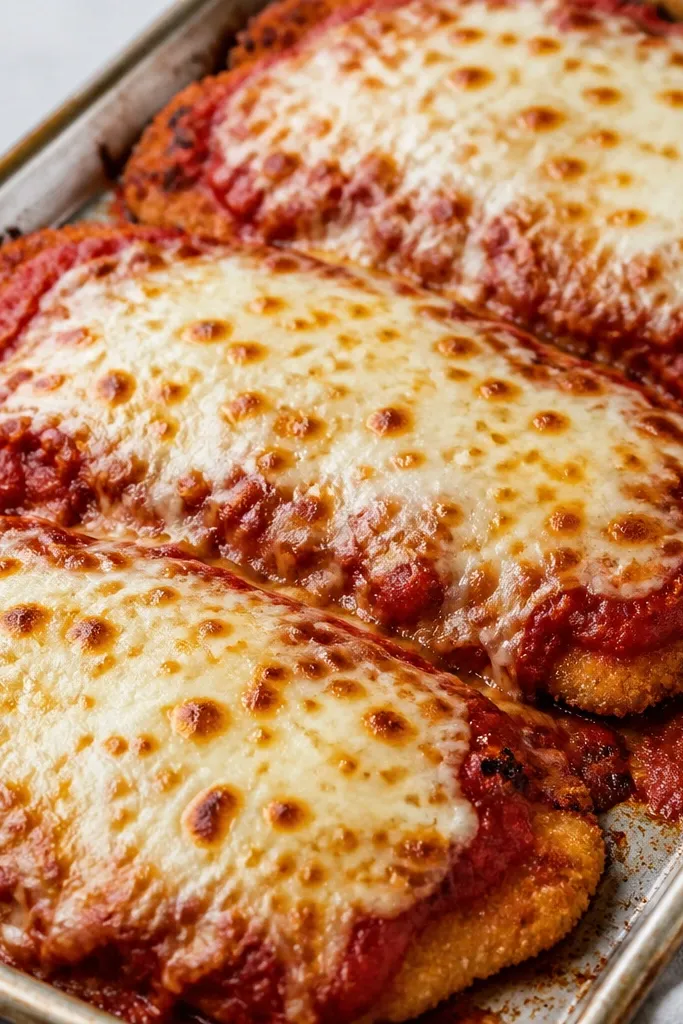
This look comes from baking long enough to set the breading, then using a short broil to brown the mozzarella. The contrast is the point: golden breading edges show through the red sauce, while the cheese has darker spots instead of one smooth melt. I like shredded low-moisture mozzarella because it browns in little freckles rather than turning stringy and pale.
Use a rimmed sheet pan and place cutlets 1 inch apart so air circulates. Bake at 425°F for about 18-22 minutes for 1/2-inch cutlets, then broil on high for 1-2 minutes with the top rack about 6 inches from the broiler. Top with sauce first, then mozzarella right before the broil so it browns and doesn't dry out.
Try thisBroil with the oven door cracked open 1-2 inches so you can pull it the second the cheese freckles. Over-broil turns it rubbery fast.
One warningDon't cover the pan with foil for the whole bake - it steams the breading and kills the crisp edge.
2. Air fryer parm with a tight, crispy breading edge
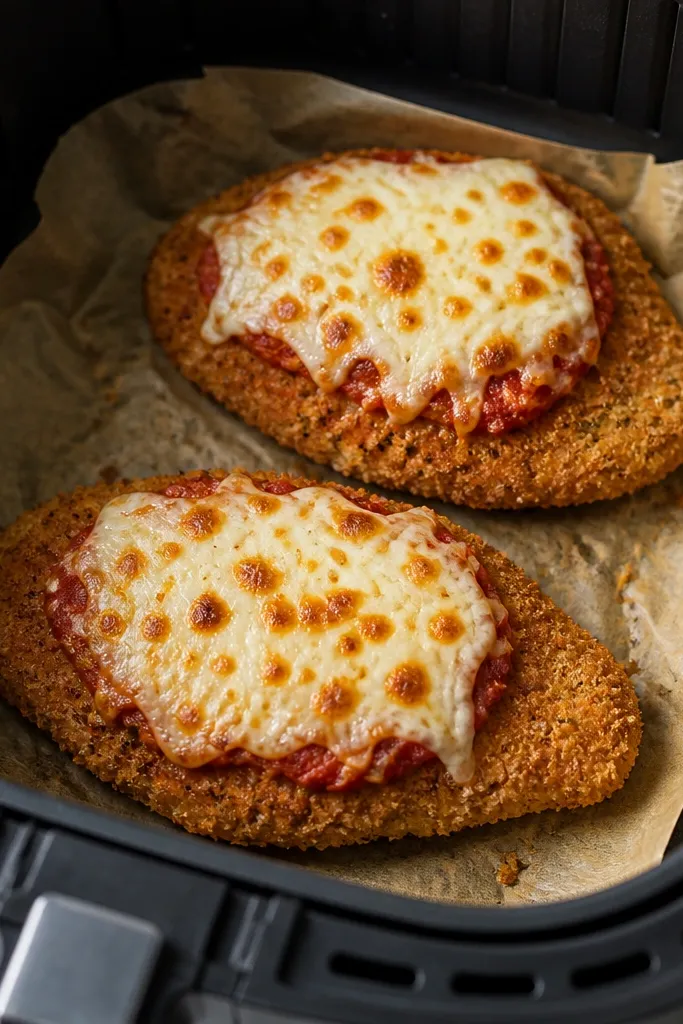
Air fryer chicken parm looks crisp because the circulating heat dries the breading quickly. The secret is adding sauce and cheese after you've finished the first cook - that way the breading doesn't take a steam bath. I also keep the mozzarella layer thinner here so it browns instead of pooling.
Cook breaded cutlets at 380°F for 10-13 minutes, flipping halfway if your basket doesn't brown evenly. Remove, spoon on thick marinara, add mozzarella, then air fry 3-5 minutes until cheese melts and spots brown. Don't stack cutlets; keep a little space between them.
Try thisSpray the basket lightly with oil and spray the top of the chicken right before the first cook. It helps the breading set without making it greasy.
One warningDon't crowd the basket - crowded air fryers steam the breading and it turns soft at the edges.
3. Sauce-first vs cheese-first plate test
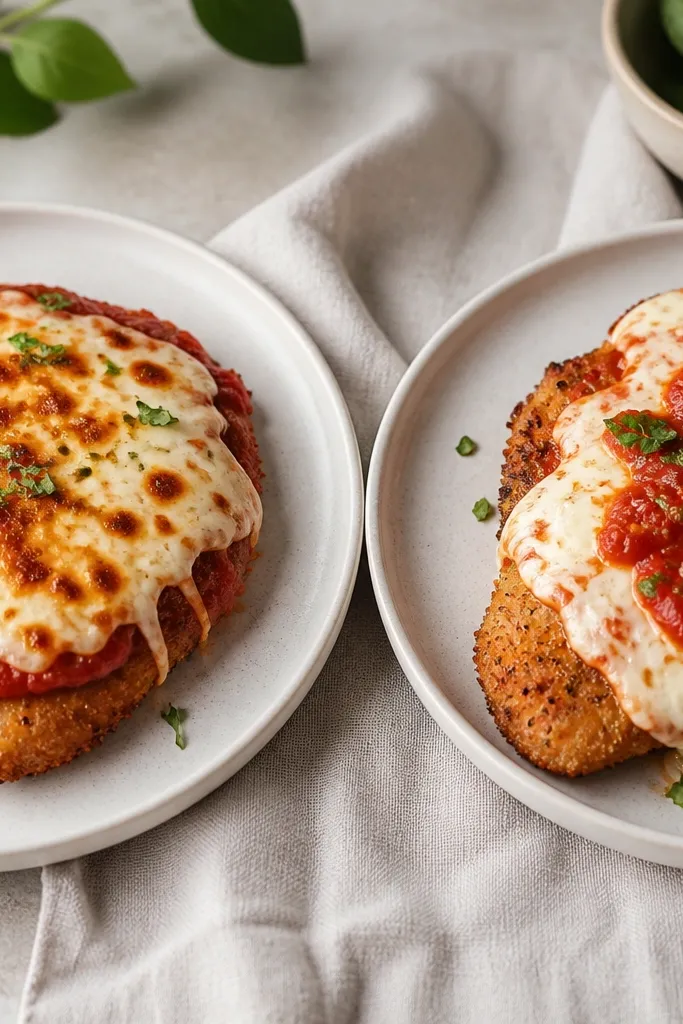
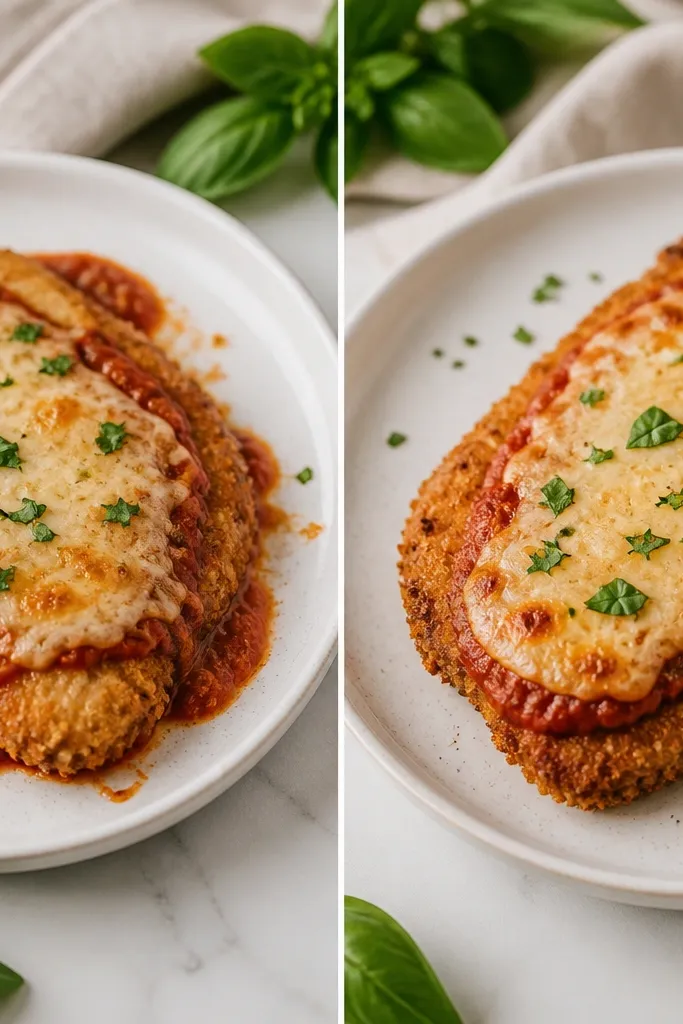
This comparison shows why I always put sauce under mozzarella for the baked version. Sauce under cheese helps the cheese seal to the meat and keeps it from sliding off. Cheese under sauce looks messier because the sauce can't grip the melted layer cleanly.
For the baked look, spoon marinara on the cutlet, then add mozzarella. For the air fryer look, I still do sauce under cheese, but I keep the sauce portion smaller so the cheese browns without soaking the breading.
Try thisUse a spoon to spread sauce in a thin oval leaving 1/2 inch border around the breading edge.
One warningDon't flood the top - sauce pooling makes the crust look pale and wet.
4. Thick marinara layer with visible texture
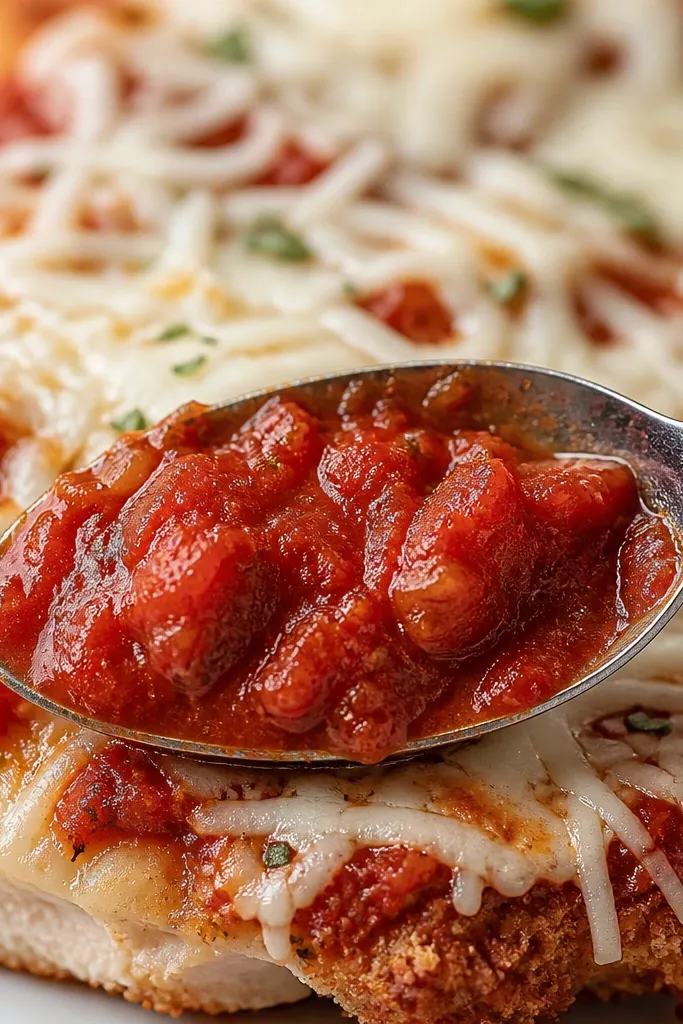
Chunky sauce makes the whole dish look more "restaurant." It also protects the breading because it doesn't run. When the sauce is thick, the mozzarella browns on top instead of sinking into wet red liquid.
If your jarred marinara is thin, simmer it 5-8 minutes until it coats the back of a spoon. Spread it in a thin layer so it covers the chicken but doesn't reach the crust edge. Finish with mozzarella right after sauce so it melts evenly.
Try thisStir in 1 teaspoon tomato paste if the sauce tastes watery after simmering.
One warningDon't use straight thin spaghetti sauce - it looks shiny and makes the crust go limp.
5. Breading that looks dry and craggy
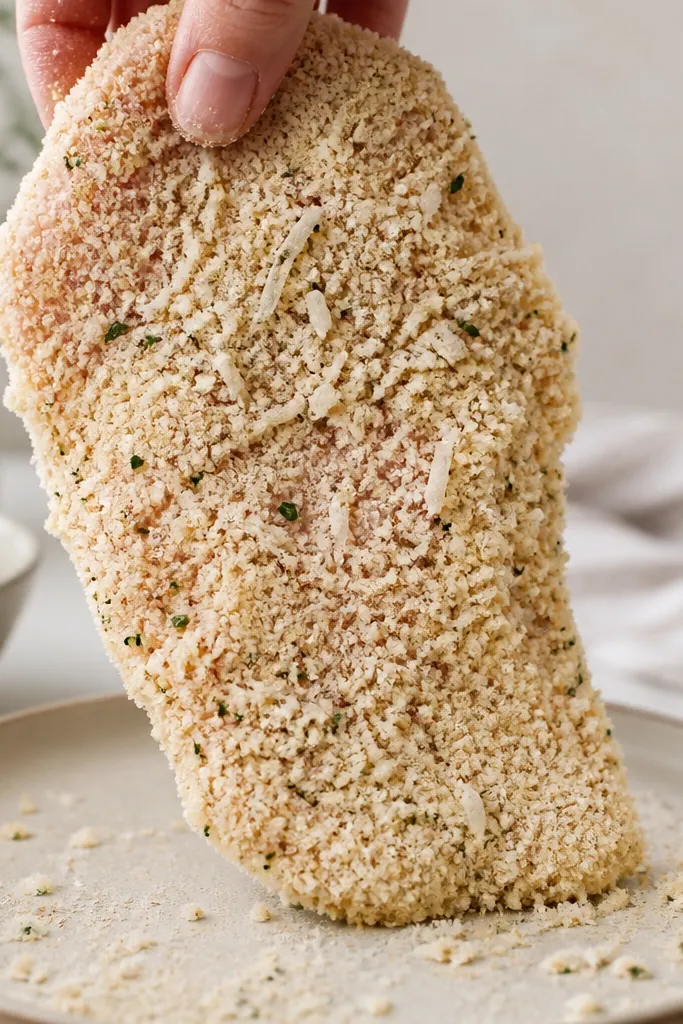
That matte, craggy breading is what you're aiming for before it hits heat. It means the chicken surface is dry enough for the egg to grab and the crumbs to set. When the surface is shiny, it usually turns gummy in the oven and soft in the air fryer.
Pat chicken dry, then dredge in flour, dip in beaten egg, then press into seasoned breadcrumbs mixed with finely grated parmesan. Let it sit 5 minutes so the coating hydrates slightly and sticks. Add a light spray of oil before baking or air frying.
Try thisUse panko for the outer layer if you want that crunchy bite with visible texture.
One warningDon't skip the flour - egg alone makes the coating slide and it looks patchy after cooking.
6. Mozzarella blend with browned edges
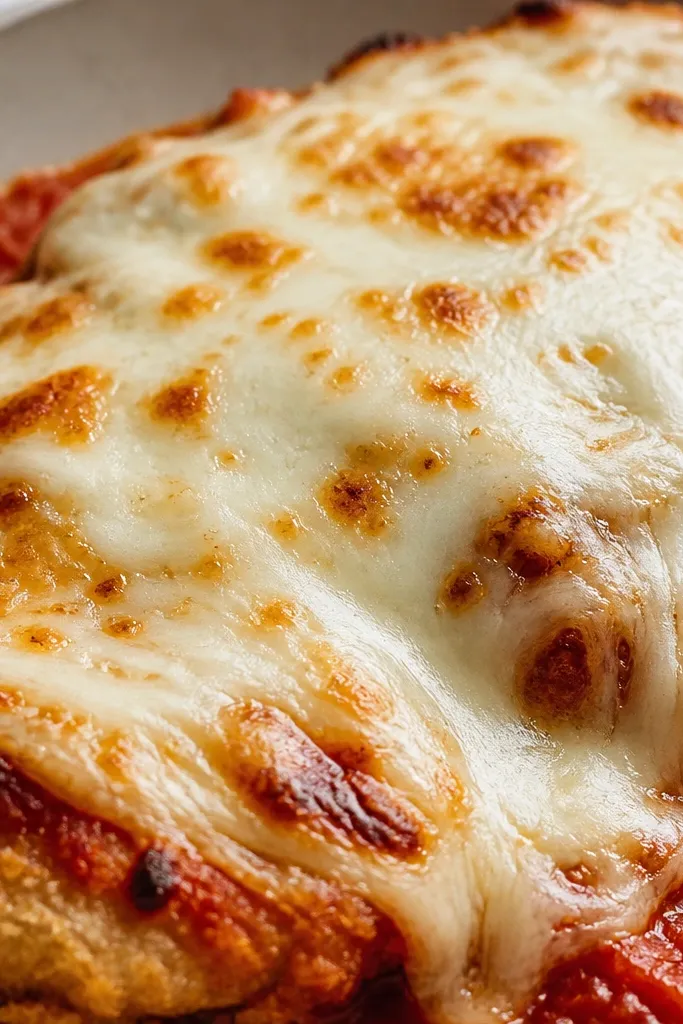
A low-moisture mozzarella blend browns faster and looks more appetizing. I mix shredded mozzarella with a small handful of part-skim shredded for stretch and a slightly drier melt. The browned edges come from exposing cheese to high heat at the end.
Use about 1/3 cup shredded mozzarella per 1 cutlet, spread evenly but not thick. Bake first, then broil briefly or air fry the cheese topping after the initial cook. If you use fresh mozzarella, pat it very dry or it won't brown well.
Try thisShred your own if you can. Pre-shredded has anti-caking agents that slow browning.
One warningDon't pile on a mountain of cheese - it turns into a greasy slide instead of browned bites.
7. Sheet pan method with rack-like airflow
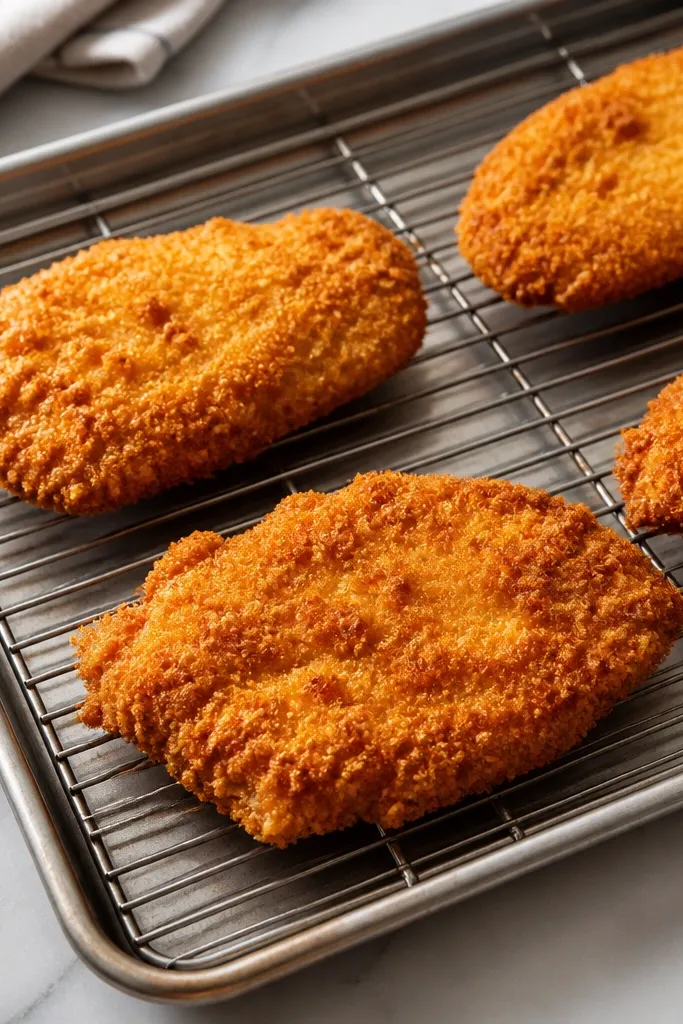
Using a wire rack keeps the bottom of the breading from steaming in its own juices. You get more even browning, especially on the side that would normally touch the pan. This is the oven version of "air fryer crisp," just slower.
Place a wire rack on a sheet pan and lightly oil the rack. Bake at 425°F until the breading is set and golden, about 18-22 minutes for medium cutlets. Finish with broiler after sauce and mozzarella so the top browns.
Try thisIf you don't have a rack, you can flip once halfway to reduce pale spots.
One warningDon't bake on a bare sheet pan if you care about crust texture - the bottom stays softer.
8. Single-layer air fryer spacing
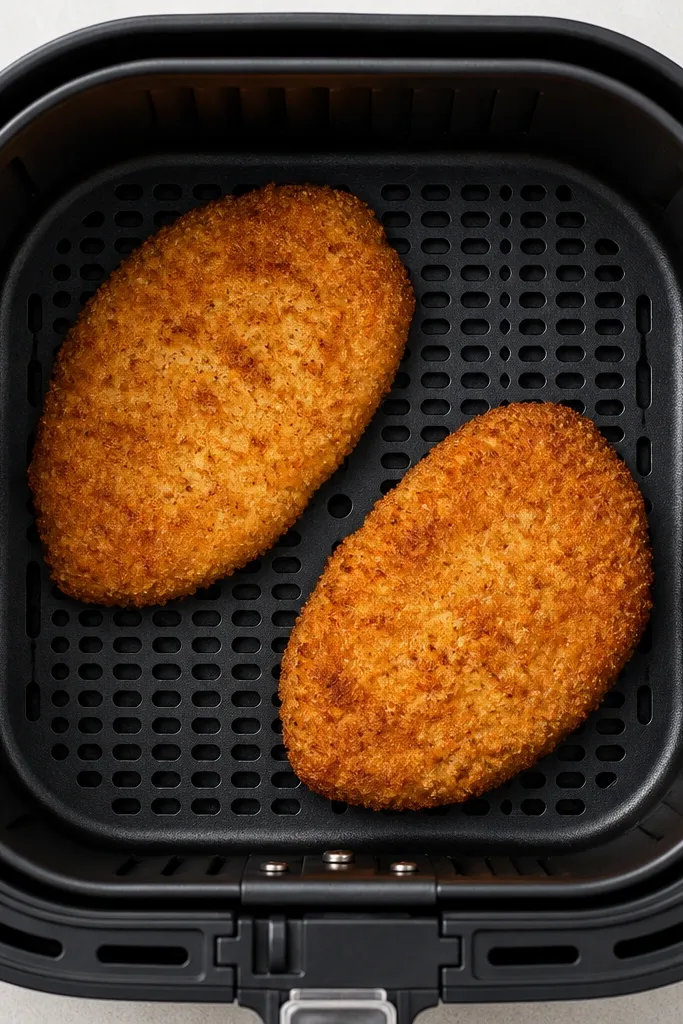
Air fryers need space so hot air can move. The gaps are visible in the final look: even browning, less soggy coating, and cleaner cheese melting. When cutlets touch, steam builds where they meet and the breading dulls.
Cook 1-2 cutlets at a time depending on your basket size. Keep at least 1 inch between them. Flip halfway if your model doesn't brown evenly, and keep sauce portions modest so the top doesn't steam.
Try thisUse a timer for the first cook, then check at the 2-minute mark during the cheese finish so it doesn't over-brown.
One warningDon't stack cutlets - the underside turns pale and soft.
9. Rest-and-set timing for prettier cheese edges
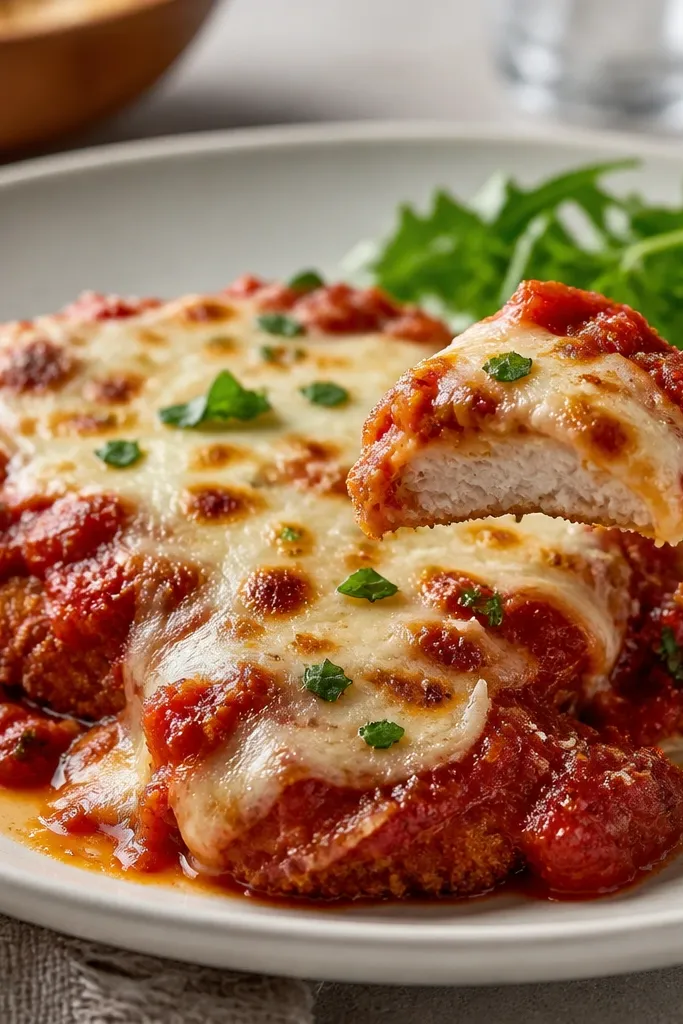
Resting makes the cheese stop sliding and lets the breading firm up. The dish looks more "cutable" instead of collapsing into sauce. I also notice the flavors settle - the marinara tastes less sharp and more blended once the heat drops a bit.
After baking or air frying, rest the cutlets on the pan for 2 minutes, then plate. If you rest longer than 8 minutes, the cheese cools and the breading can lose crispness. Serve right after resting for best texture.
Try thisWhile it rests, heat your pasta sauce or noodles so everything hits the table at the same time.
One warningDon't plate immediately and slice hard - the cheese is still molten and it will smear.