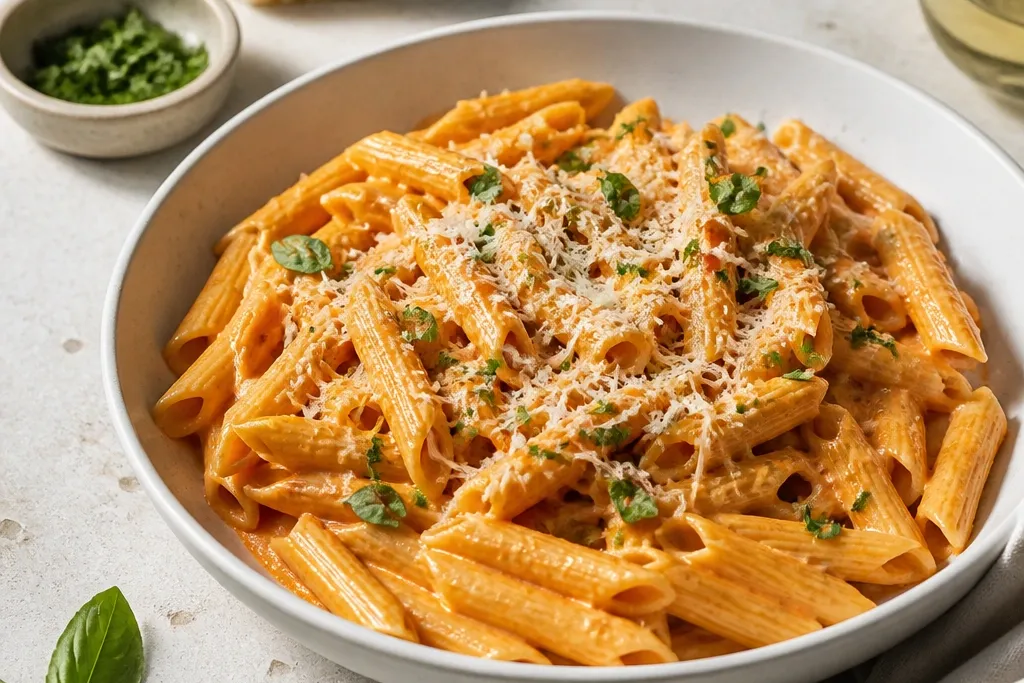
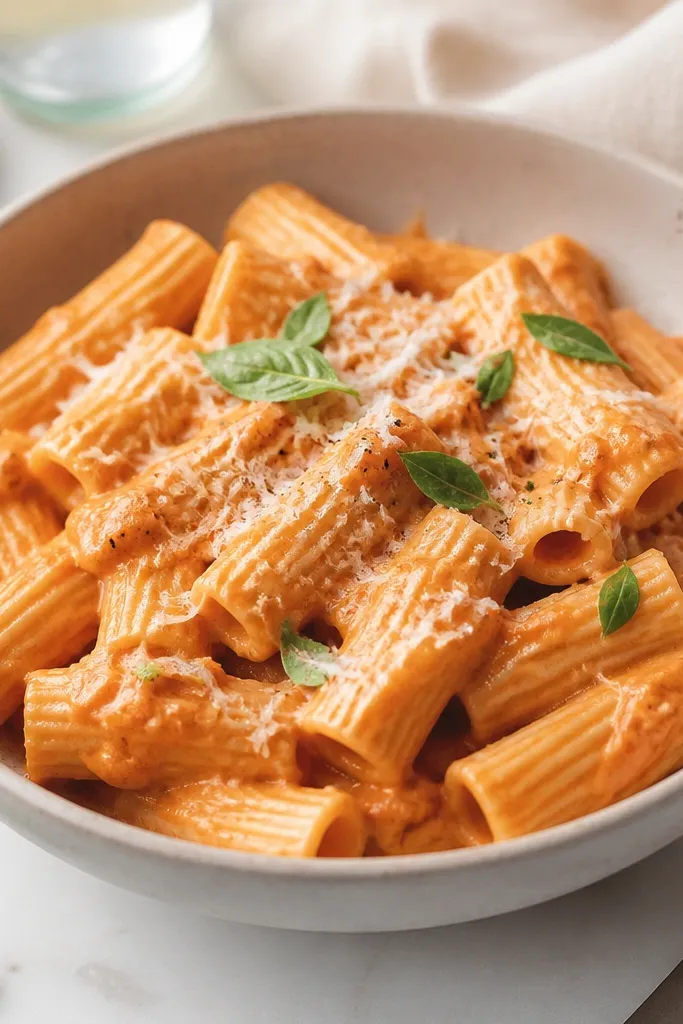
1. Rigatoni in Glossy Blush Cream Sauce
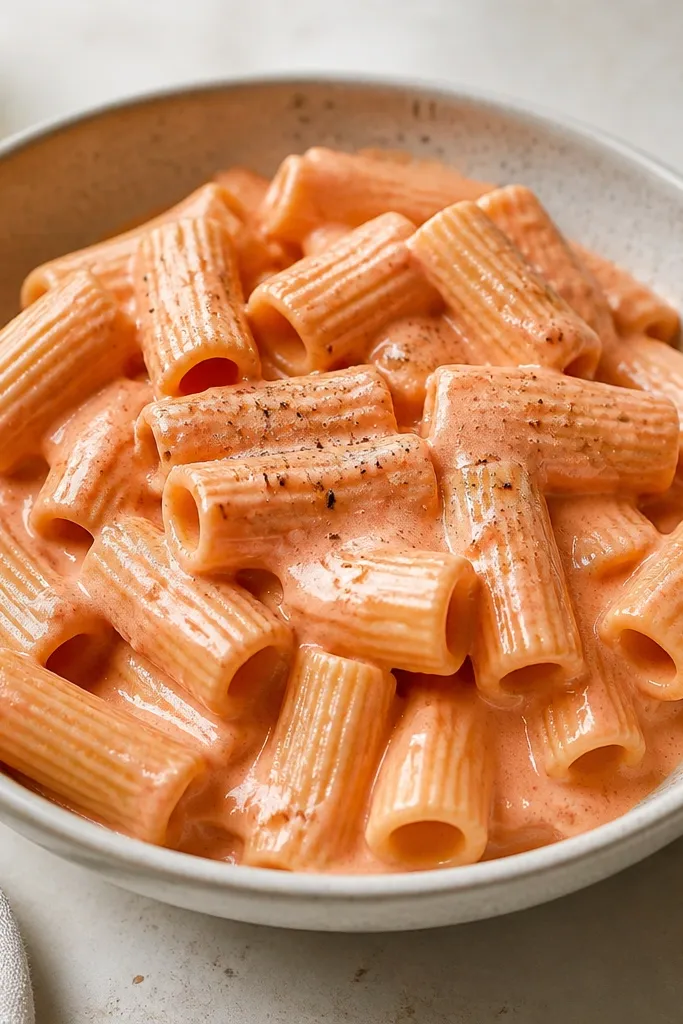
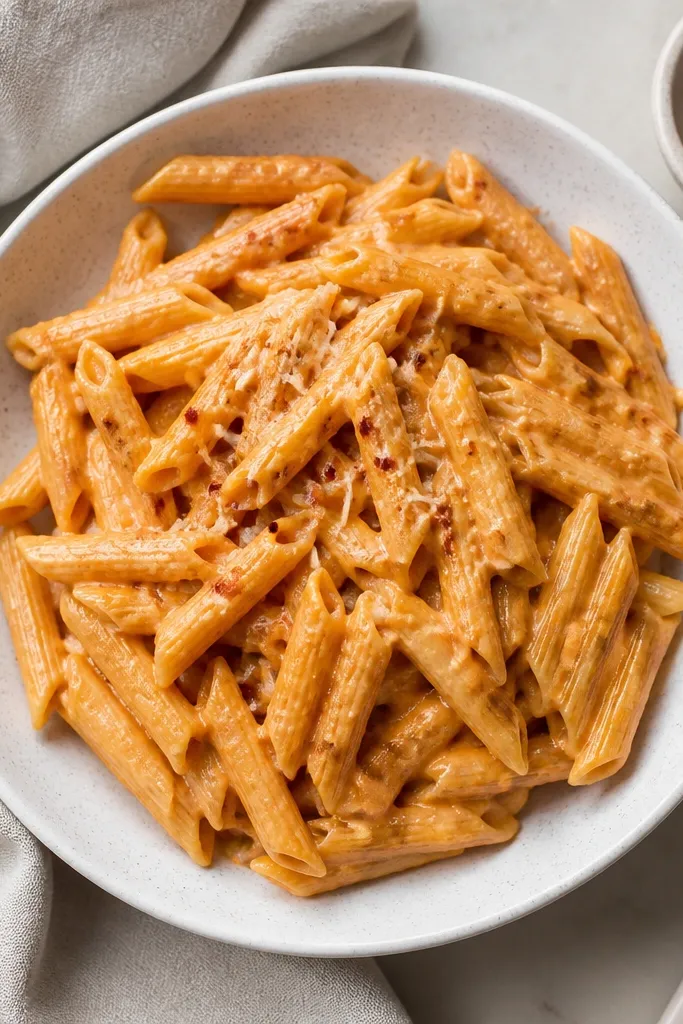
This look is the creamy target. The sauce is pale blush from tomato paste or crushed tomatoes cooked down just enough to lose raw tang. Heavy cream makes it smooth, and the glossy sheen comes from emulsifying pasta water with cheese off the heat. You can see it in the way the sauce clings to the ridges instead of pooling.
Use rigatoni with a ridged surface so the sauce catches. Keep the sauce thickness around "thin pudding" - if it looks too thick in the pan, pasta water will loosen it when it hits the noodles. Top with cracked black pepper and a small scatter of chopped parsley for green contrast.
Try thisWhen the sauce coats the spoon, turn off the heat and stir in cheese. That one step keeps it smooth.
One warningDon't boil the cream hard - it turns glossy sauce into grainy sauce fast.
2. Penne Rigate with White-Creamy Center and Pink Edges
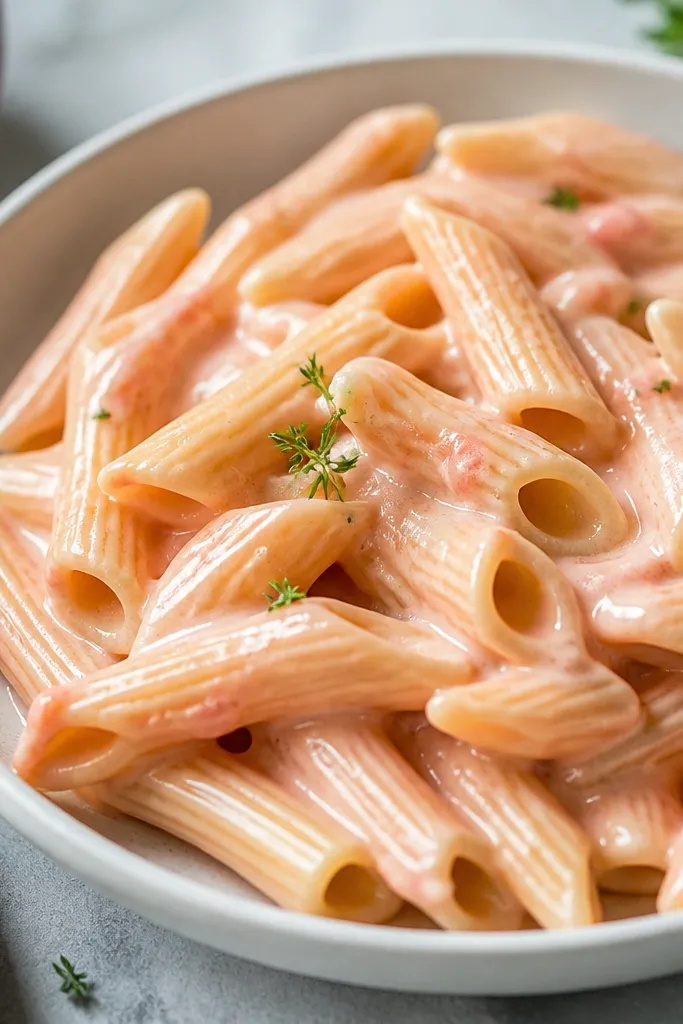
This is what happens when you emulsify well but don't over-reduce. The pink tint comes from tomato paste, while the white creaminess shows where pasta water loosens the sauce and spreads it evenly. It looks restaurant-y because each noodle has a thin, even coat instead of thick globs. The texture reads creamy because it's smooth and glossy, not chunky.
Choose penne rigate with ridges and cook it until just shy of al dente. Reserve more pasta water than you think you need - about 1 cup for 4 servings. Stir the noodles into the sauce off-heat for 30 to 60 seconds so the coating locks in.
Try thisAdd pasta water a splash at a time until the sauce looks like it wants to cling, not run.
One warningSkip pre-grated cheese - it can make the sauce look dull and slightly grainy.
3. Bacon Pancetta Style with Speckled Cheese Snow
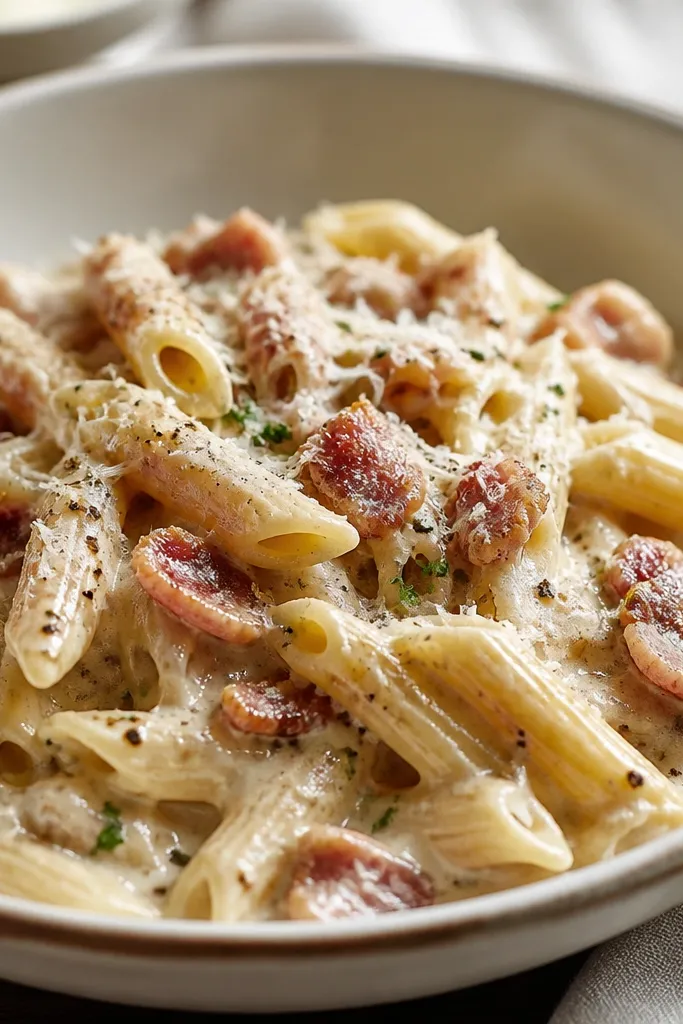
This look is about contrast. Browning the cured meat gives little amber bits that pop against the pale cream. The "snow" is freshly grated cheese melting into the hot sauce at the end, so you get tiny glossy flecks instead of a solid cheese layer. It tastes richer because the fat from bacon carries the tomato-cream flavor.
Render chopped pancetta or thick-cut bacon in a skillet until crisp. Keep the fat for cooking the aromatics and vodka - don't pour it out. Finish with a mix of Parmesan and Pecorino Romano for sharper flavor and better melt.
Try thisCook the meat first, then lower heat before adding garlic and vodka so garlic doesn't taste burnt.
One warningDon't add the cheese while the sauce is boiling - you'll get oily separation.
4. No-Meat Creamy Vodka Pasta with Roasted Tomato Depth
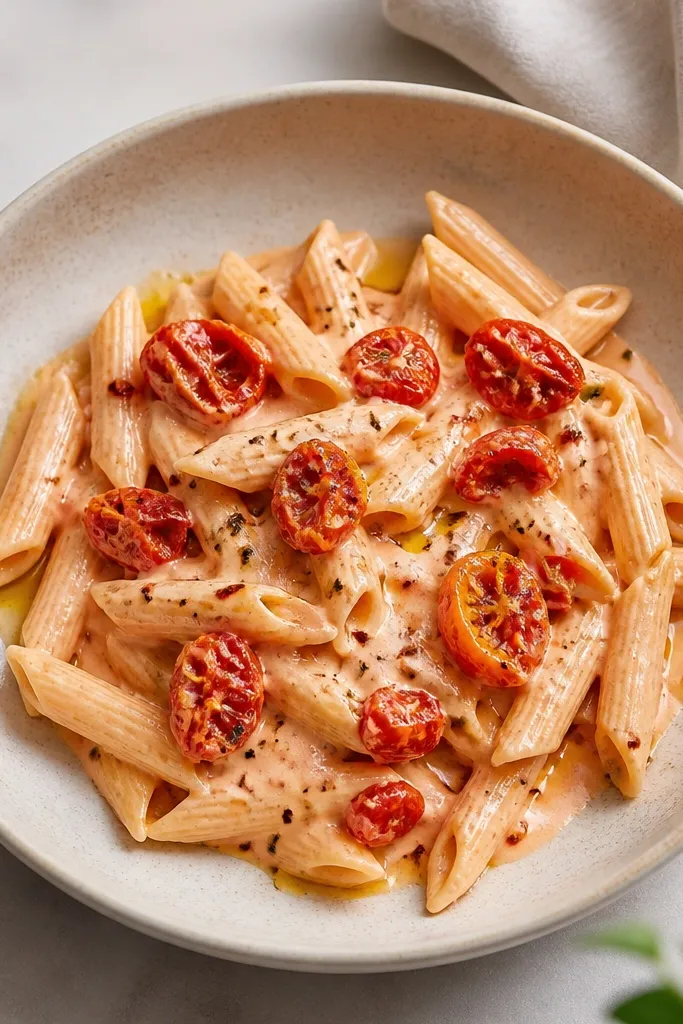
You still get creamy without meat by building flavor in the tomato step. Roasting cherry tomatoes (or using a good tomato paste cooked in oil) gives sweetness and depth that vodka and cream amplify. The sauce looks clean and smooth because there are no meat bits to break up the texture. Olive oil drizzle adds a glossy finish and helps the sauce look "silkier."
Sauté tomato paste in olive oil until it turns brick-red and smells deeper, then add vodka and simmer down. Stir in cream and pasta water, then off-heat add cheese. For topping, roast tomatoes at 425°F for 12 to 15 minutes, then scatter on top right before serving.
Try thisUse a pinch of smoked paprika if you miss the bacon flavor - it's subtle, not smoky-bbq.
One warningDon't rely on raw canned tomatoes - they make the sauce taste flat and watery.
5. Extra Pepper Finish with Dark Flecks
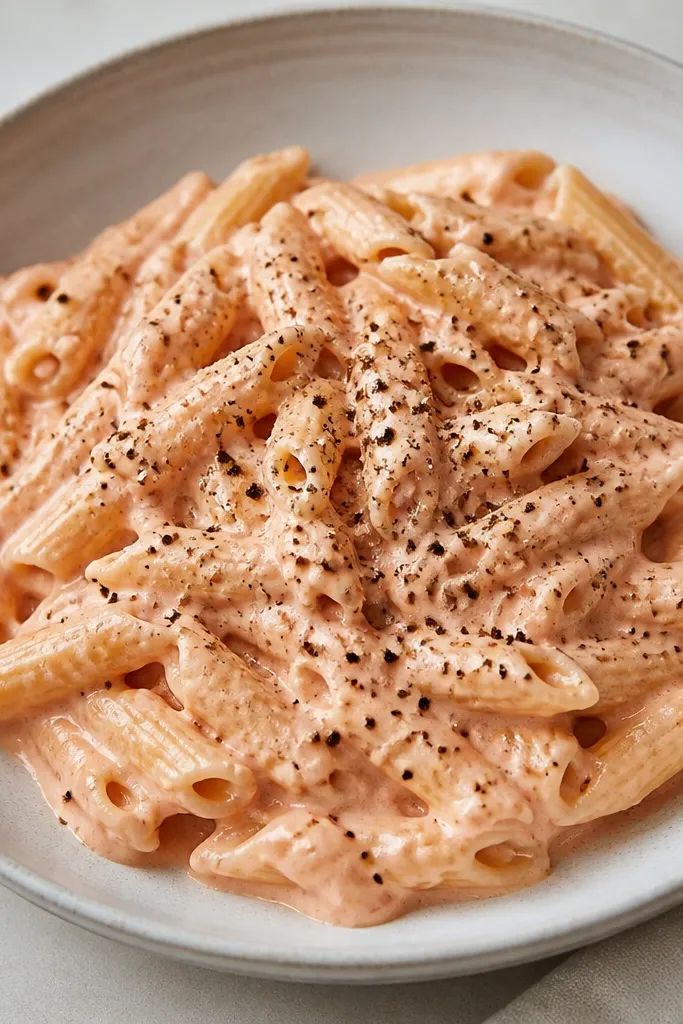
This look is for people who like their sauce to taste awake. The pepper gives a sharp aroma that cuts through creaminess, so the dish doesn't feel heavy. The sauce stays creamy because the pepper goes on top after cooking, not simmered in. It also photographs well because the contrast is strong.
Grind pepper fresh at the end. If you want it more aromatic, toast whole peppercorns in a dry pan for 30 seconds, then grind. Keep parsley minimal so the pepper specks stay the star.
Try thisAdd pepper in two passes - a small amount in the sauce and the rest on top for that restaurant finish.
One warningDon't use pre-ground pepper - it fades and tastes dusty.
6. Garlic-Butter Vodka Sauce with Yellow Gloss
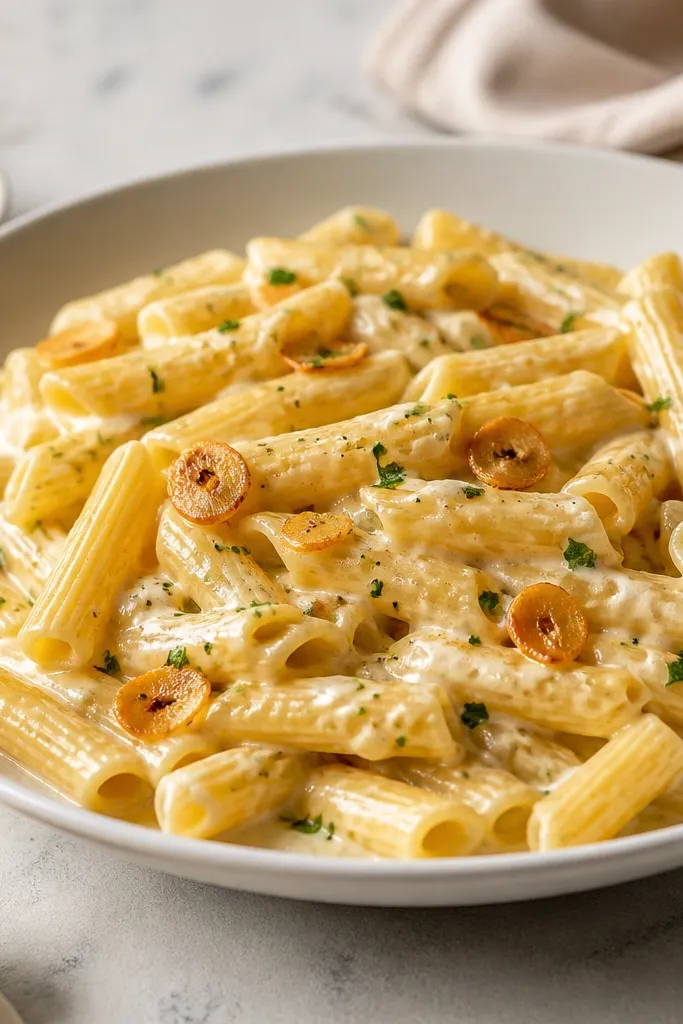
Butter changes the look. When you add a small amount of butter to the cream base, you get a warmer color and a silky mouthfeel that feels richer without extra thickness. Golden garlic slices add sweetness and aroma, and you still keep that creamy vodka pasta vibe. The sauce looks "wet" in the best way because emulsified fat holds the shine.
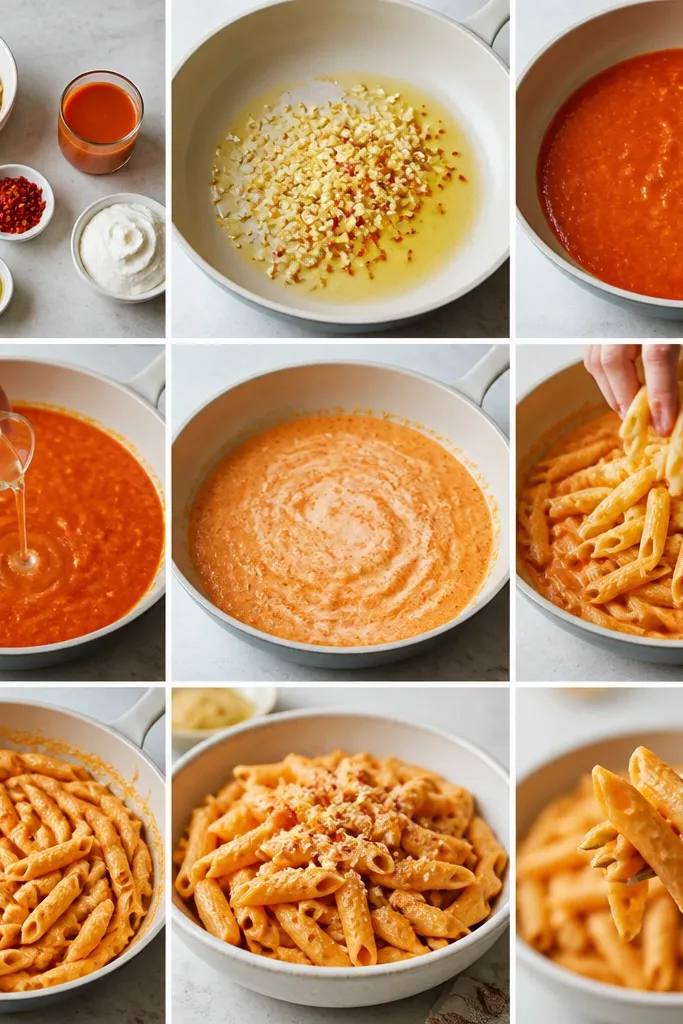
Use 2 tablespoons butter for 4 servings, melted with olive oil. Cook garlic just until fragrant, then add vodka and reduce. Finish with cream and cheese off-heat, then toss with pasta water until glossy.
Try thisIf garlic starts browning, lower the heat - pale gold tastes sweet, dark tastes bitter.
One warningDon't rush the vodka reduction - sharp alcohol ruins the creamy feel.
7. Vodka Pasta with a Thin Cheese Ribbon
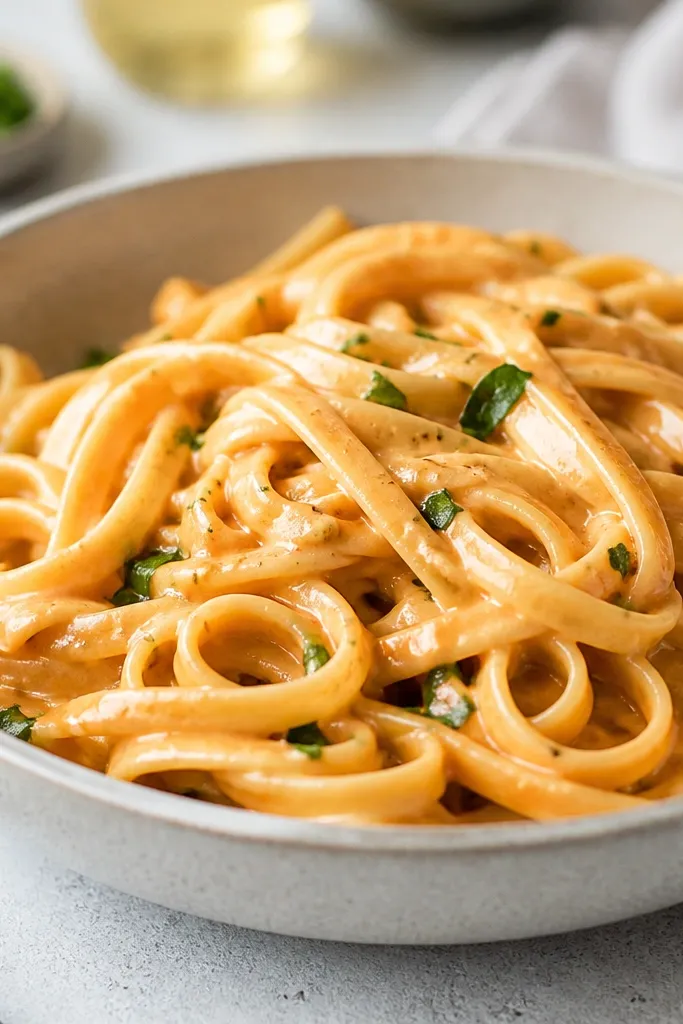
This look happens when you add cheese gradually and keep the sauce slightly looser than you want. The cheese melts into the sauce and forms a thin ribbon that clings. It tastes more balanced because you're not over-thickening with dairy. The result feels creamy but not heavy.
Turn off the heat before cheese. Add Parmesan 1/4 cup at a time, stirring until melted, then add another small handful. If it tightens up, loosen with pasta water. Toss the noodles back into the pan for 30 seconds so everything coats evenly.
Try thisGrate cheese yourself - the melt point is better and the sauce looks smoother.
One warningAvoid dumping all cheese at once - it can clump and make the sauce look dry.
8. Sunset Pink Vodka Pasta with Tomato Paste Concentrate
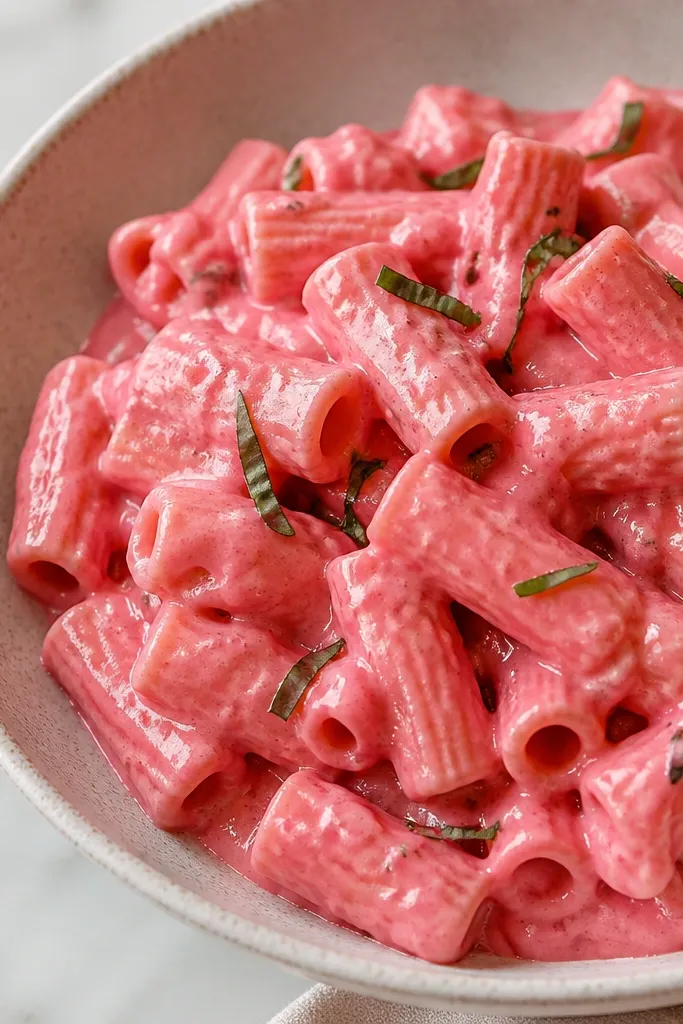
If you want a stronger pink color without tasting tomato-heavy, cook tomato paste in fat until it darkens and smells sweeter. Then vodka deglazes and cream turns it into a smooth blush-sunset color. The sauce looks thicker because the paste concentrate adds body, but it stays creamy when you emulsify with pasta water. This is the "pretty bowl" version.
Use 2 to 3 tablespoons tomato paste for 4 servings. Cook it in olive oil or bacon fat for 1 to 2 minutes until brick-red. Add vodka, scrape the browned bits, then simmer down and add cream.
Try thisTaste the sauce before cheese. If it tastes too tomato-forward, reduce a little more vodka before adding cream.
One warningDon't skip the paste cooking step - it tastes metallic and the color looks flat.
9. Side-Plate Garlic Breadcrumb Crunch
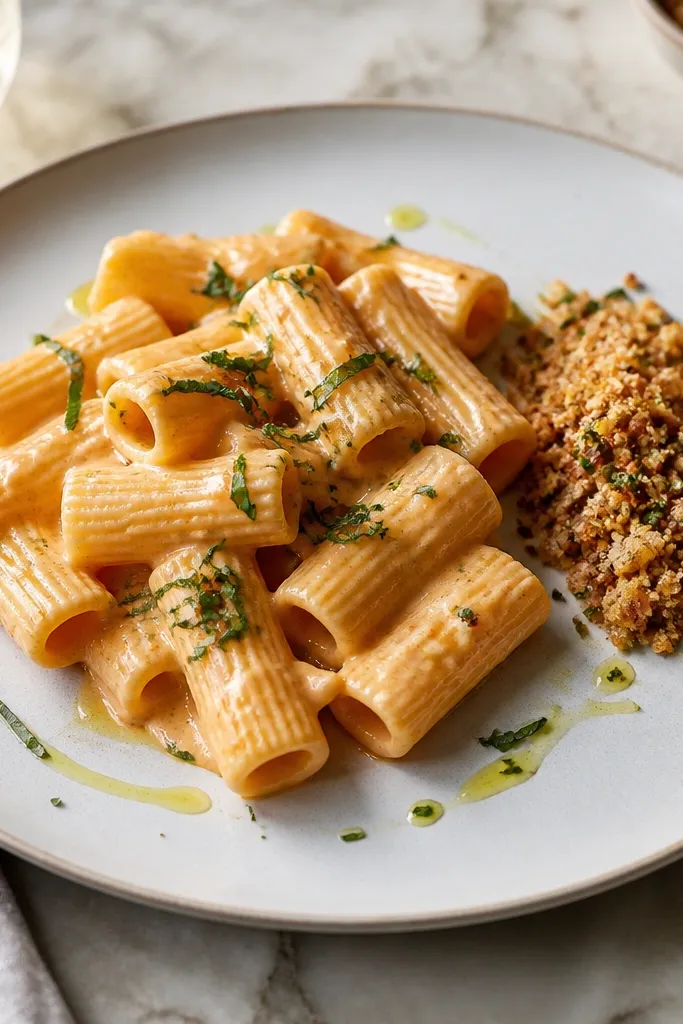
This is an aesthetic trick and a texture trick. The sauce stays smooth and creamy, while the crunch gives contrast so it doesn't feel one-note. Breadcrumbs also look great in photos because they add warm brown specks against pale pink sauce. I like serving it on the side so the noodles stay creamy longer at the table.
Toast breadcrumbs in olive oil with minced garlic until golden, then salt and a pinch of chili flakes. Keep them separate from the hot pasta until serving. Sprinkle right before eating so they don't go soft.
Try thisUse panko for crunch - regular breadcrumbs go pasty faster.
One warningDon't toast garlic in butter alone - it can scorch and taste bitter.