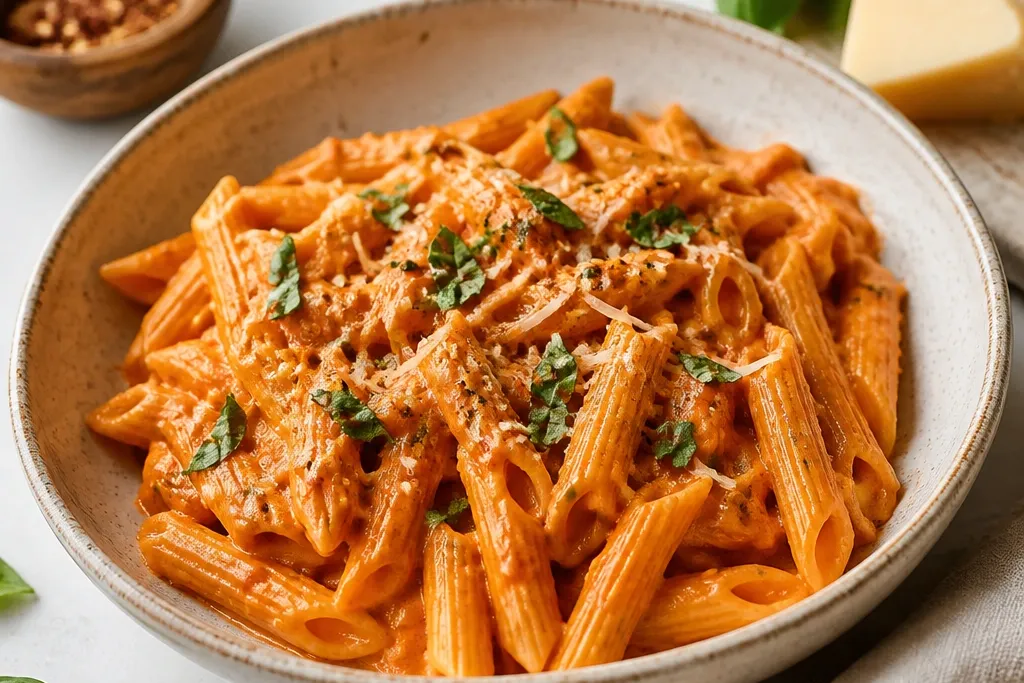
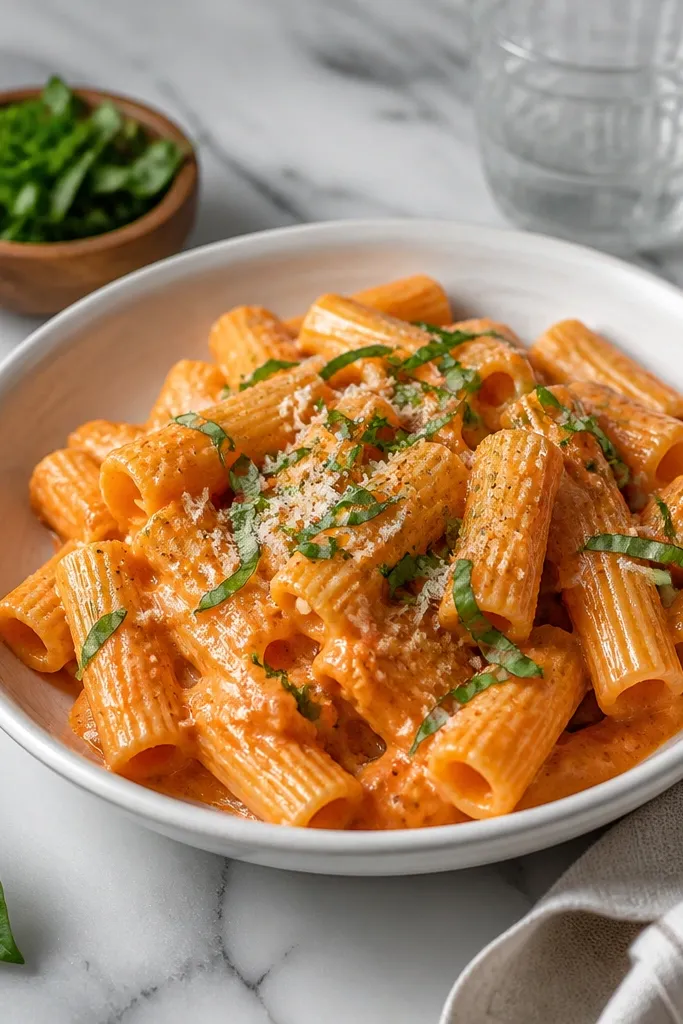
1. Spoon-Coat Creamy Red Finish
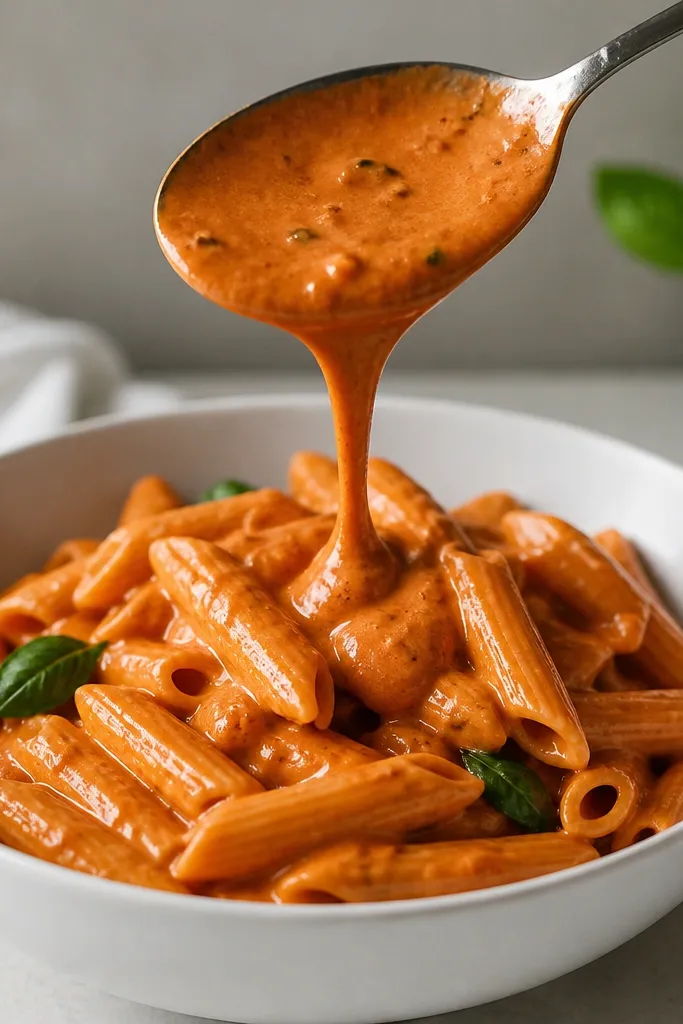
That thick ribbon is the visual cue that the vodka has simmered out and the cream has emulsified with the tomato. The color should be a muted rosé-pink, not bright cherry-red and not pale beige. When it's right, the sauce looks like it has body - it doesn't pool around the pasta.
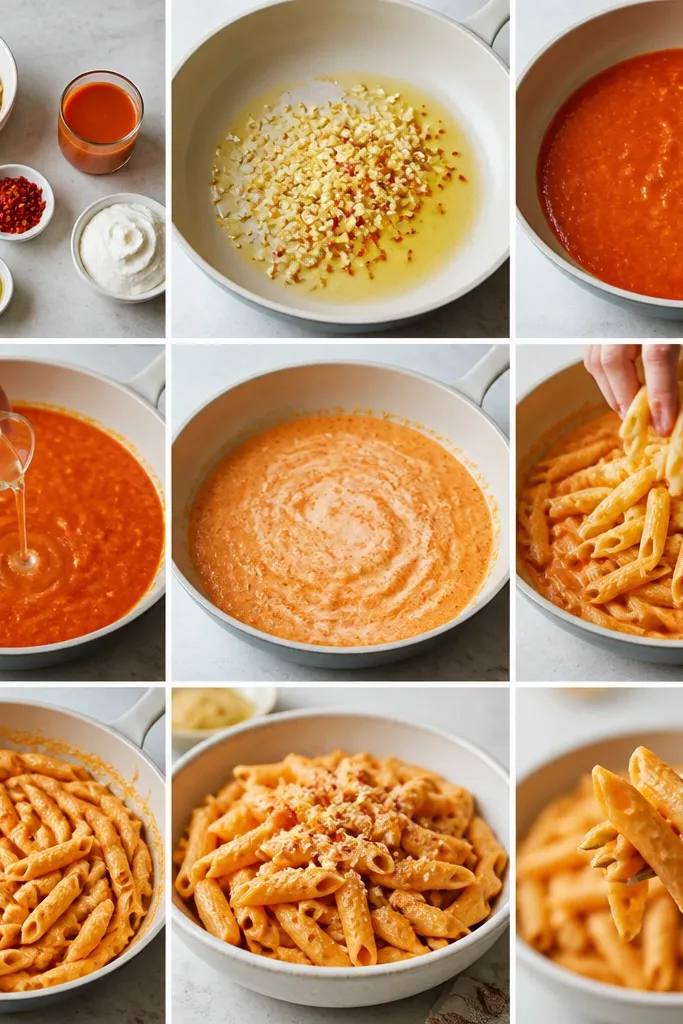
Aim for a reduction where the sauce coats the back of a metal spoon. If it runs off instantly like water, simmer 2 more minutes. If it looks too tight and matte, add 1 to 2 tablespoons of pasta water and stir until it loosens.
Try thisHold the spoon over the pot and count to 2 as it drips. If it drips like melted ice cream, you're close.
One warningSkipping the simmer after vodka makes the sauce look thin and taste sharp.
2. Toasted Tomato Paste Darkening
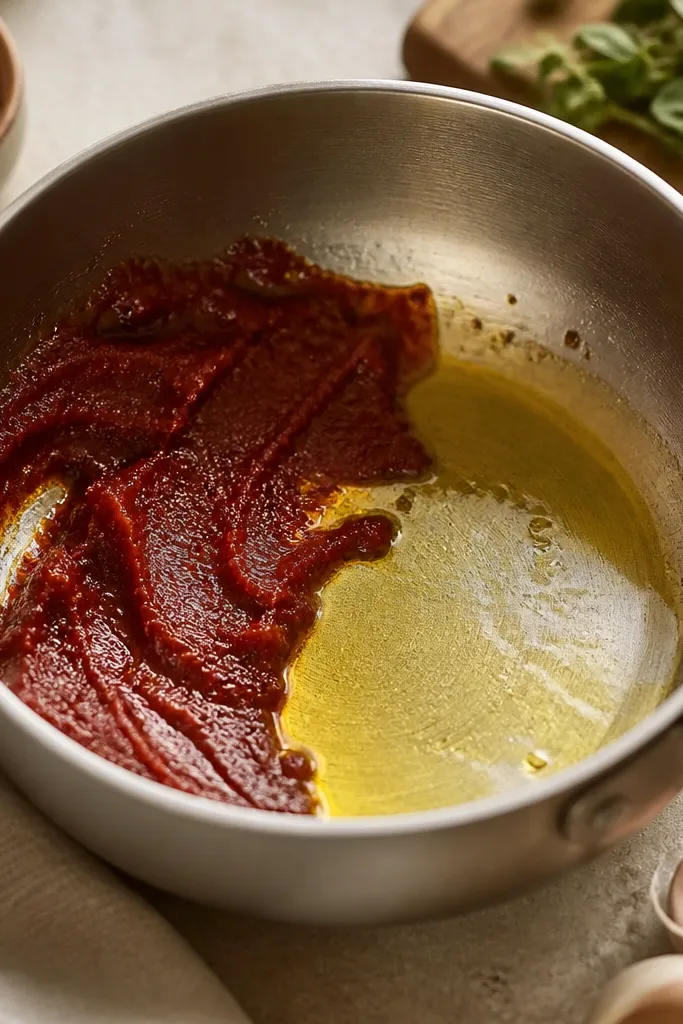
Tomato paste needs direct heat to lose the raw edge. That slight darkening reads as "toasted," and it's what gives vodka sauce its classic depth without extra ingredients. The oil around the paste looks glossy, which means the paste is cooking evenly.
Use a wide pan so paste cooks in a thin layer. Stir constantly for about 60 seconds, then add vodka immediately so the paste doesn't burn. If the paste smells scorched, start over - bitterness shows up fast in this sauce.
Try thisSmear the paste across the pan bottom with your spoon so it heats uniformly.
One warningAdding vodka before the paste cooks leaves a flat, tinny tomato taste.
3. Glossy Olive Oil Rim
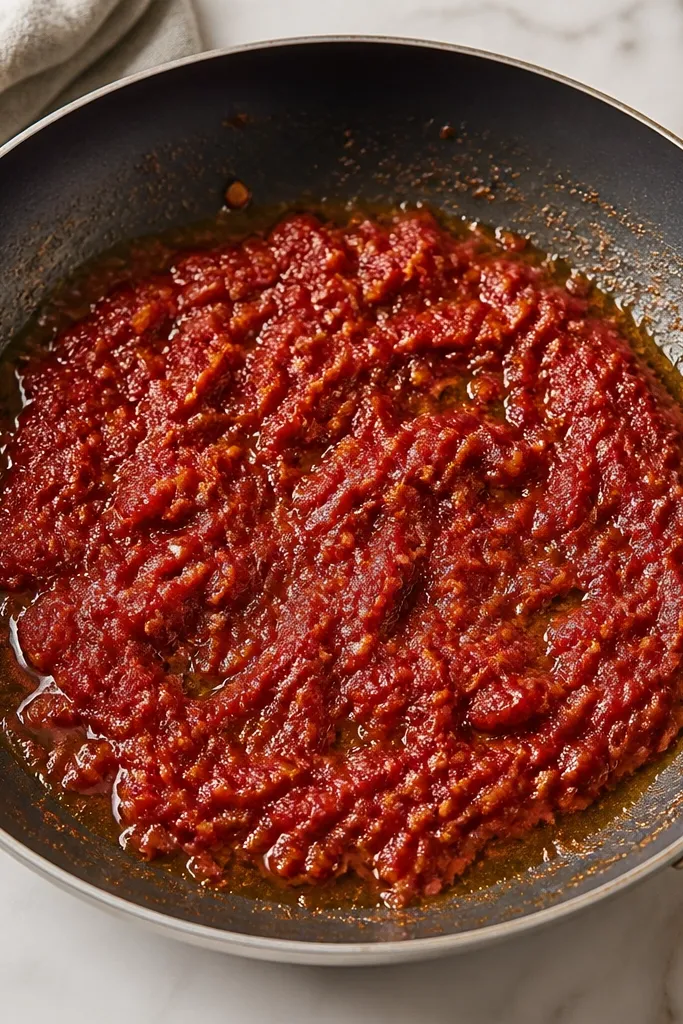
A little oil separation at the edges is normal when you're building the sauce base. That sheen helps carry garlic and pepper flavor into the cream later. When it looks dull and dry, the paste isn't cooking right or the heat is too low.
Use medium heat - you should hear a gentle sizzle when aromatics hit the pan. If oil starts smoking, lower the heat. When the paste is ready, the mixture looks thick and shiny, not chunky.
Try thisAdd garlic right after paste darkens, then stir 20 to 30 seconds before vodka.
One warningOvercooking garlic makes it look darker and tastes bitter.
4. Cream Swirl Emulsion
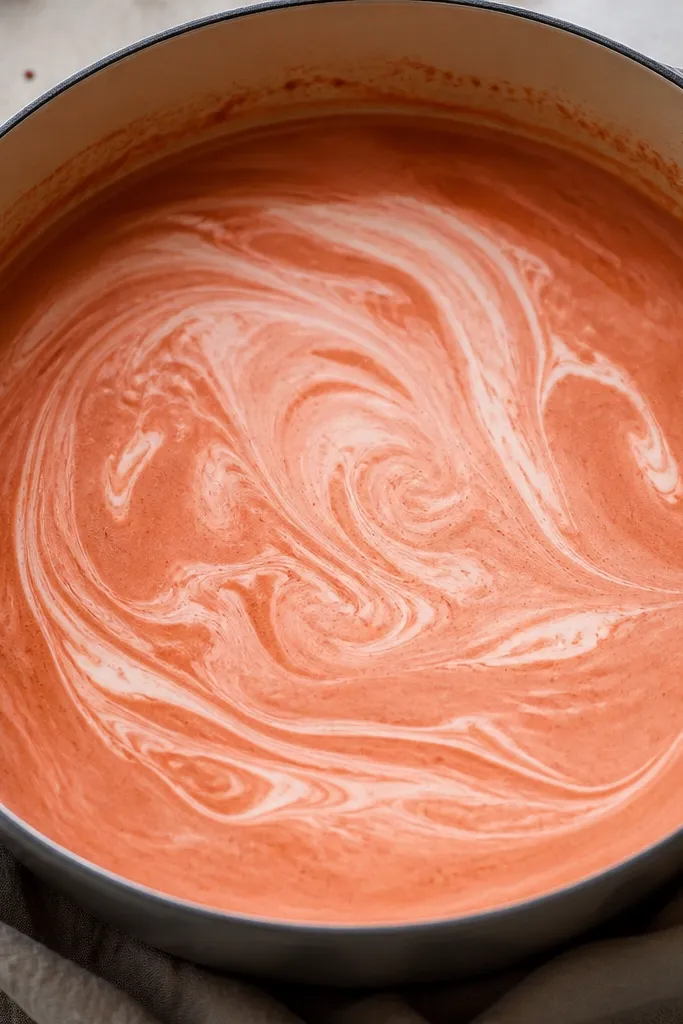
The moment cream hits should create a marbled swirl that turns smooth as you simmer. That's your sign the emulsion is working: the fat from cream binds with the tomato base. A fully uniform color after a short simmer means the sauce will coat pasta evenly.
Turn heat to low before adding cream. Pour in slowly while stirring so you don't get lumps. Simmer 4 to 6 minutes, stirring every 30 seconds, until it thickens to spoon-coat.
Try thisIf cream looks curdled, add 1 tablespoon pasta water and lower heat, then stir hard for 20 seconds.
One warningBoiling after cream goes in can split the texture.
5. Pepper Flecks on Rosé Sauce
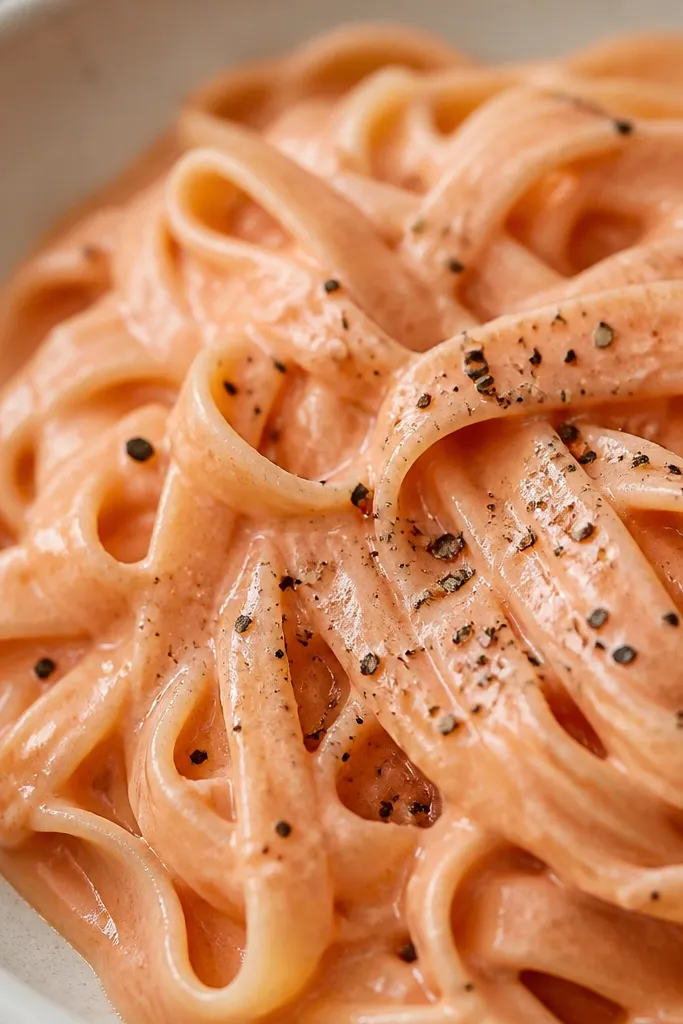
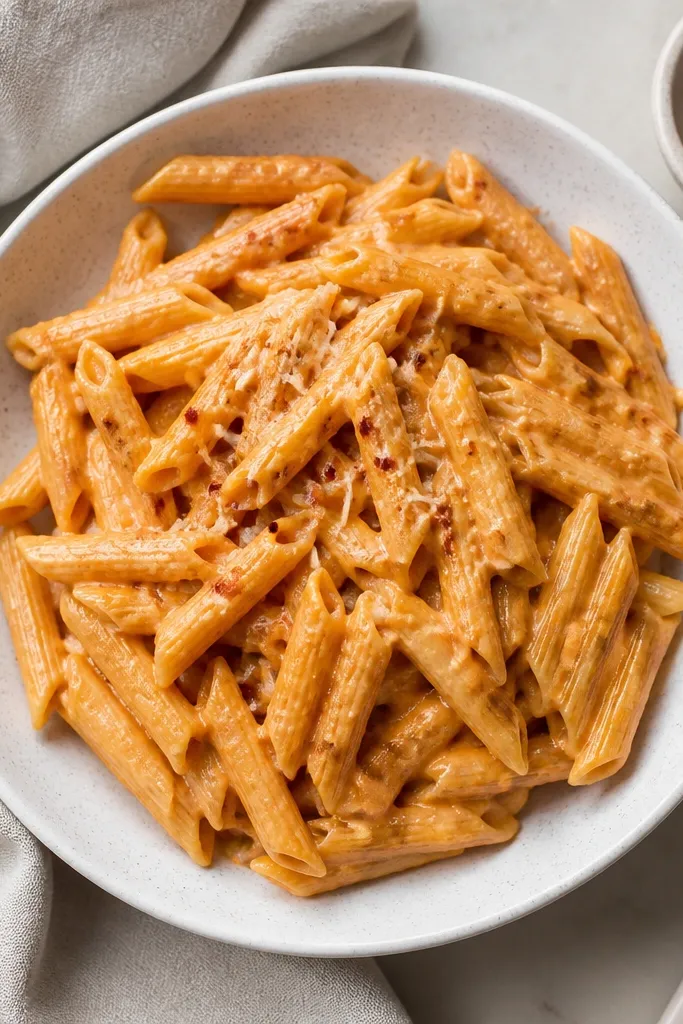
Fresh cracked pepper adds visual contrast and a clean bite that cuts through the cream. In classic vodka sauce, pepper should be noticeable but not harsh. The flecks also tell you the sauce was seasoned at the end, not cooked too long after adding pepper.
Grind pepper over the finished bowl after tossing. Use a microplane Parmigiano-Reggiano so it melts slightly into the warm sauce. If you add pepper in the pot and simmer another 10 minutes, it turns muted.
Try thisAdd pepper in two passes: one pinch during the sauce simmer, one fresh grind on the plate.
One warningUsing pre-ground pepper makes the specks look dull and the flavor flat.
6. Parmigiano Snow Dust
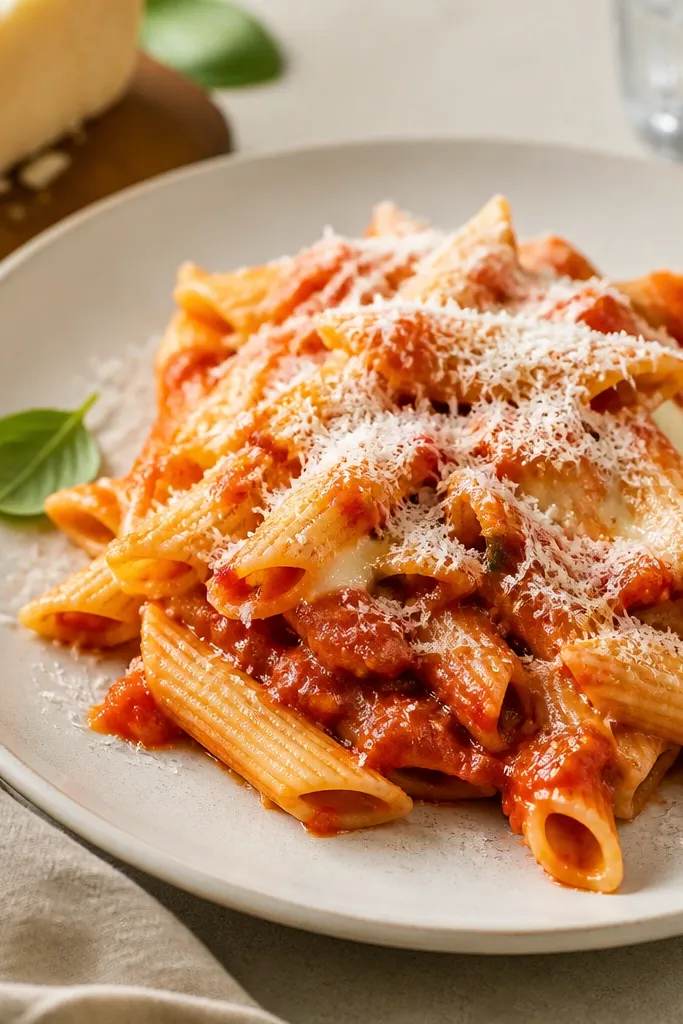
Finely grated Parmigiano gives that classic salty finish and thickens the sauce slightly as it melts. The "snow dust" look means the cheese is dry and fine, not clumpy. It also creates tiny glossy patches that make the sauce look thicker.
Use Parmigiano-Reggiano and grate with a microplane or the small holes of a box grater. Toss pasta, then add cheese in a bowl first with a splash of pasta water, then pile it on top. Too much cheese at once can make the sauce look grainy.
Try thisGrate right before serving. Old cheese looks dry and doesn't melt as nicely.
One warningUsing bagged shredded cheese makes the topping sit instead of melting.
7. Penne Ridges Hold the Sauce
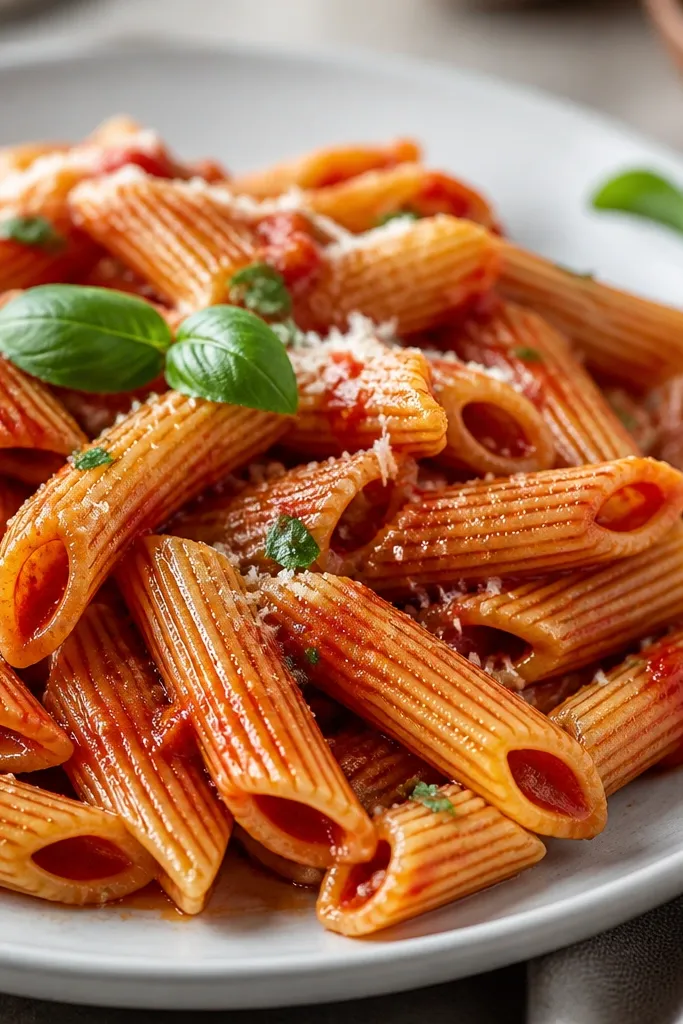
Ridges are the whole point visually. They trap sauce so you get an even coat without needing a heavy-handed amount of cream. When the pasta is tossed properly, each piece looks wet with sauce, not slick on the outside only.
Cook penne until it's just under al dente - 1 minute less than the box says. Reserve pasta water, then toss in the sauce for 45 to 60 seconds. Add pasta water a tablespoon at a time until the coat looks even.
Try thisUse a pair of tongs to toss; it drags sauce into the ridges better than a spoon.
One warningOvercooking pasta makes it too soft to hold sauce in the ridges.
8. Fresh Basil Leaf Placement
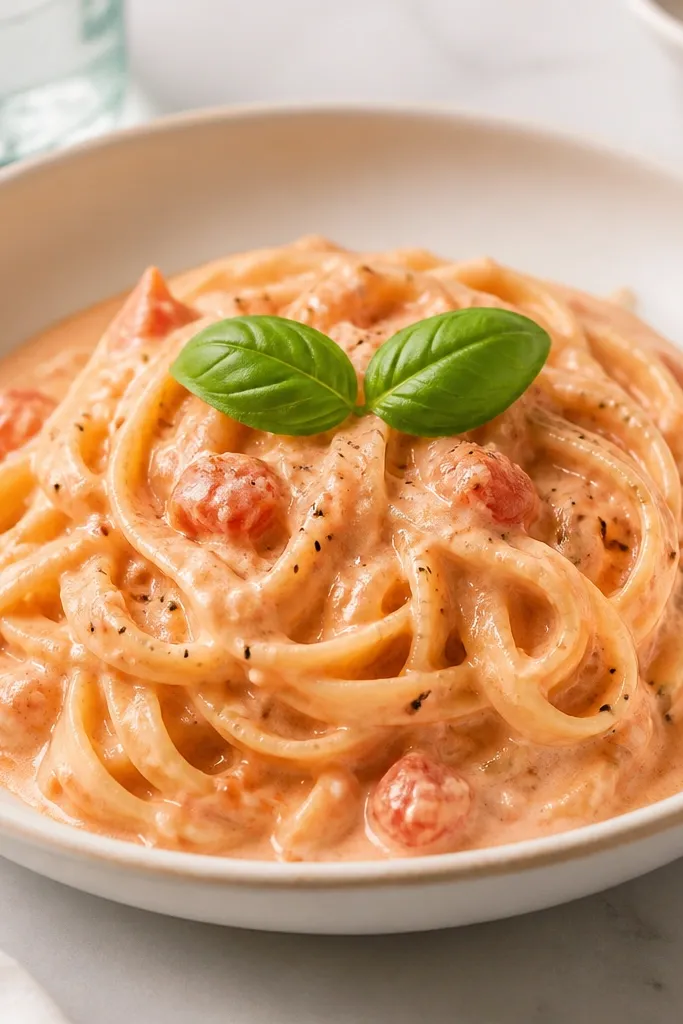
Basil is a color and aroma hit, but placement matters. The leaves should sit on top so they stay green and smell bright. If basil is cooked in the sauce for long, it darkens and tastes tired.
Use torn basil leaves, not chopped. Tear right before serving and place on top after you add cheese. If you want basil in the sauce, stir it for 20 seconds off heat.
Try thisUse the stems too - tear small pieces and distribute them so you get basil in every bite.
One warningSimmering basil for 10 minutes turns it brown and bitter.
9. Garlic-After-Paste Aroma Base
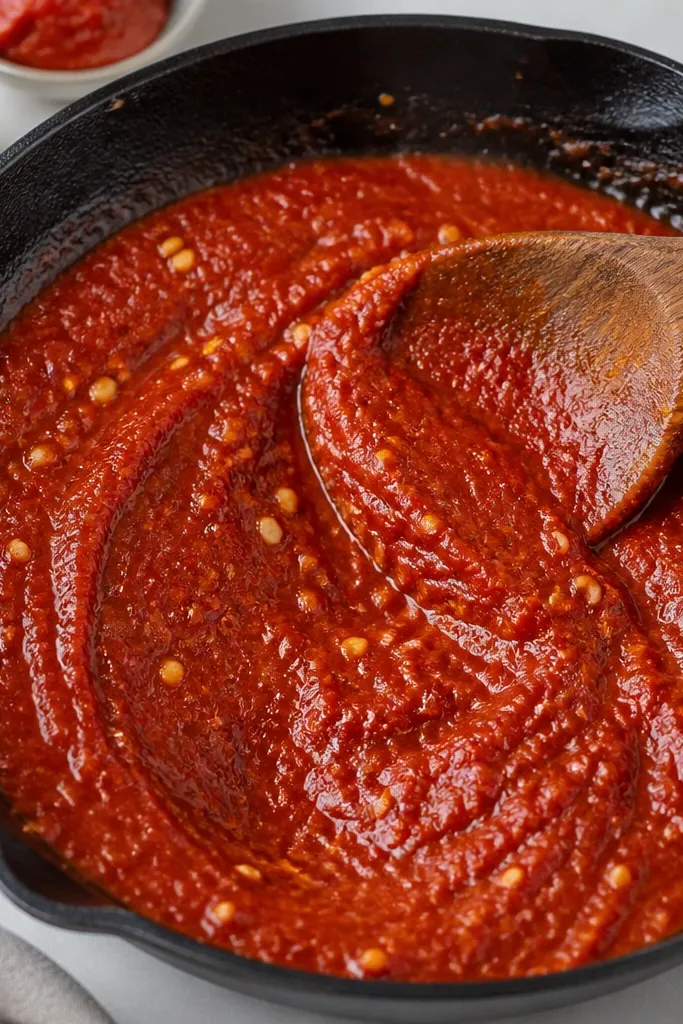
Garlic goes in after paste darkens so it toasts briefly without burning. That keeps the garlic sweet and gives the sauce that familiar Italian background aroma. Visually, you see small garlic flecks suspended in a thick red paste.
Minced garlic should cook 20 to 30 seconds only. Stir constantly and keep heat at medium-low. If garlic starts to brown quickly, lower the heat and add vodka sooner.
Try thisIf you're using garlic paste from a jar, taste once - it can be sharper and needs a slightly longer simmer after cream.
One warningCooking garlic too long makes the sauce look darker and tastes harsh.
10. Vodka Simmer Steam Check
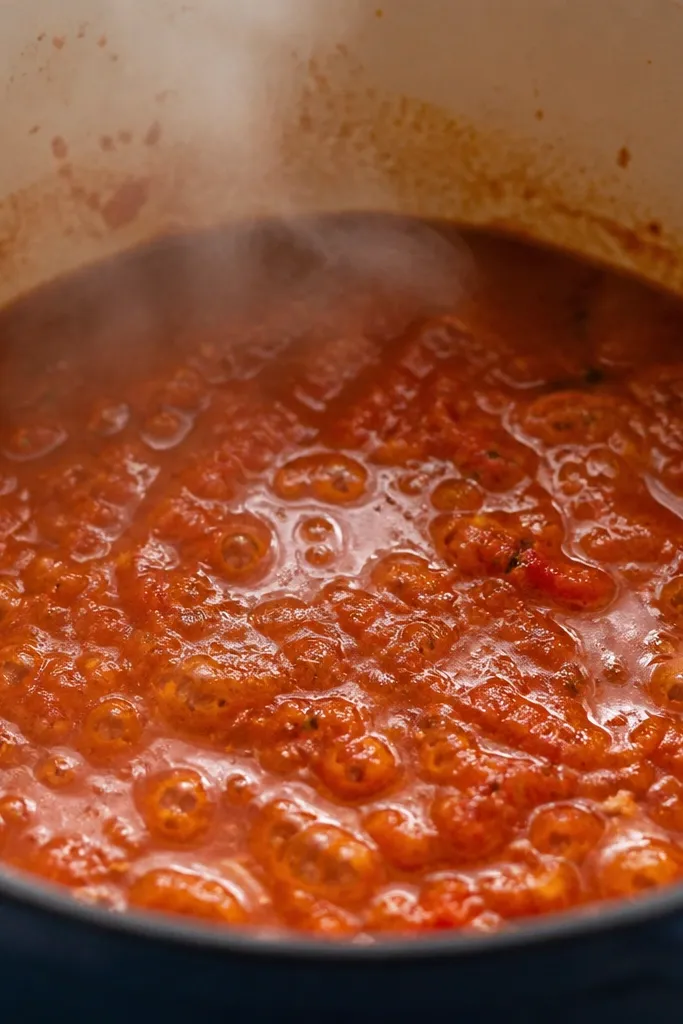
When vodka goes in, it bubbles fast and you'll smell alcohol at first. The classic look is when bubbles slow and the steam smells like cooked tomato, not straight liquor. That change tells you the simmer time is right.
Add vodka, stir, then keep a gentle simmer - not a rolling boil. Simmer 8 to 12 minutes, stirring every couple of minutes so the bottom doesn't scorch. If your pot is thin-bottomed, reduce simmer time by 1 to 2 minutes.
Try thisUse a timer. Vodka sauce is one of the few pasta sauces where timing changes the flavor more than ingredients.
One warningSkipping the vodka simmer leaves a boozy edge and a thin texture.