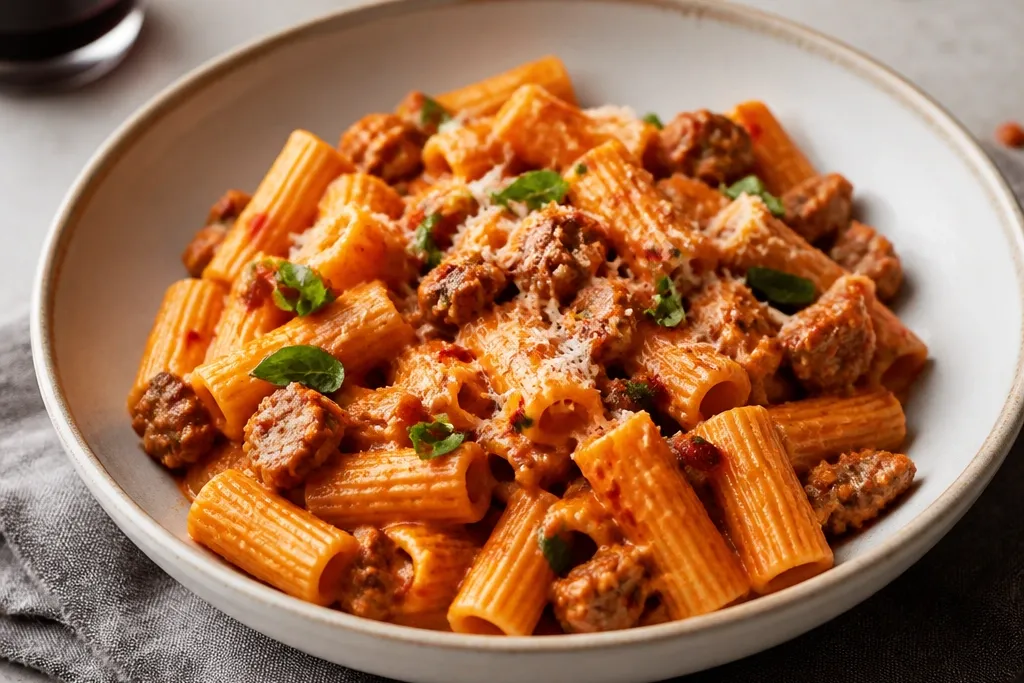
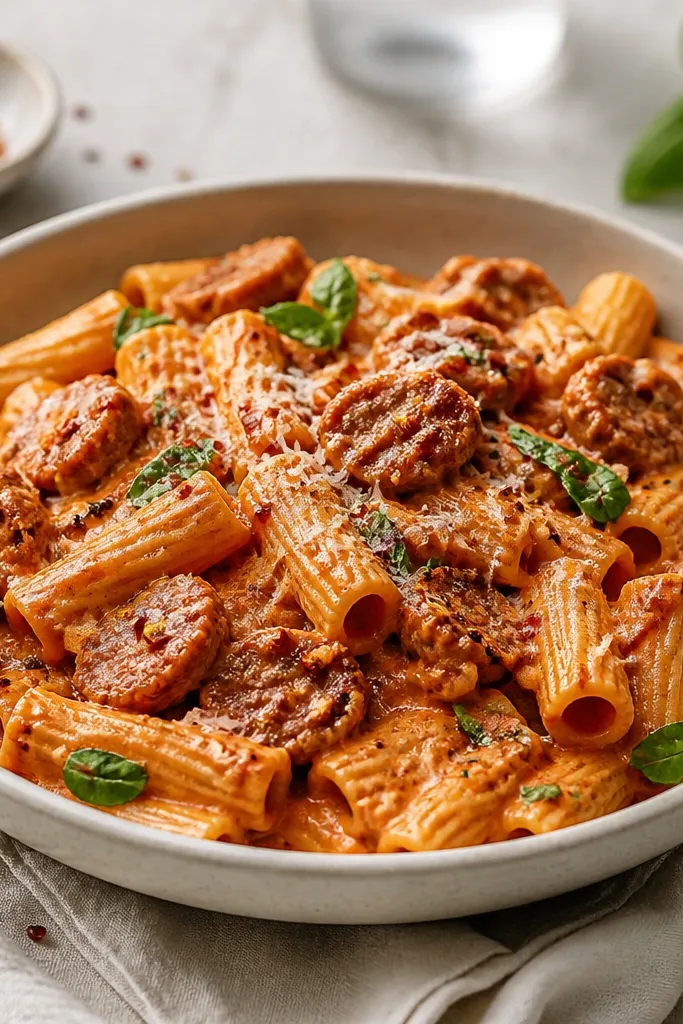
1. Pink-sauce swirl with sausage flecks
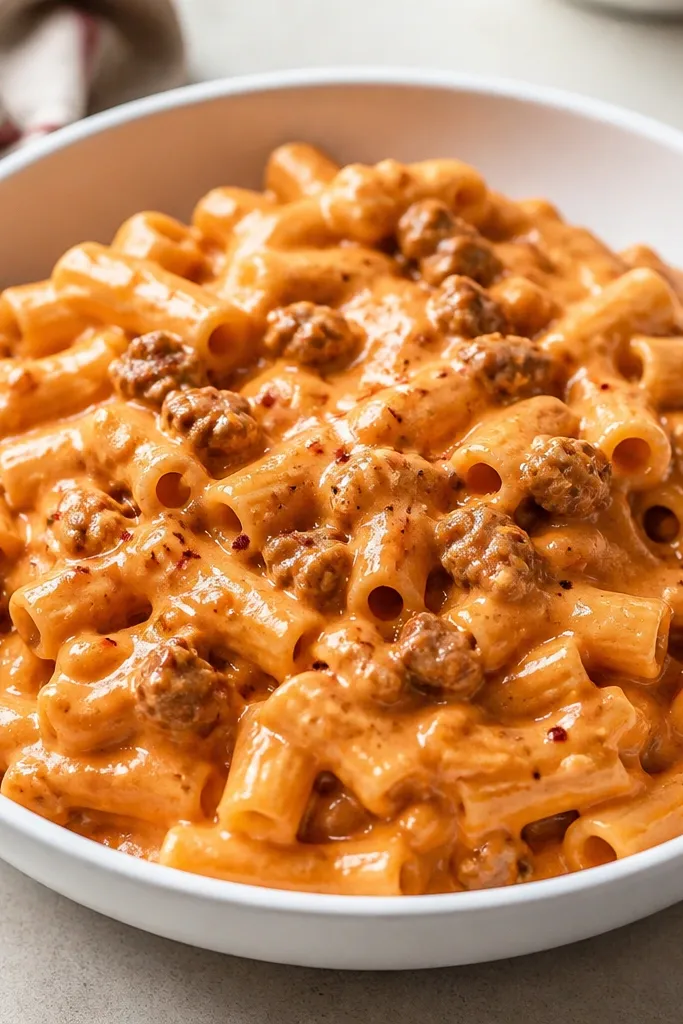
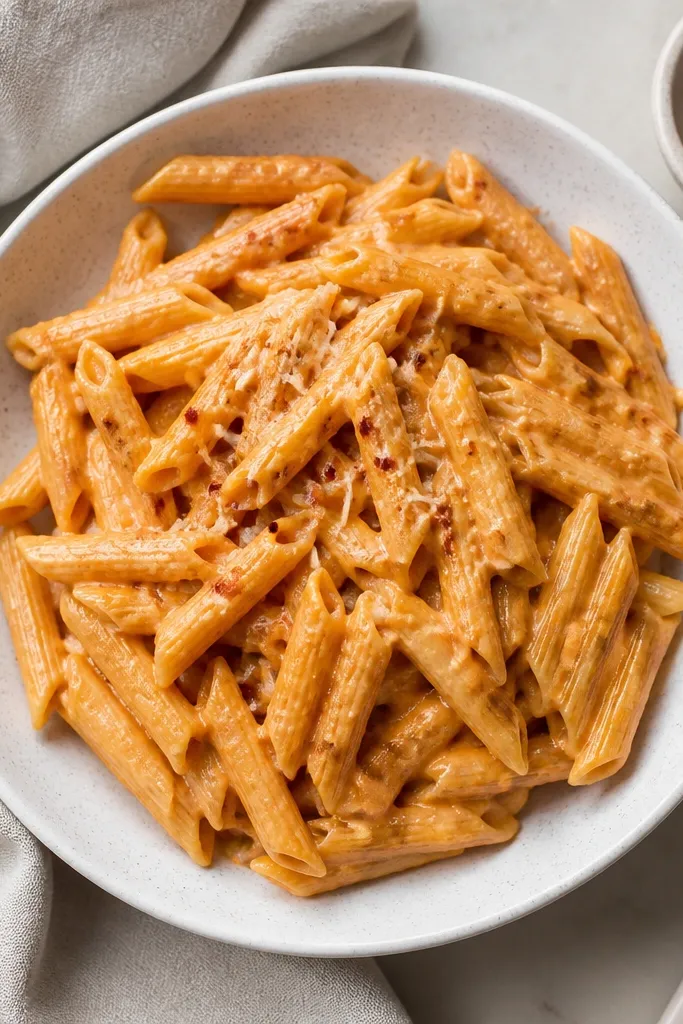
This look comes from the sauce staying emulsified instead of splitting. Pink-orange color happens when tomato paste cooks briefly before vodka, then cream turns it creamy without dulling the color. The sausage flecks give texture and keep the surface from looking uniform. I aim for a sauce that looks wet and shiny, not matte.
Cook sausage until you see browned edges and rendered fat in the pan. Stir in tomato paste for 60-90 seconds so it darkens slightly, then pour in vodka to deglaze. After the vodka reduces, add cream and toss until the sauce coats the pasta.
Try thisIf the sauce looks too thick, add pasta water one tablespoon at a time while tossing hard.
One warningDon't dump the cream in before the vodka reduces - it often turns the sauce flat and less glossy.
2. Smoky rim from browned sausage bits
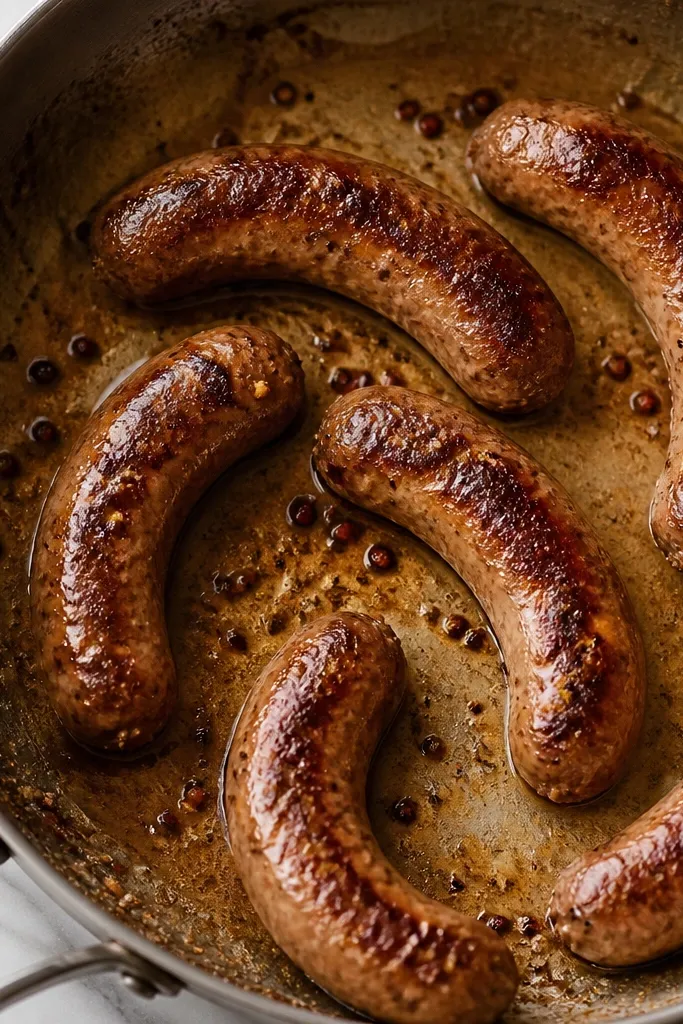
Those browned bits around the edge are flavor concentrate. When you deglaze with vodka, the alcohol lifts the caramelized residue into the sauce, and the smoky aroma shows up in the first bite. You can see this effect when the skillet bottom looks clean-ish but still glossy. That's what you want before cream goes in.
Use a heavy skillet, not a thin nonstick. Brown sausage in a single layer when possible, then stir and keep cooking until it's deeply colored. Deglaze by scraping the bottom for 30 seconds right after vodka hits.
Try thisIf the bottom won't scrape, turn the heat up for 15 seconds and keep going until you can lift the browned film.
One warningDon't rush the sausage browning - pale crumbles make a sauce that tastes like plain meat.
3. Garlic-parm sheen with a light cheese scatter
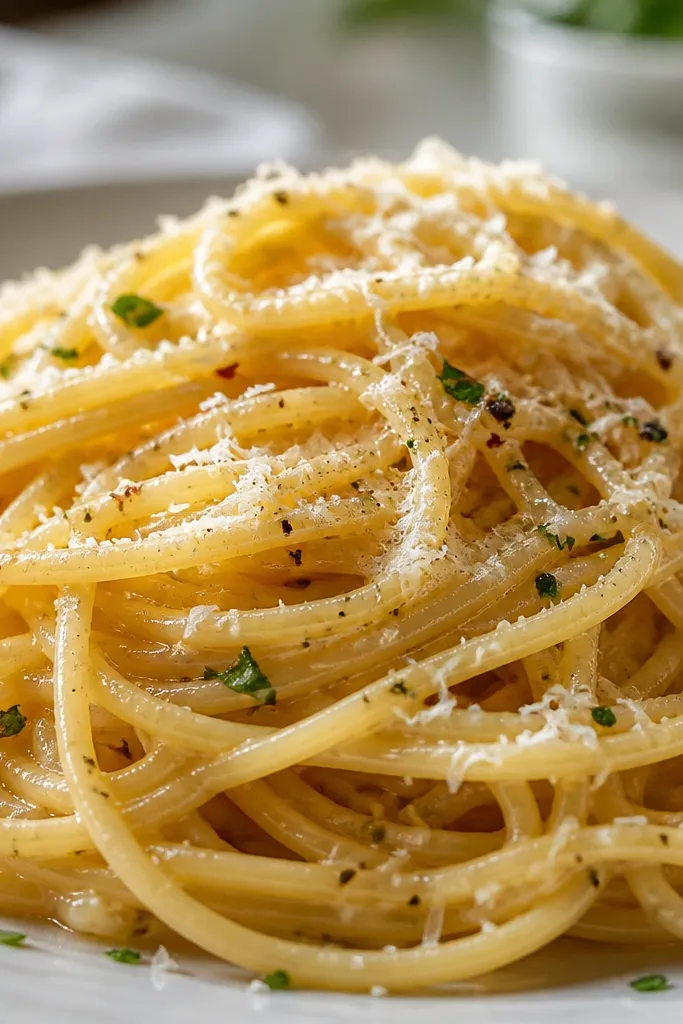
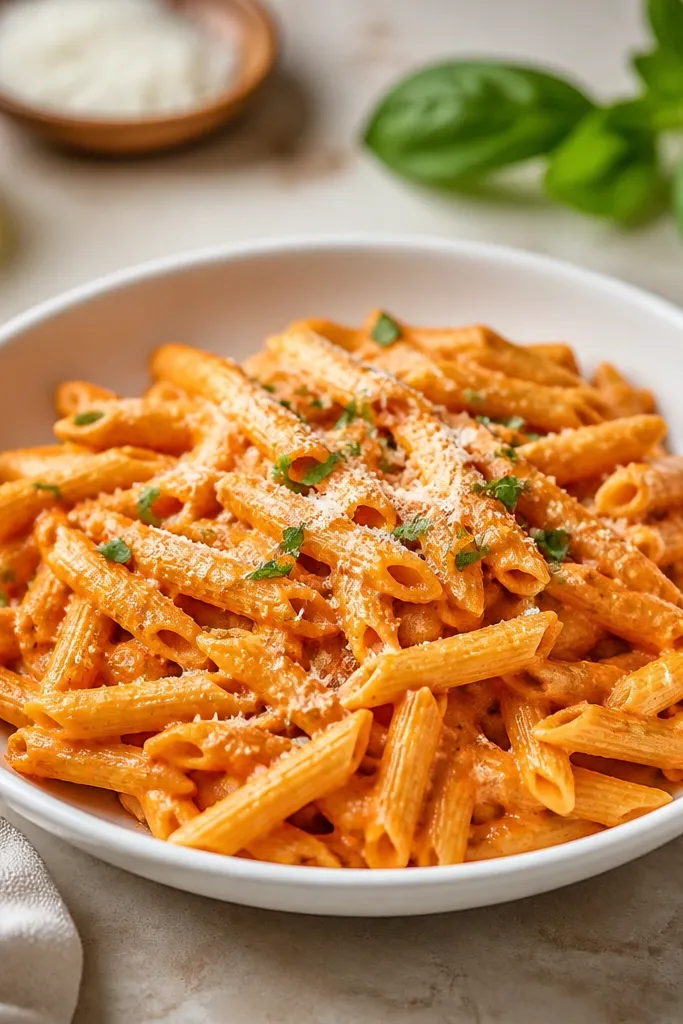
A small amount of parmesan makes the sauce look thicker and more "restaurant," because it helps bind the emulsion. The sheen comes from tossing the pasta in the sauce until it clings. I keep the cheese scatter light so it doesn't turn grainy. This is about finish, not drowning the dish.
Grate parmesan fresh and sprinkle in two rounds: one during the final toss, one right before serving. Add black pepper at the same time as the first cheese round so the aroma lifts with the heat.
Try thisUse parmesan off the block, not pre-shredded - pre-shredded often melts unevenly and dulls the look.
One warningDon't add parmesan right after turning off the heat every time; it can clump if the pan is too cool.
4. Crushed red pepper freckles
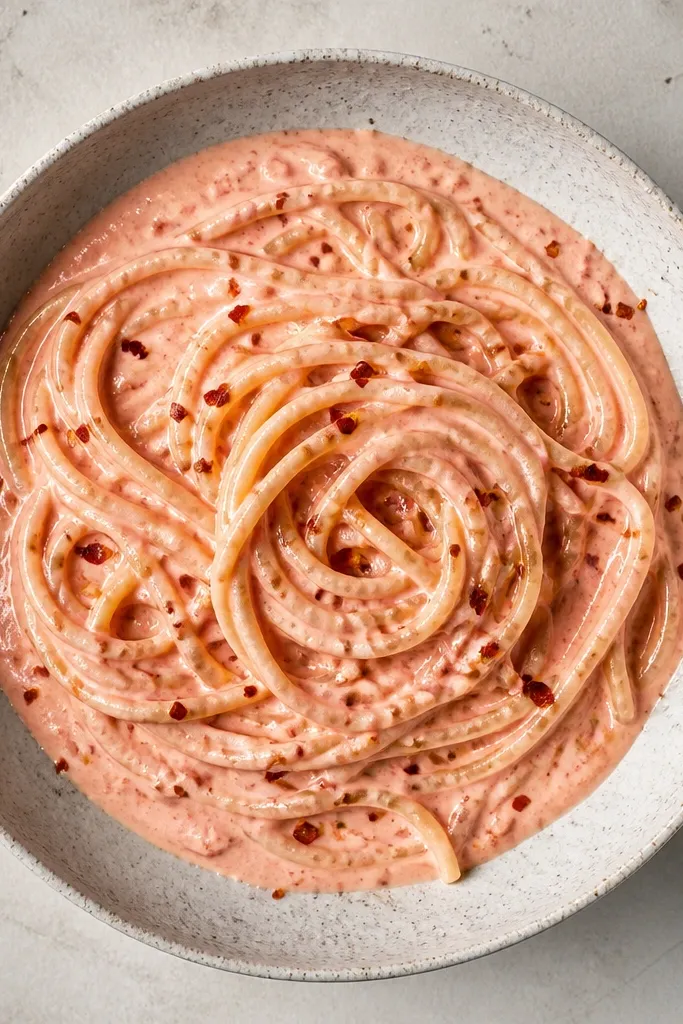
Heat that lands on the surface tastes sharper and more "spicy" than heat mixed fully into a creamy sauce. Adding pepper after the vodka step keeps the pepper's aroma present. The freckles also make the dish look intentional and homemade. It's a small visual cue that tells you it's spicy.
After vodka reduces and cream goes in, simmer 1-2 minutes, then turn off heat. Sprinkle crushed red pepper over the pan and toss for 30 seconds. Finish with a pinch on top of each bowl.
Try thisStart with 1/4 teaspoon crushed red pepper for every 2 servings, then adjust bowl-by-bowl.
One warningDon't add cayenne early and assume it will "bloom" - it often tastes flat after cream.
5. Lemon-lifted bright finish
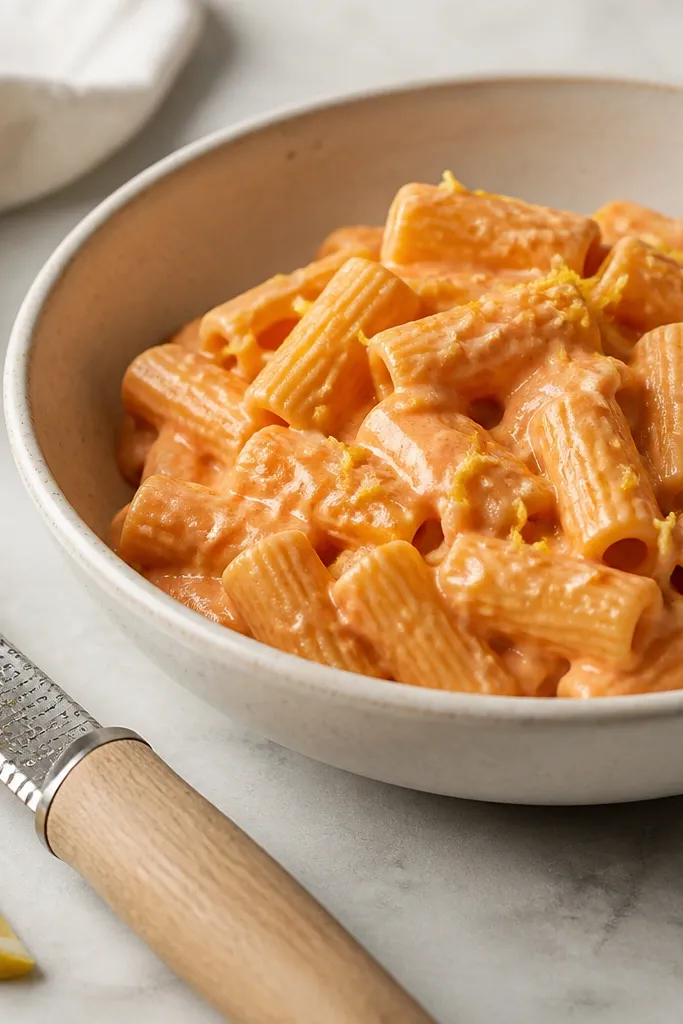
A little lemon zest and a quick squeeze cut the fattiness so the sauce tastes brighter, not heavy. The zest looks delicate against the pink sauce and adds aroma you notice before the first bite. I keep it light so it doesn't turn the dish into "lemon pasta."
Use a microplane for zest, then squeeze with a small lemon wedge right before serving. Add zest to the bowl, not the pan, so it stays fresh-looking.
Try thisZest first, squeeze second; squeezing too early can wet the surface and dull the look.
One warningDon't use bottled lemon juice - it tastes harsher and looks less fresh.
6. Fresh parsley green contrast
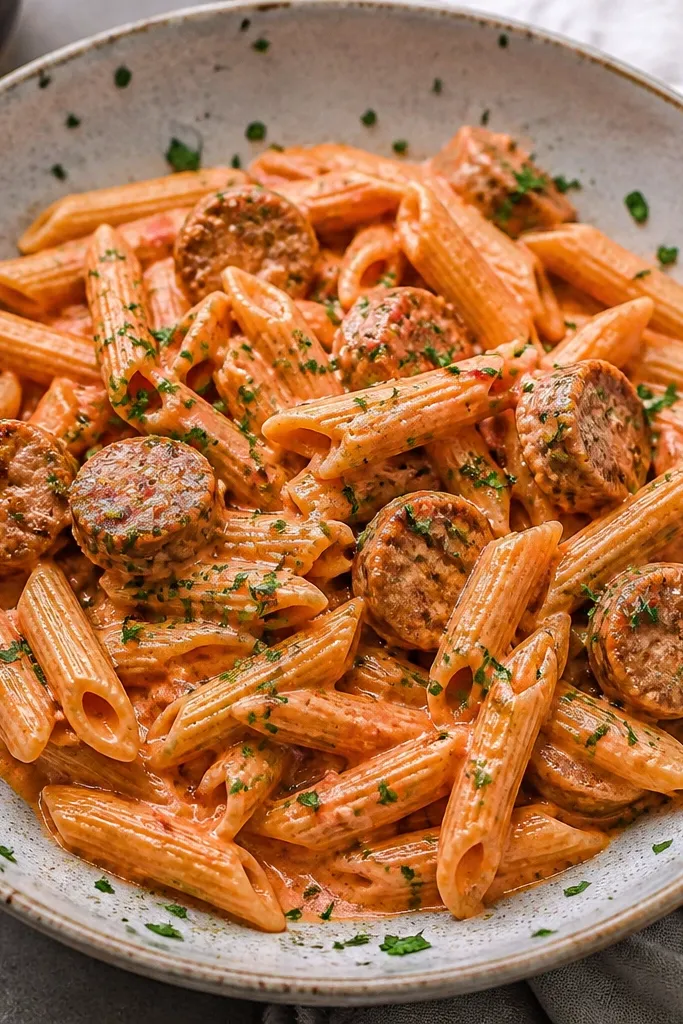
Parsley gives a clean green contrast to the pink sauce, and it tastes like "fresh" instead of "cooked all day." It also hides minor sauce unevenness on the surface. I chop it fine so it spreads across bites rather than sitting in big clumps.
Use flat-leaf parsley, dry it well, then chop. Add most of it during the final toss, and reserve a pinch for the top. This keeps the top looking bright and not wilted.
Try thisPat parsley dry with paper towels; wet herbs look darker and limp.
One warningDon't add parsley in the simmer stage; it turns dull and gray.
7. Basil switch for a sweeter edge
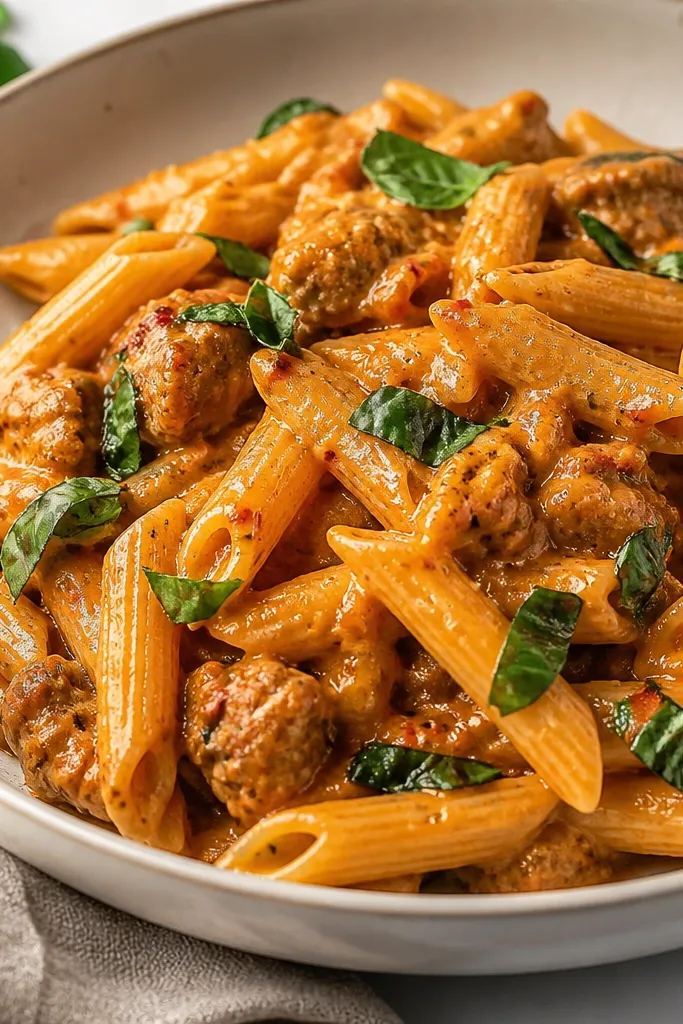
If you want a sweeter herbal note, basil works better than parsley in this sauce. The sauce's cream and tomato make basil smell more like fresh mozzarella and less like dried spice. Tearing leaves by hand keeps texture and makes the top look natural.
Tear basil leaves right before serving. Toss gently so leaves wilt just at the edges, not fully. Keep basil portions small so it doesn't overwhelm sausage heat.
Try thisIf you use basil, add less crushed red pepper so the herbs and heat don't fight.
One warningDon't chop basil with a knife - it bruises fast and turns dark quickly.
8. Chili oil glossy finish
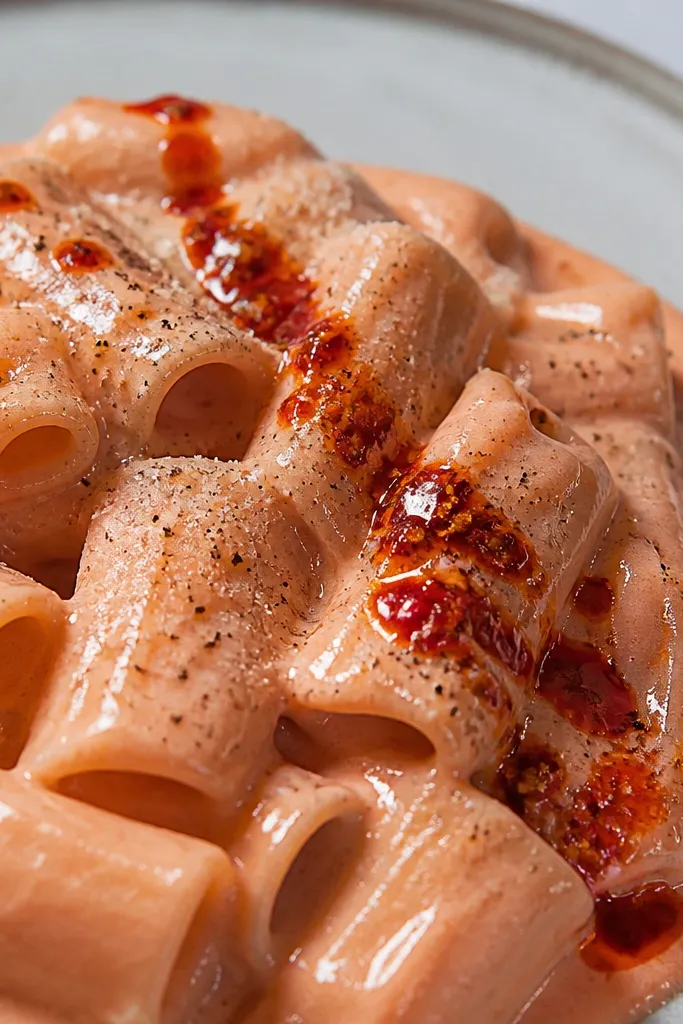
A tiny drizzle of chili oil makes the dish look "finished" and adds heat that hits right away. It also creates a visual contrast: red streaks on pink sauce. I like chili oil more than extra pepper when I want spice that tastes smooth, not sharp.
Use a spoon to drizzle 1-2 teaspoons per bowl. Add it right at the end and toss lightly once, or just drizzle on top and keep the surface glossy.
Try thisWarm the chili oil in a spoon over hot water for 10 seconds so it pours thin.
One warningDon't mix chili oil into the sauce while simmering - it can taste burnt and look muddy.
9. Crusty garlic bread side dunking
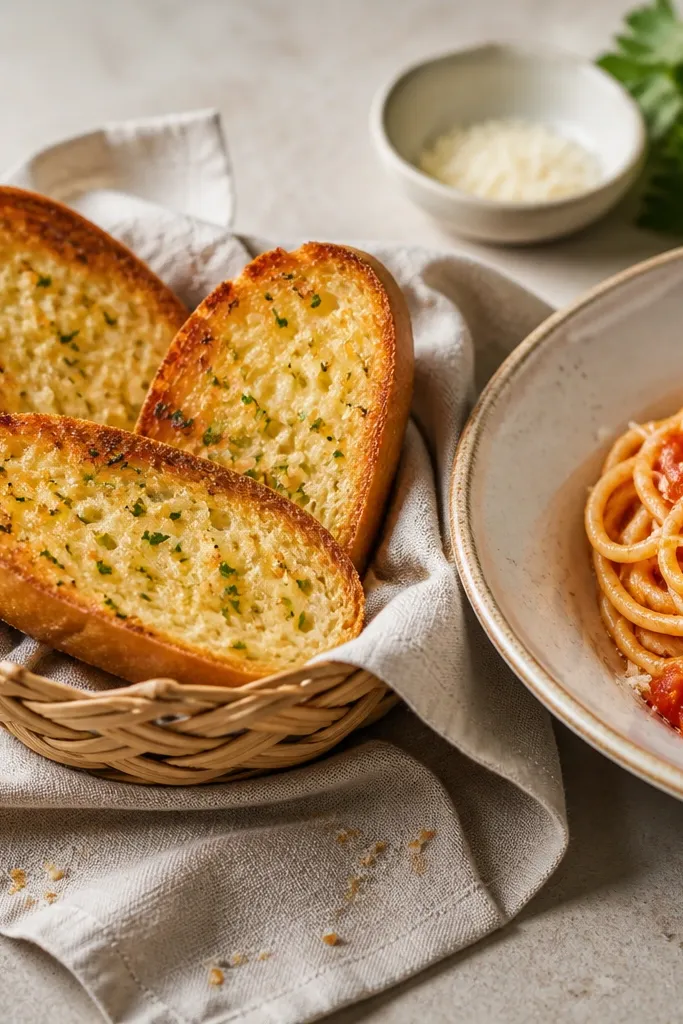
This side makes the sauce experience better because you can scoop every bit. The browned edges of garlic bread match the smoky sausage flavor, and the butter sheen looks great next to creamy sauce. I keep the bread sturdy so it doesn't collapse after one dunk.
Use a baguette or ciabatta. Toast slices in the oven at 425F until edges brown, then rub with garlic and brush with melted butter. Serve immediately so it stays crisp.
Try thisPut a pinch of flaky salt on the bread right out of the oven.
One warningDon't make it soggy with wet garlic butter; crisp edges are the whole point.
10. Vodka reduction depth in the pan shot
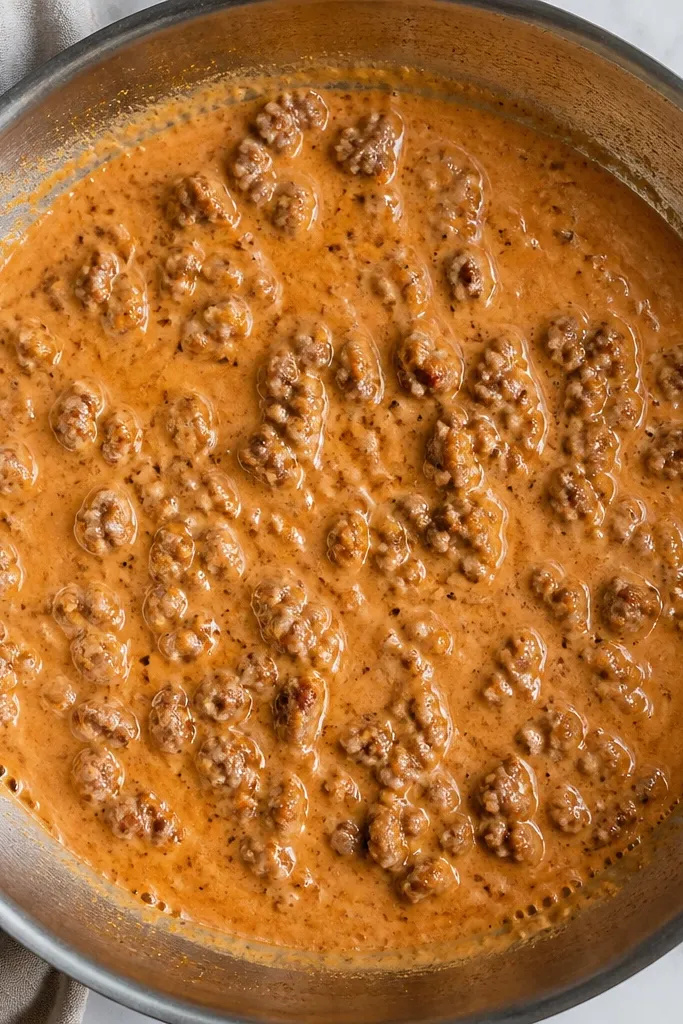
This pan stage is where you learn whether your sauce will be smooth. After vodka reduction, the pan should look slightly syrupy - not watery, not dry. That's your cue that the tomato paste is cooked and the alcohol has done its job. When you add cream, it should thicken quickly.
Simmer vodka until you see fewer active bubbles and the pan bottom looks coated. Stir and scrape once more so nothing sticks. Then lower heat and stir in cream, whisking for 20 seconds.
Try thisIf it's still watery, simmer 1-2 more minutes before cream.
One warningDon't add cream to a pan that still smells strongly like alcohol - it will taste sharp.