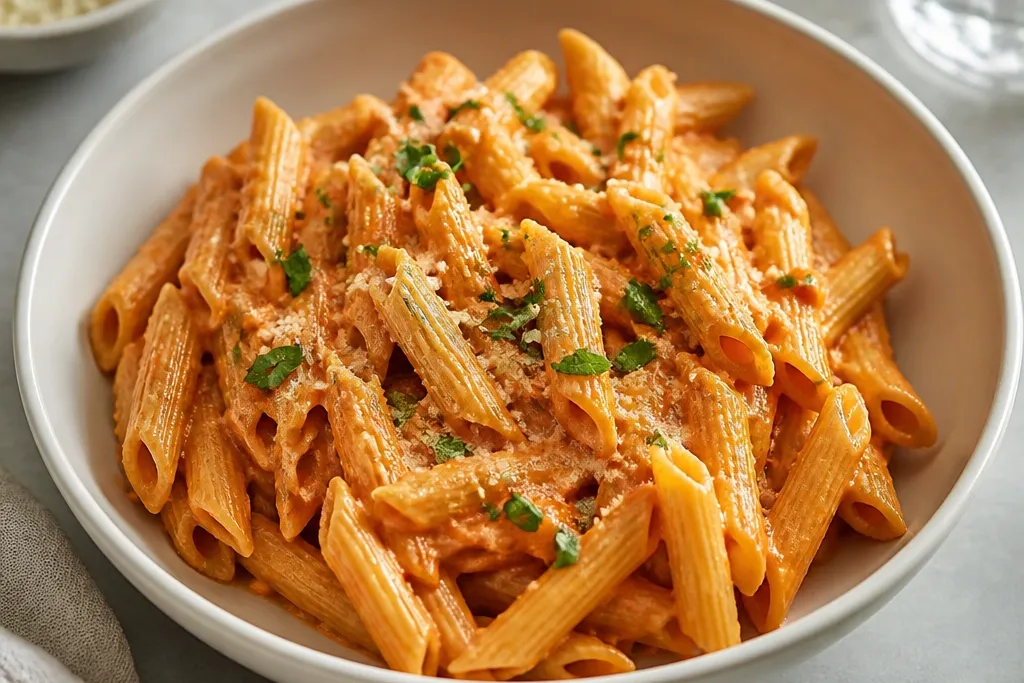
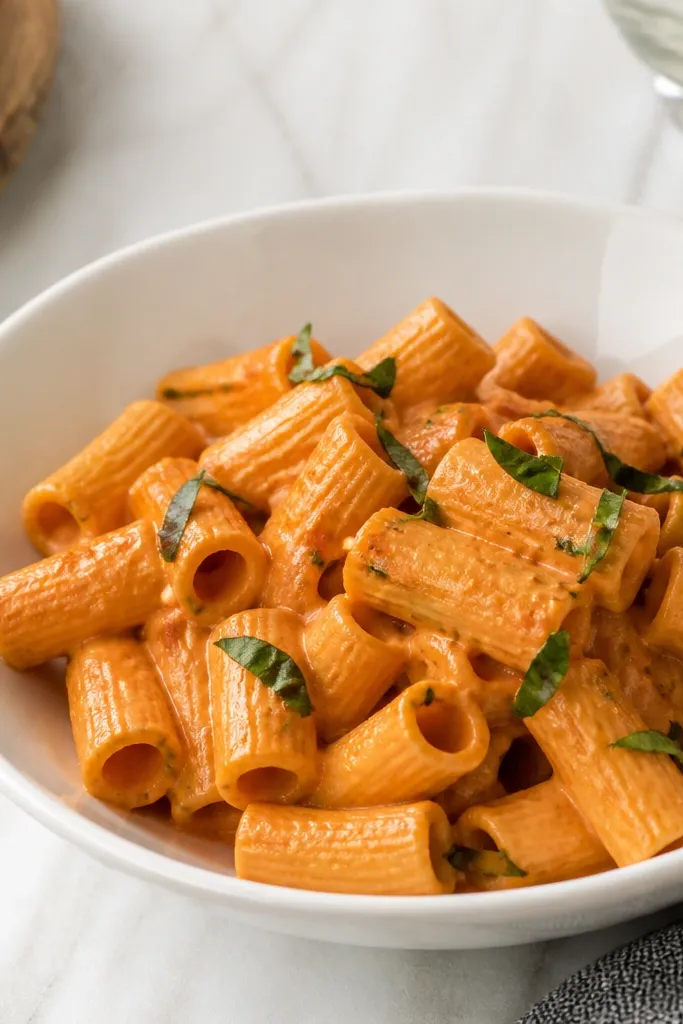
1. Blush-pink sauce gloss with rigatoni ridges
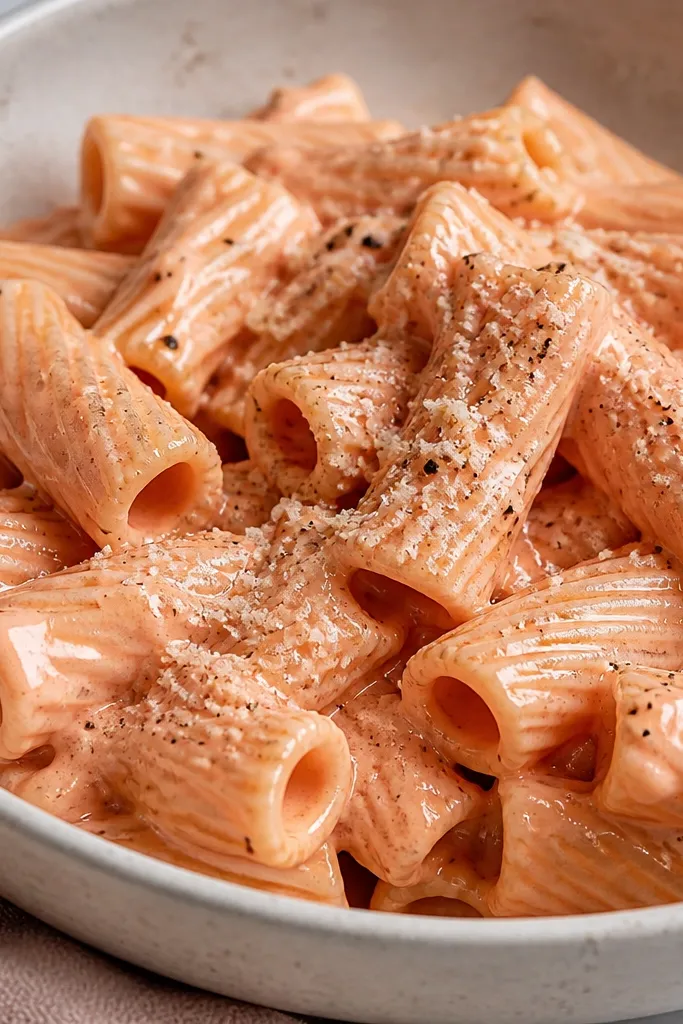
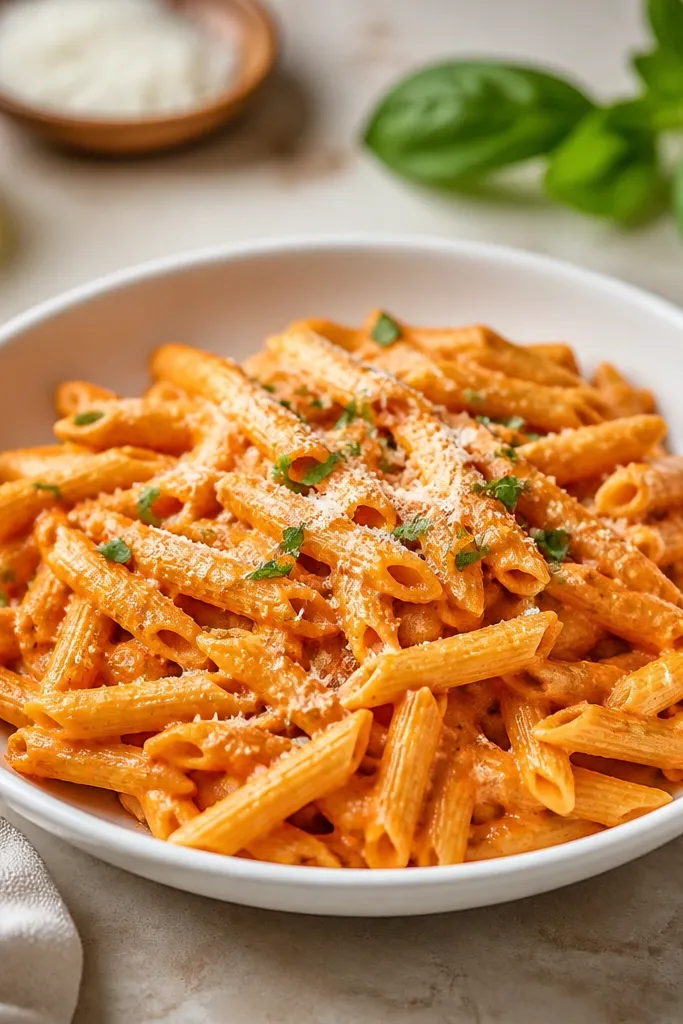
The signature visual is blush pink with shine. That comes from emulsifying the tomato paste base with cream after the vodka reduction, then using starchy pasta water to help the sauce cling. Rigatoni ridges catch the sauce so every bite looks coated, which is why it looks like a restaurant dish even when it's homemade.
Cook rigatoni until just under al dente - about 1 minute less than the box says - then finish it in the sauce. Aim for a sauce thickness where it coats the back of a spoon and leaves a clear line when you swipe a finger through it. Keep the sauce at a gentle simmer; a rolling boil ruins the smooth look.
Try thisSave one cup of pasta water and add it in 2-tablespoon splashes until the sauce turns glossy instead of matte.
One warningSkip letting the sauce boil hard after the cream goes in - that's how you get grainy beige instead of smooth pink.
2. Tomato paste cooked just until it smells sweet
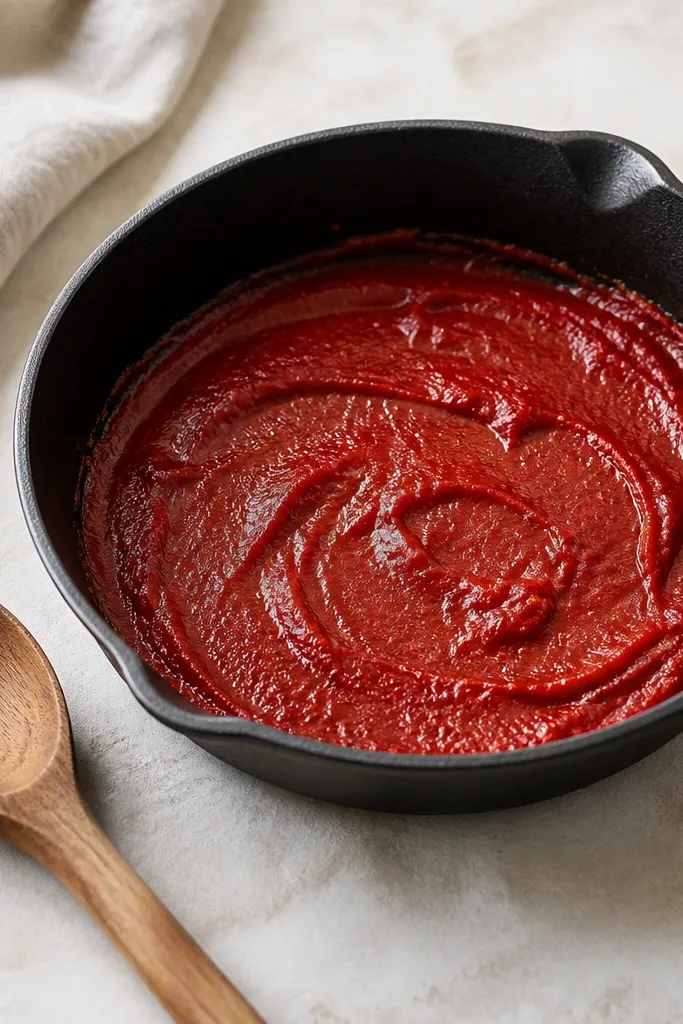
Tomato paste is the color engine, but it burns fast. When you cook it only until it smells sweet and loses the raw tang, you get a pale blush base that turns pink once cream hits. Overcooked paste turns brown-orange and makes the whole dish look tired.
Spread tomato paste in a thin layer on the pan with butter or olive oil, then stir constantly for 60-90 seconds. Add minced garlic for the last 20-30 seconds so it stays fragrant, not browned. You should see bubbles around the edges, not dark sticky spots.
Try thisIf your paste starts to smell smoky, it's already too far - add vodka right away to cool it down.
One warningDon't cook tomato paste for 3-4 minutes unattended - that's the common reason the sauce looks muddy.
3. Vodka reduction that looks syrupy, not watery
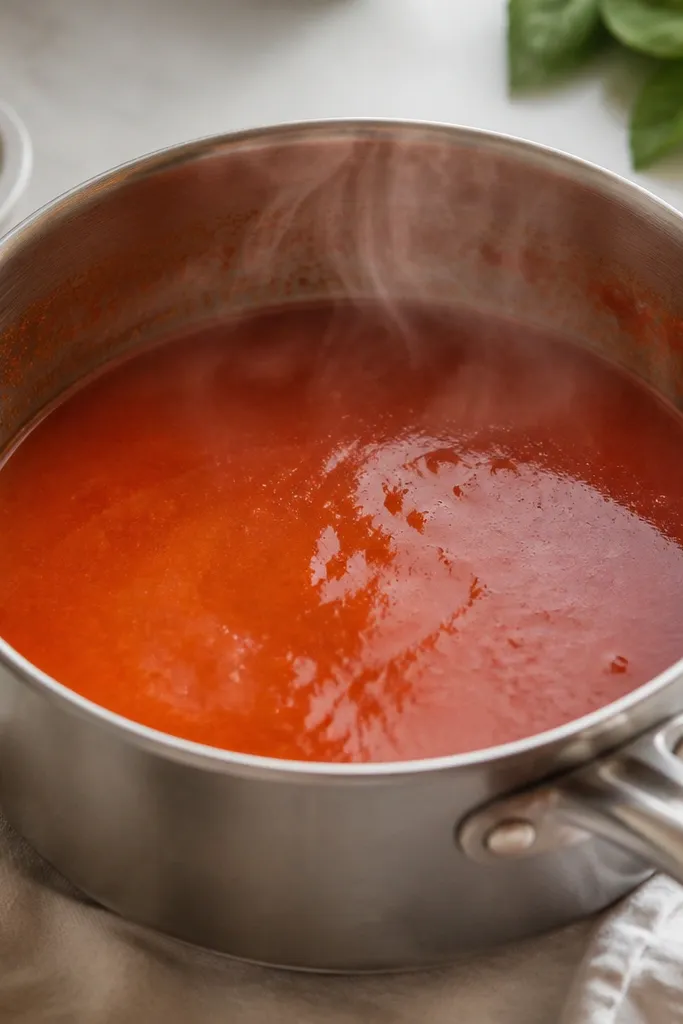
The vodka reduction does two jobs: it takes the edge off and concentrates the tomato flavor so the cream tastes balanced. When it reduces to a thin syrup consistency, the final sauce becomes smooth and clingy. If it stays watery, the cream dilutes and the sauce looks thin and pale.
After you add vodka, keep heat at medium and stir. You're looking for about 2 minutes of bubbling until the liquid looks slightly thicker and coats the spoon lightly. Then lower heat and add cream right away.
Try thisUse a timer. "A splash then hope" is how you end up with either boozy sauce or bland sauce.
One warningDon't add cream before the vodka reduces - that's how you get a raw-alcohol taste.
4. Cream added off the heat for a smooth pink emulsion
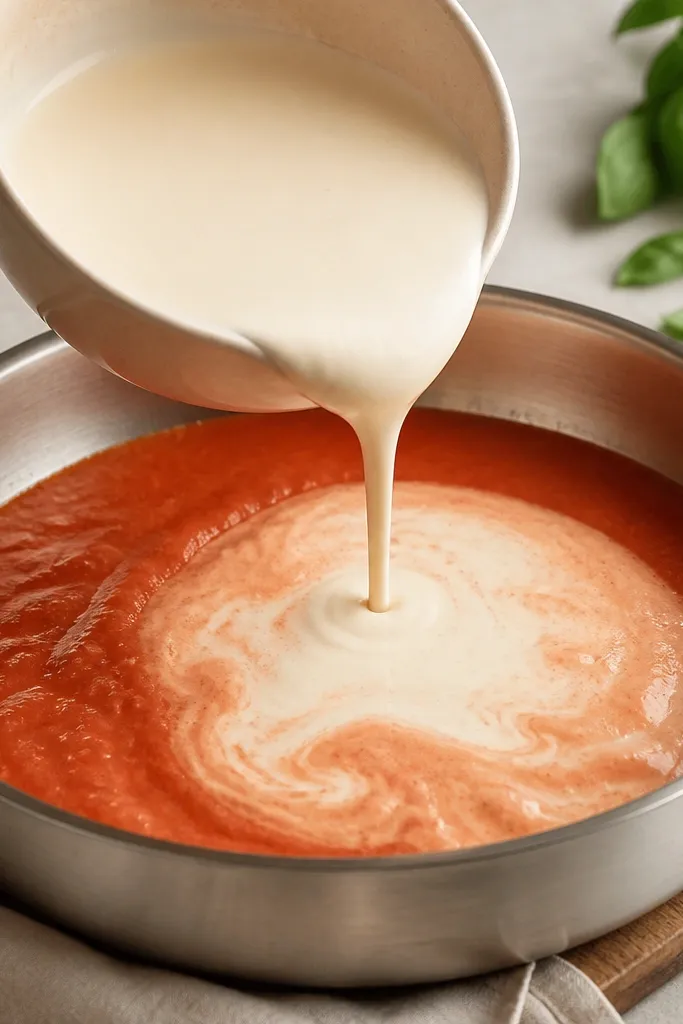
This is the step that keeps the sauce silky. Adding cream off direct heat prevents curdling and helps the dairy emulsify with the tomato-vodka base. The result is a stable pink sauce that stays glossy instead of separating.
Turn off the burner when the vodka reduction is ready. Pour in cold-ish cream slowly while stirring. Then return to low heat and simmer gently for 3-4 minutes until it thickens.
Try thisIf it thickens too fast, add pasta water a tablespoon at a time to loosen and re-gloss it.
One warningAvoid boiling the cream mixture - hard simmering makes it look speckled and dull.
5. Parmesan finish that melts into the sauce, not clumps
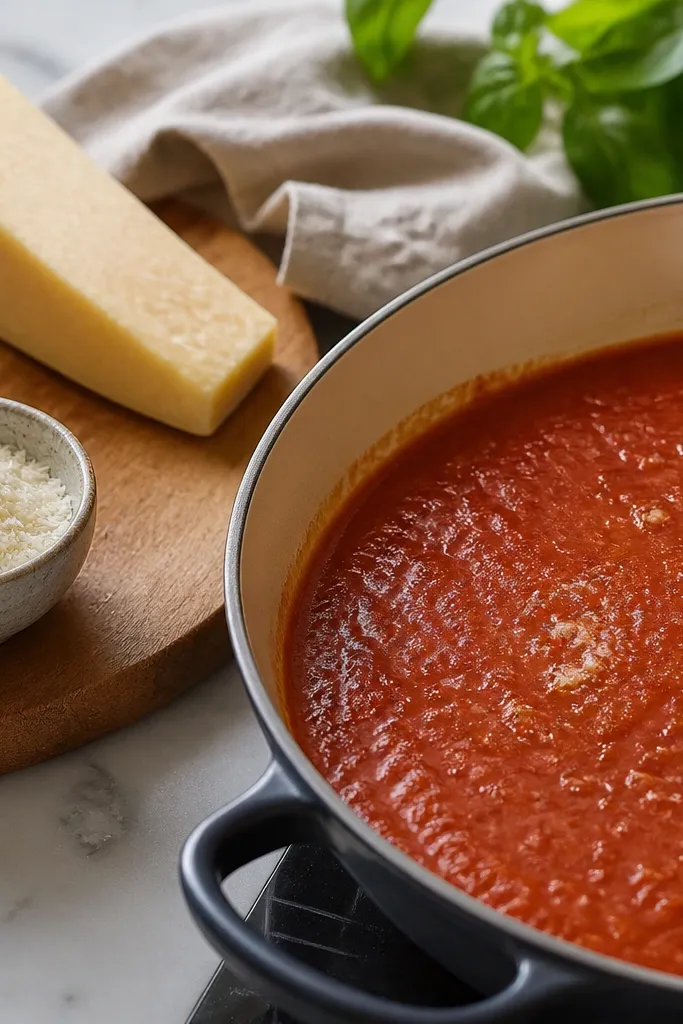
Parmesan is the final polish. Finely grated parmesan melts fast and thickens without turning grainy. It also boosts that brio-style savory edge so the sauce tastes balanced, not just creamy and sweet.
Use finely grated parmesan (not shredded from a bag). Add it off heat or at the lowest simmer, stirring until fully smooth. If you see clumps, let the sauce cool 30 seconds, then stir hard and add a splash of pasta water.
Try thisGrate fresh. Pre-grated parmesan has anti-caking agents that slow melting and make the sauce look uneven.
One warningDon't dump in a big handful at once - you'll get stringy bits instead of a smooth finish.
6. Black pepper top and white parmesan snow
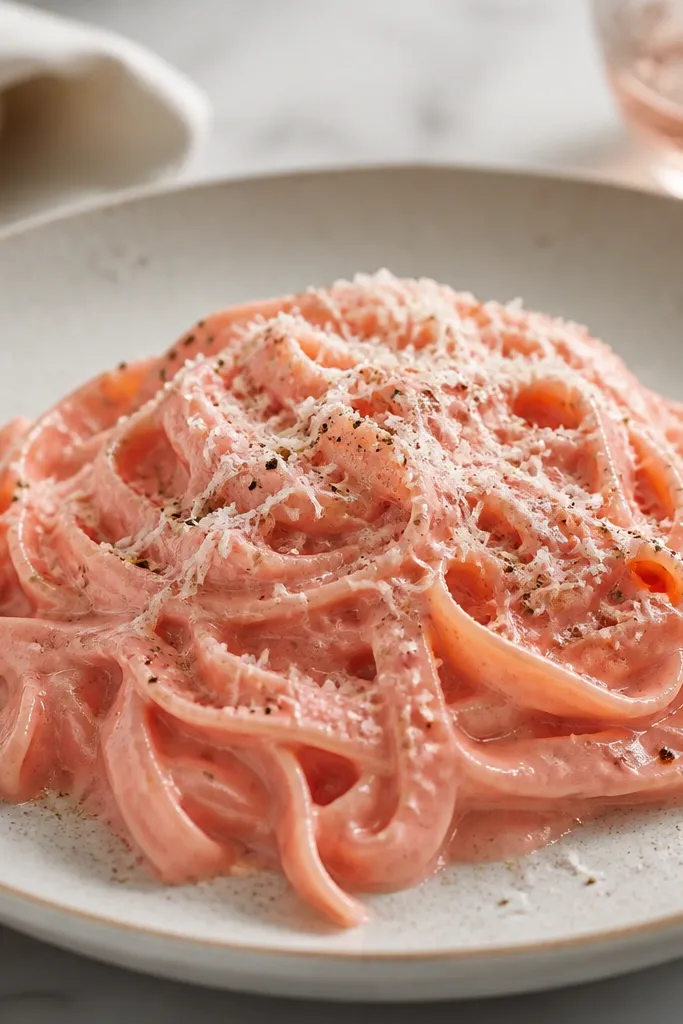
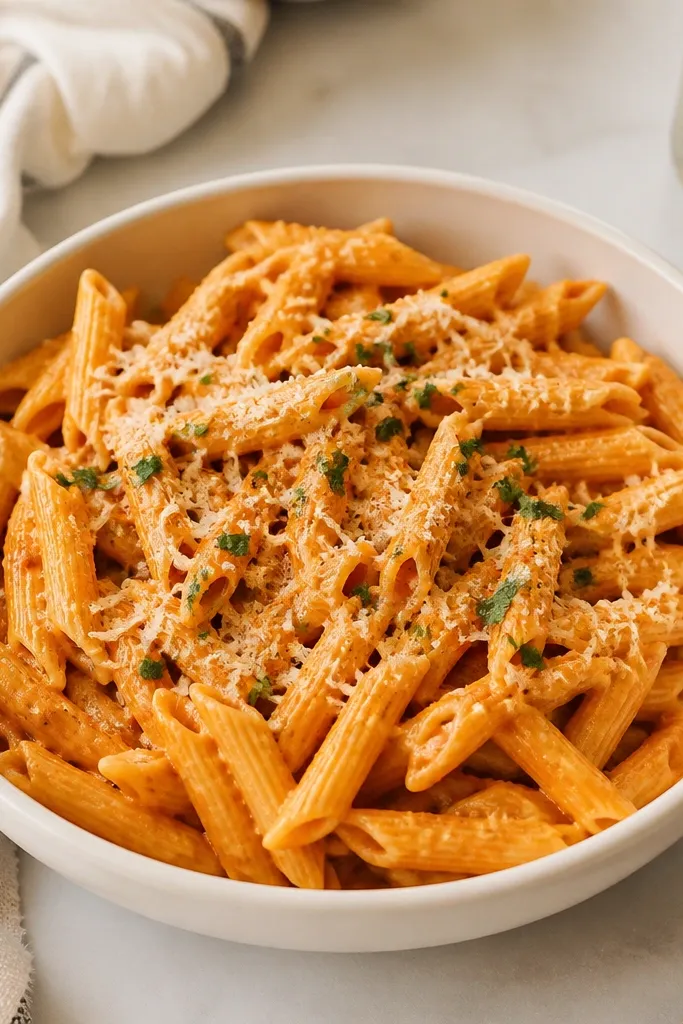
This is the "looks like a restaurant" finishing combo. White parmesan dust contrasts the blush sauce and makes the dish look intentional. Cracked black pepper adds tiny dark specks that read as fresh, not flat.
After plating, crack pepper over the top from a few inches away. Then add parmesan lightly with your fingertips so it lands in small patches instead of a thick blanket. Keep the garnish minimal so the sauce color stays the star.
Try thisPress a little parmesan between your fingers before sprinkling; it breaks into lighter flakes.
One warningSkip heavy garnish mounds - they absorb sauce and make the top look dry.
7. Garlic butter base for that soft Italian aroma
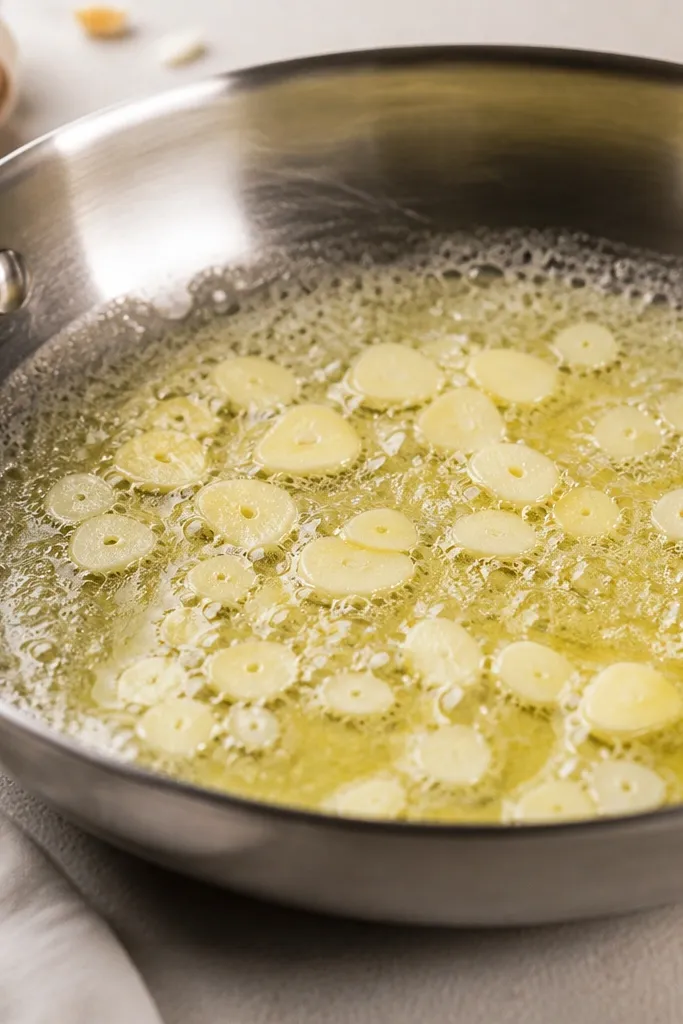
The base matters for the smell you get before the first bite. Garlic cooked until pale gold adds sweetness and makes the vodka sauce feel less sharp. Butter also helps the sauce look rounded and glossy once cream is in.
Melt butter on medium-low, add minced garlic, and stir for 20-30 seconds. Don't chase browning; you want fragrance only. Then add tomato paste and cook briefly so the paste coats the fat.
Try thisIf garlic starts to darken, reduce heat and add vodka sooner.
One warningDon't brown garlic - dark bits taste bitter and make the final sauce look darker too.
8. Pasta water adjustment for perfect coating thickness
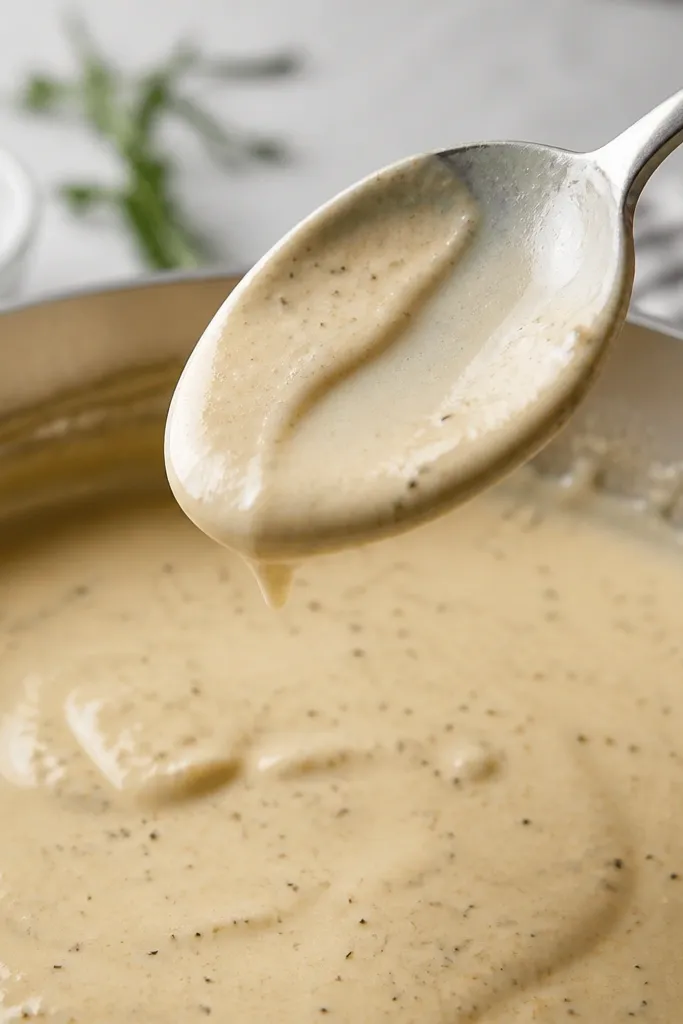
That cling is what makes the dish look like Brio. Pasta water has starch that thickens and emulsifies, giving the sauce a satin finish. Too thick looks sticky and heavy; too thin looks watery and pale.
After pasta finishes cooking in the sauce, add pasta water 2 tablespoons at a time. Stir constantly and let it simmer 20-30 seconds between additions. Stop when the sauce coats the spoon and you see a clean swipe line.
Try thisIf the sauce thickens as it sits, loosen with a splash of hot pasta water right before serving.
One warningDon't add plain water - it dilutes without starch and the sauce loses that glossy look.
9. Serving bowl trick: warm the dish so sauce stays glossy
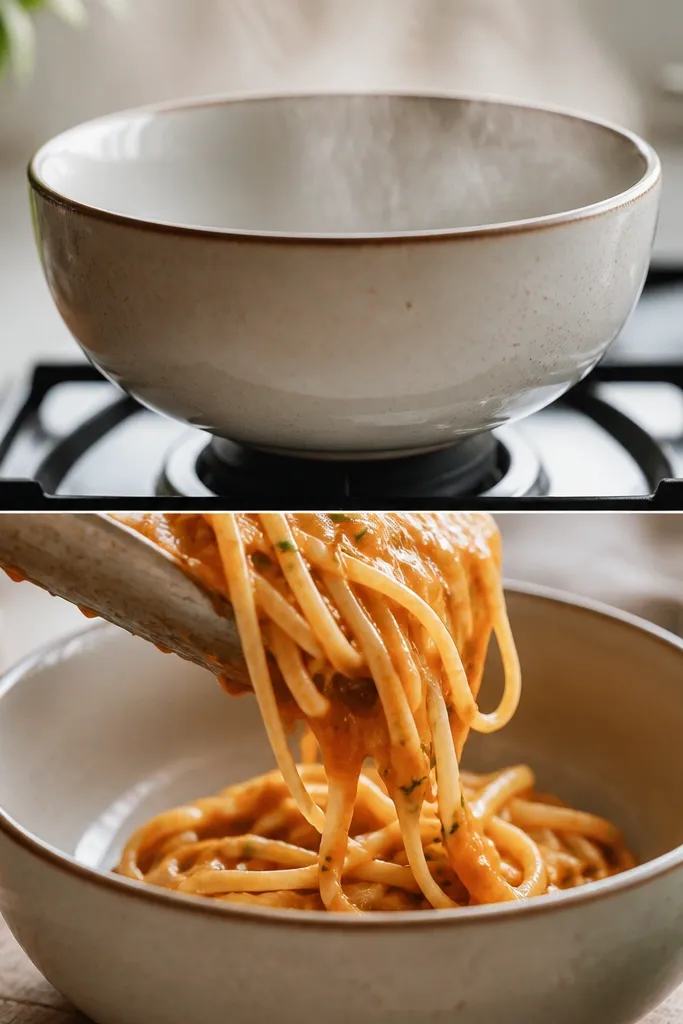
Hot pasta and hot sauce chemistry. If the bowl is cold, the cream sauce tightens and dulls fast, so it loses that restaurant sheen. Warming the bowl helps the sauce keep a smooth surface for the first few minutes after plating.
Run the bowl under hot water for 30-60 seconds, then dry quickly. Plate immediately after finishing the sauce. If you're serving a crowd, keep the finished pasta covered loosely and re-loosen with pasta water right before serving.
Try thisWarm your ladle too. It sounds silly, but it helps the sauce stay fluid while you portion.
One warningDon't plate and wait 15 minutes - cream sauces set and look thicker and chalkier.