1. Glassy Alfredo Swirl Over Cheese Pockets
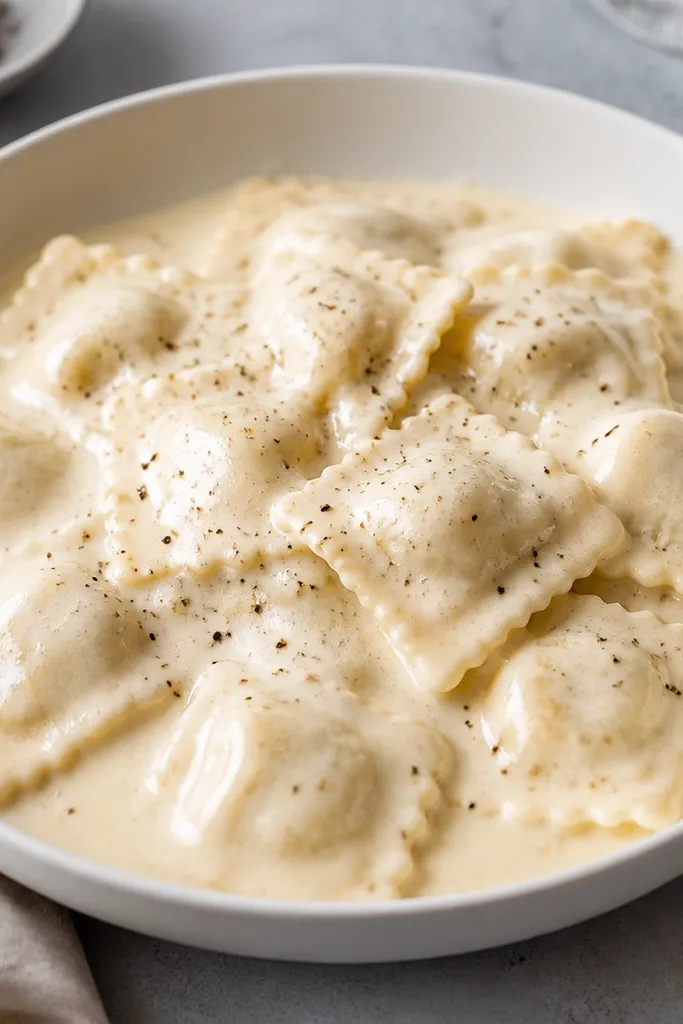
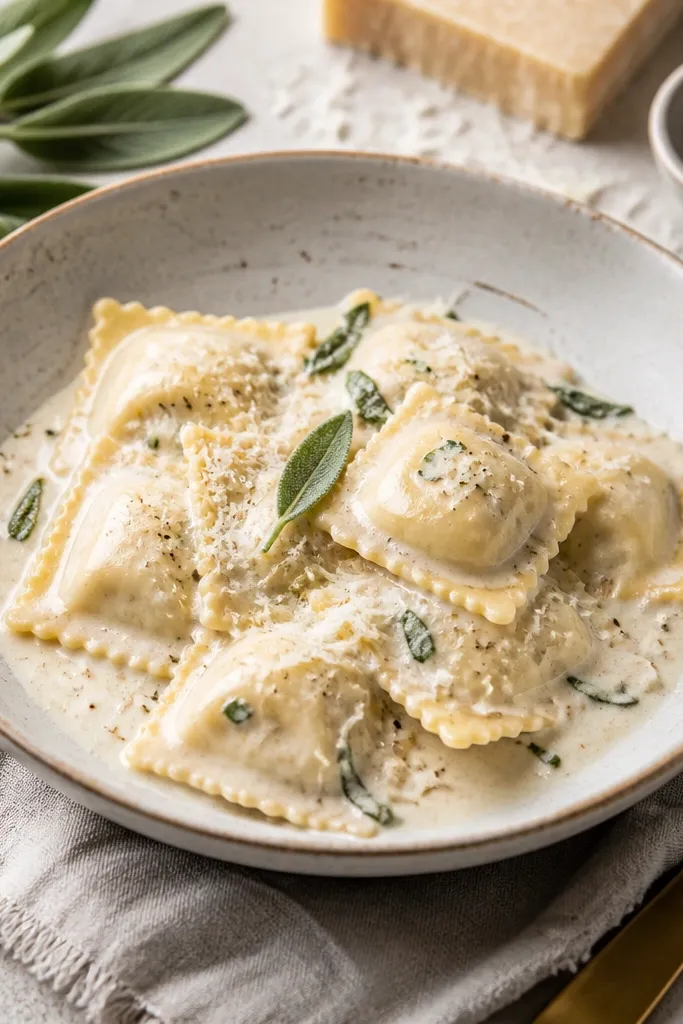
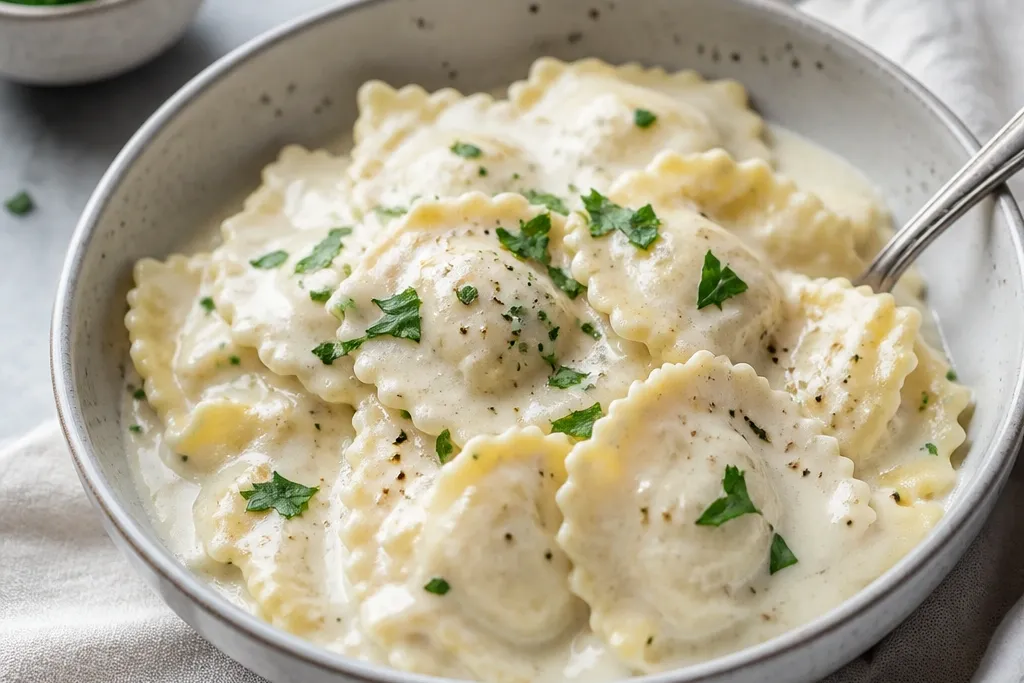
This look comes from keeping the sauce glossy while the ravioli releases just enough starch to thicken. I aim for an off-white sauce that clings to the ravioli, not a matte coating. When you stir gently and don't overcook, the ravioli edges stay intact and you see the cheese filling through the pasta seams.
Use a wide skillet so the sauce layer is thin enough to simmer quickly. Heat the alfredo until you see small bubbles at the edges, then slide in frozen ravioli in a single layer. Stir once after 2 minutes, then stop stirring so the ravioli doesn't get scuffed.
Try thisTurn off the heat right before serving and stir in parmesan for a smoother shine.
One warningDon't boil hard - split ravioli ruins the clean, glossy look fast.
2. Golden Butter Finish With Pepper Snow
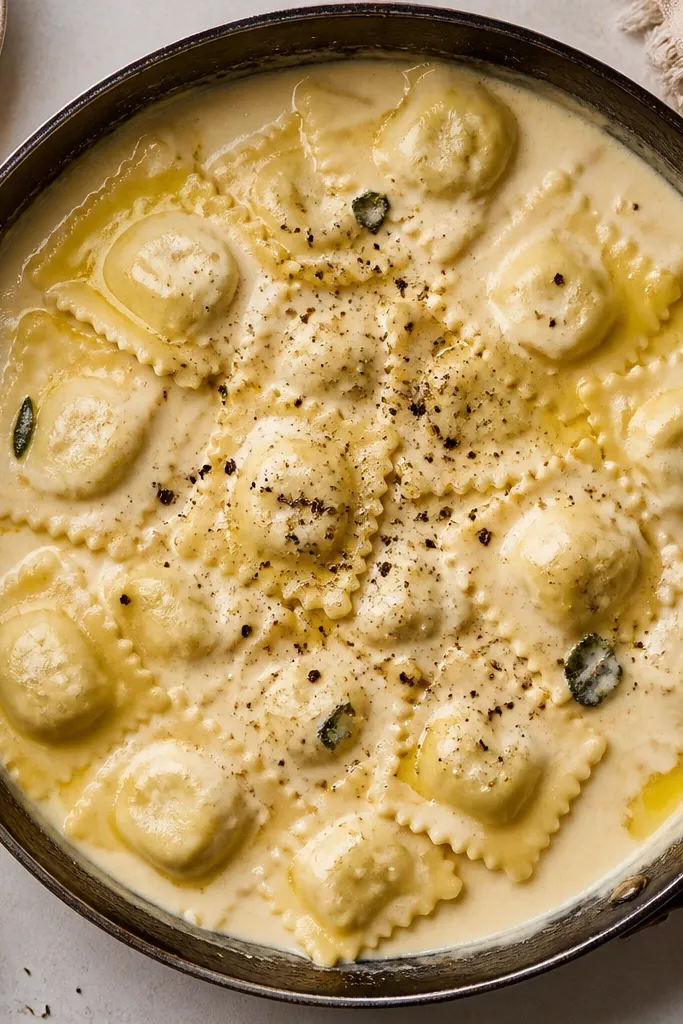
A small amount of butter at the end makes the sauce look richer without changing the flavor much. The pepper adds contrast - it's the difference between "pale bowl" and "inviting bowl." I use coarse black pepper so you see texture, not just dust.
After the ravioli are tender, add 1 tablespoon butter and stir for 20 seconds off heat. Sprinkle pepper right before you plate so it doesn't darken into the sauce. If you want extra shine, drizzle a teaspoon of reserved sauce from the skillet over the top.
Try thisUse a microplane parmesan right at the end so it melts instantly and looks flecked, not clumped.
One warningSkip pre-mixing pepper into the simmer - it can taste sharp and look dull.
3. Parsley-Laced Green Speckles on Off-White Sauce
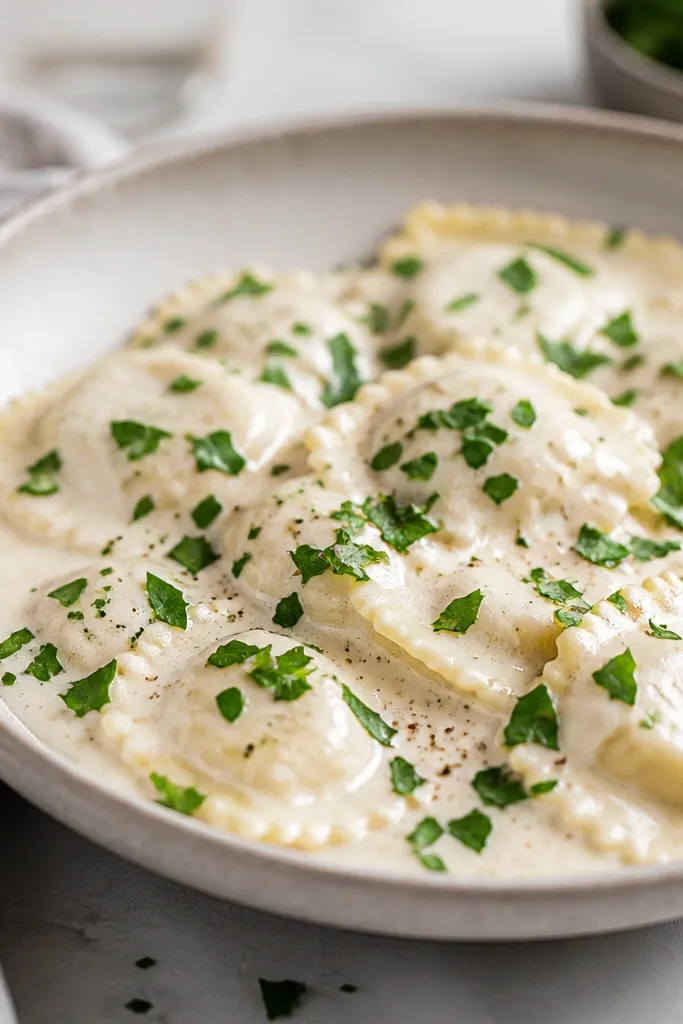
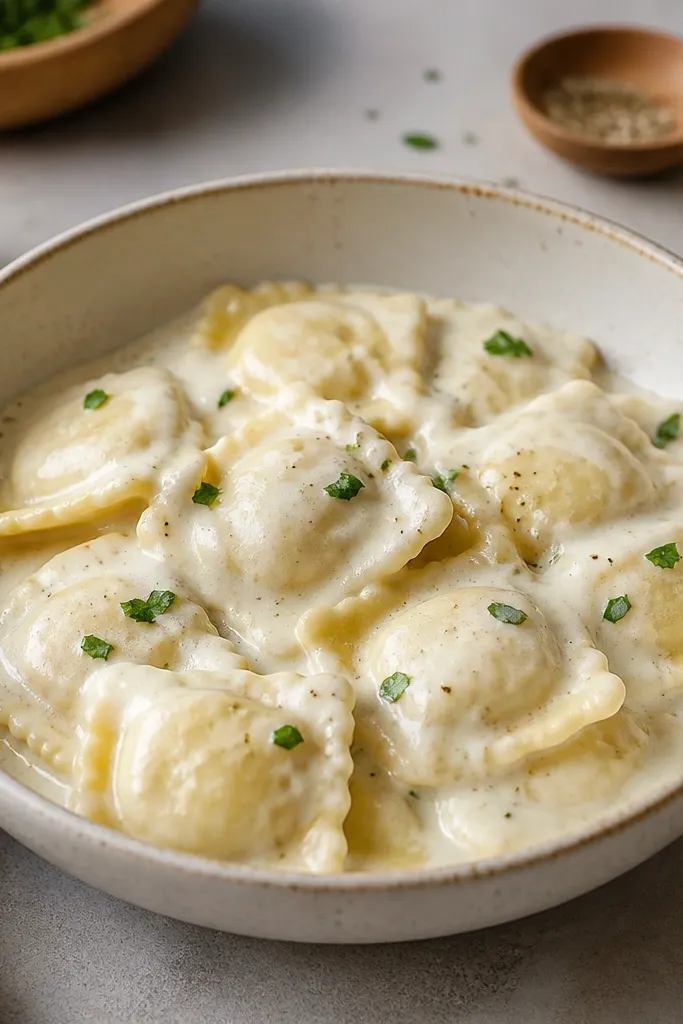
Parsley makes the bowl look finished because it breaks up the single-color cream. The trick is adding it at the right time so it stays bright. When parsley wilts in the heat too long, it turns darker and the sauce looks heavier.
Chop parsley very fine and dry it with a paper towel so water doesn't thin the sauce. Add about 1 tablespoon chopped parsley during the last 30 seconds of warm time, then plate immediately. If you're using dried parsley, use less - it never looks as fresh.
Try thisPat parsley dry and add it off heat for brighter green specks.
One warningDon't add a big handful at the start - it sinks and makes the sauce look muddy.
4. Lemon Zest Brightening the Whole Plate
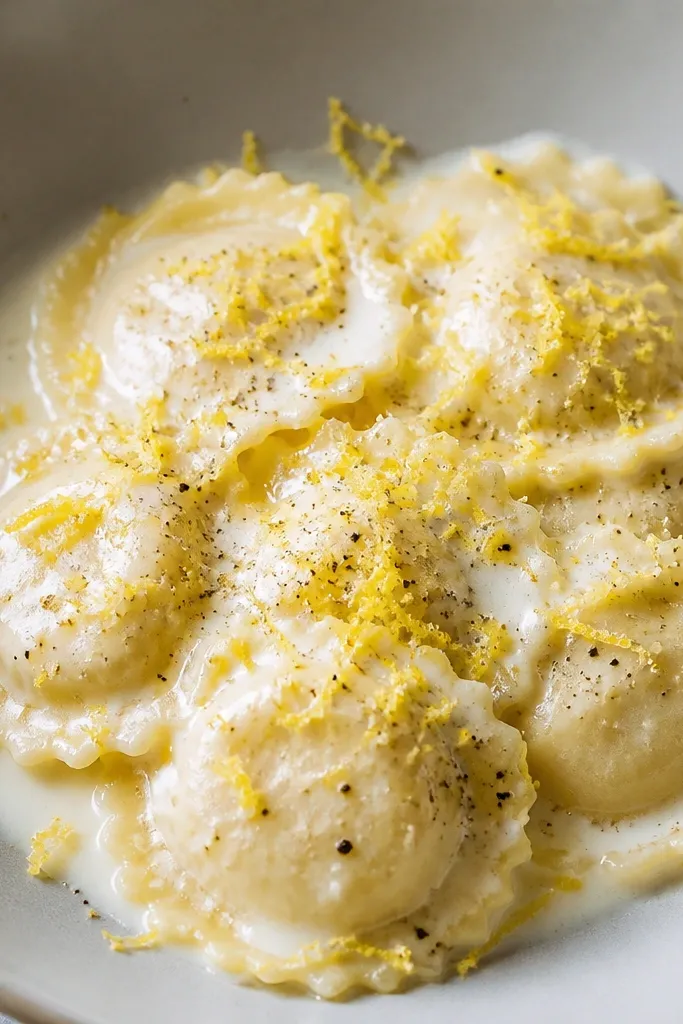
A little citrus makes alfredo taste less heavy and makes the surface look lively. Lemon zest is dry and stays visible, so it gives that "fresh" look without adding liquid. I use zest sparingly because too much makes the sauce taste sharp.
Use a microplane and zest one lemon over the plated ravioli, not in the pot. For a standard 20 oz package of ravioli, use about 1 teaspoon zest. Add it right before eating so it smells bright.
Try thisZest first, taste the sauce, then add another half-teaspoon if it needs lift.
One warningDon't use lemon juice in the simmer - it can split the sauce.
5. Skillet-Seared Edges for a Slightly Crisp Look
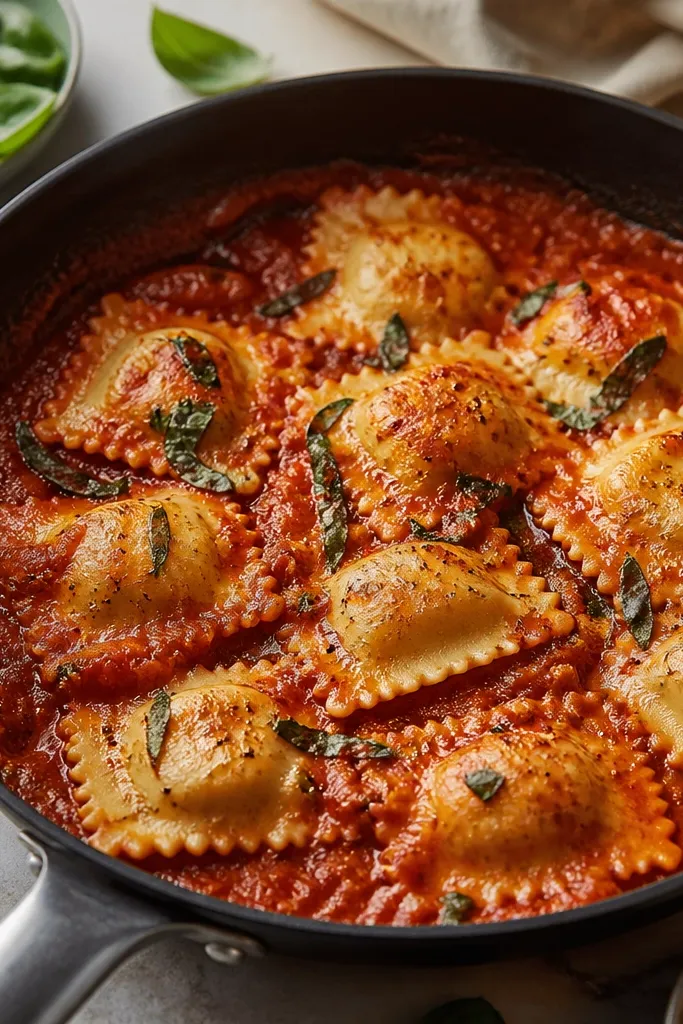
You get a more "cozy restaurant" look when some ravioli edges get gentle browning. That happens when the sauce is thick enough to cling and the heat is steady. The browned edges also add a deeper flavor note without extra steps.
After the first 2 minutes, let the sauce simmer without constant stirring so a few ravioli touch the skillet surface. Use a nonstick or well-seasoned pan so the edges brown without sticking. If the sauce is too thin, reduce it 1-2 minutes before adding ravioli.
Try thisIf you see the sauce bubbling too aggressively, lower the heat and keep the lid slightly ajar for even heating.
One warningDon't crowd the pan - packed ravioli steams and stays pale.
6. Parmesan Snowdrift With Melted Strings
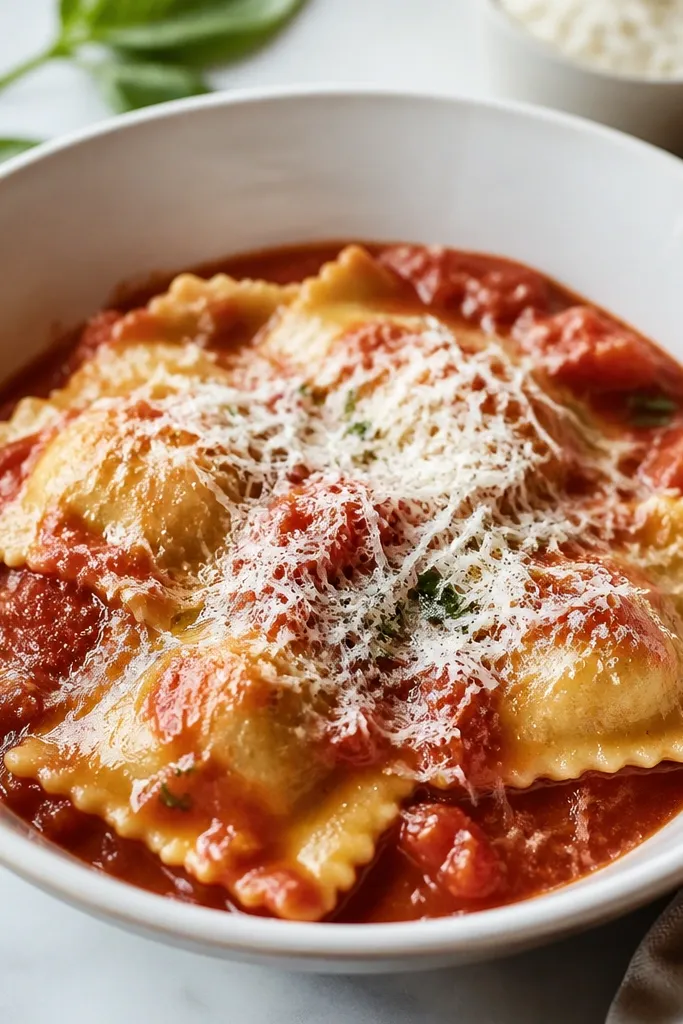
Fresh parmesan gives you that melt-and-string look because it's fine enough to melt quickly. It also makes the top look textured instead of flat. This works best when you add parmesan right after turning off the heat.
Turn off the burner, add 1/3 cup finely grated parmesan, and stir for 10 seconds. If you want snowdrifts, leave a small amount on top and don't stir it in fully. Use fine-grate, not shredded from a bag, for the clean melting effect.
Try thisGrate parmesan fresh from a wedge if you want the best melt texture.
One warningDon't add a thick layer of pre-shredded cheese - it can clump and look greasy.
7. Roasted Garlic Notes Without Actual Garlic Chunks
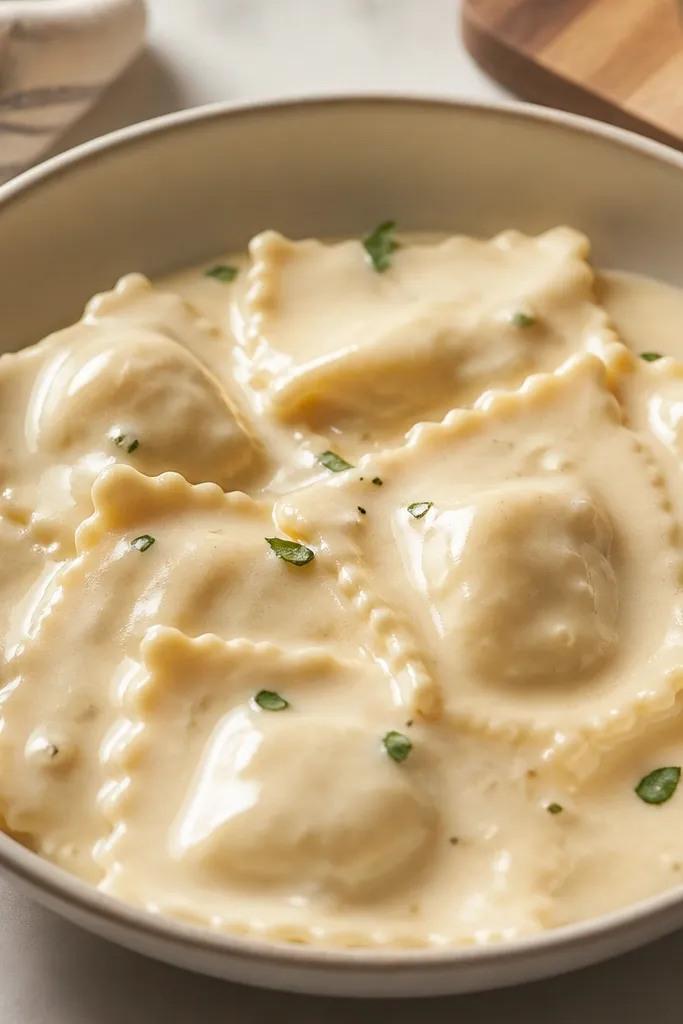
Roasted garlic adds a cozy sweetness, and you don't need big chunks for the flavor. Mixing in mashed garlic keeps the sauce looking smooth while still tasting like you tried. The golden tint comes from the garlic warming in the sauce.
Mash 1 roasted garlic clove with a fork until it's paste. Stir it into the warm alfredo off heat for 10 seconds, then reheat gently for 30-60 seconds with the ravioli. Keep it small - strong garlic can overpower cheese.
Try thisIf your garlic paste looks dry, stir in 1 teaspoon sauce first, then add it back to the pan.
One warningDon't use raw minced garlic - it tastes sharp and makes the sauce look speckled.
8. Tomato-Red Side Dishes for Color Contrast
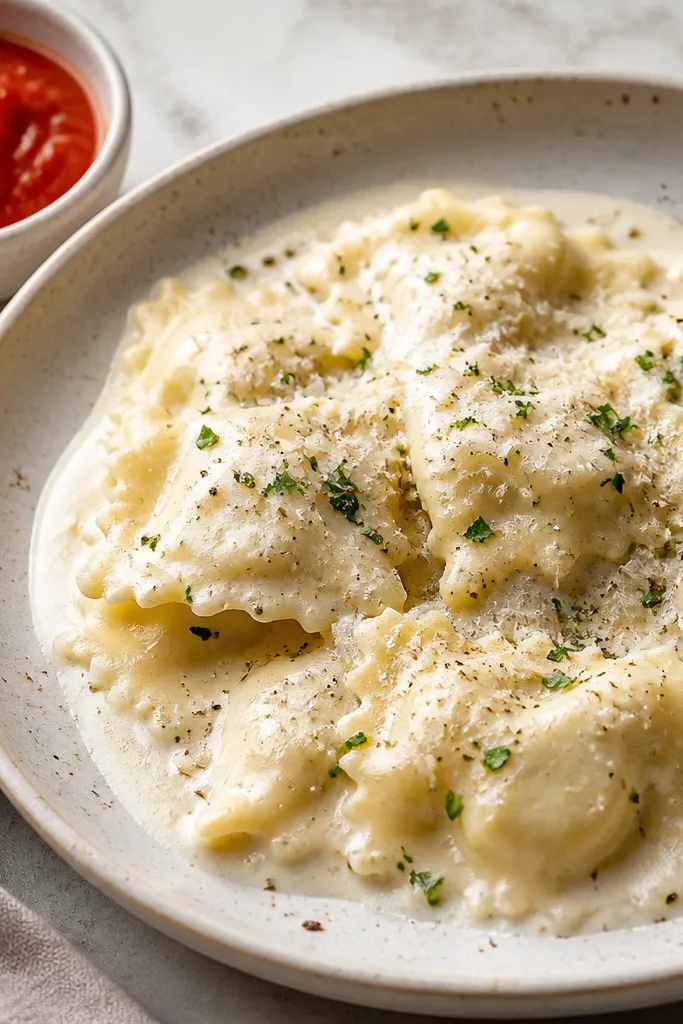
Cream sauce looks better when there's a red element somewhere on the plate. It gives the eye a place to rest and makes the meal feel intentional. Even a small amount of tomato makes the ravioli look more appetizing.
Serve a few roasted cherry tomatoes or a small ramekin of marinara on the side. Keep the tomato separate so it doesn't tint the alfredo. If you're using tomatoes, roast at 425°F until blistered, about 15-18 minutes, then season with salt and a tiny drizzle of olive oil.
Try thisAdd a pinch of flaky salt over tomatoes right before serving for a bright pop.
One warningDon't mix marinara into the alfredo - you lose the creamy look.
9. Creamy Bowl With Crispy Breadcrumb Sprinkle
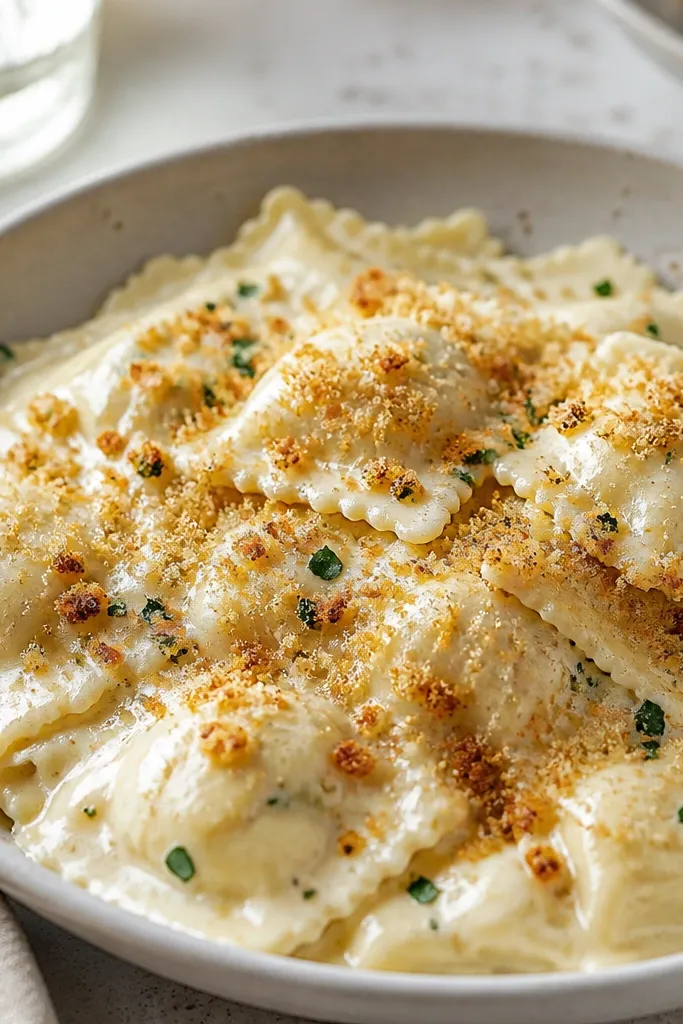
A crunchy top makes the dish look like you did more than microwave it. Toasted breadcrumbs absorb a little sauce, so they stay visible instead of dissolving instantly. It also changes the texture in a good way.
Toast 1/4 cup breadcrumbs in 1 tablespoon olive oil in a small pan until golden, 3-5 minutes. Season with salt and a pinch of garlic powder if you like. Sprinkle right before serving so they stay crisp.
Try thisUse panko for bigger crunch bits that look good on camera and in a bowl.
One warningDon't add breadcrumbs to the pot - they turn sandy and dull.
10. Bright Spinach Folded In at the Last Minute
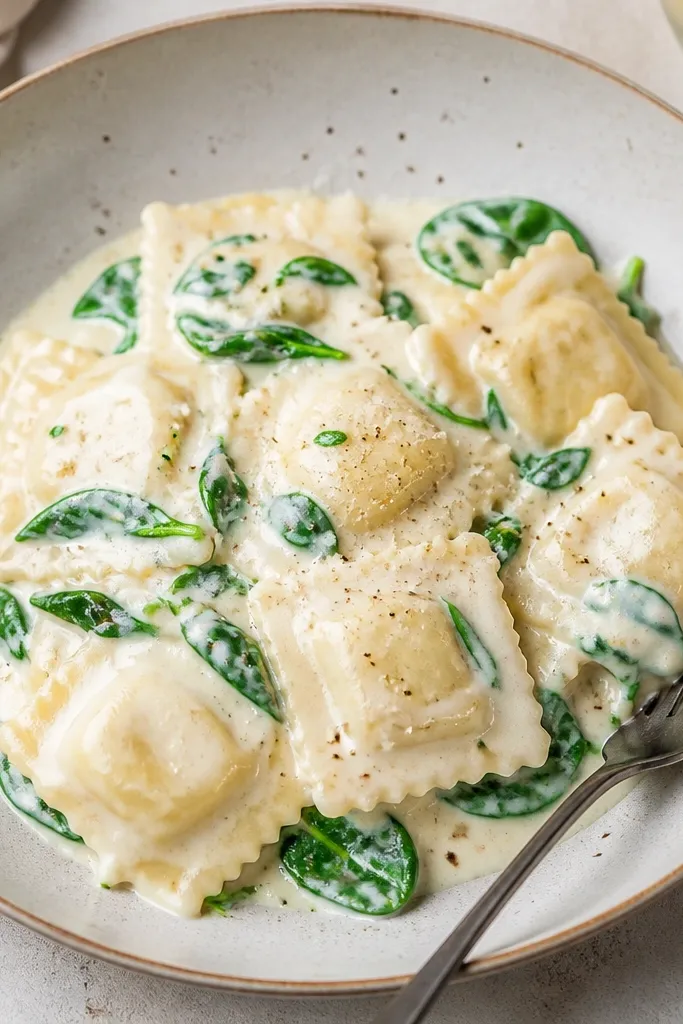
Spinach adds color and makes the bowl feel balanced, but timing matters. If you warm it too long, it turns dark and loses that fresh look. Quick heating keeps it bright and intact.
Use thawed frozen spinach squeezed dry, or fresh spinach wilted in the last 30 seconds. For frozen, squeeze with your hands or in a clean towel until it stops dripping. Stir in 1/2 cup and turn off the heat right after it warms.
Try thisSqueeze harder than you think you need to - water is what makes sauce look thin.
One warningDon't dump spinach straight from the freezer - it dumps water and ruins the texture.