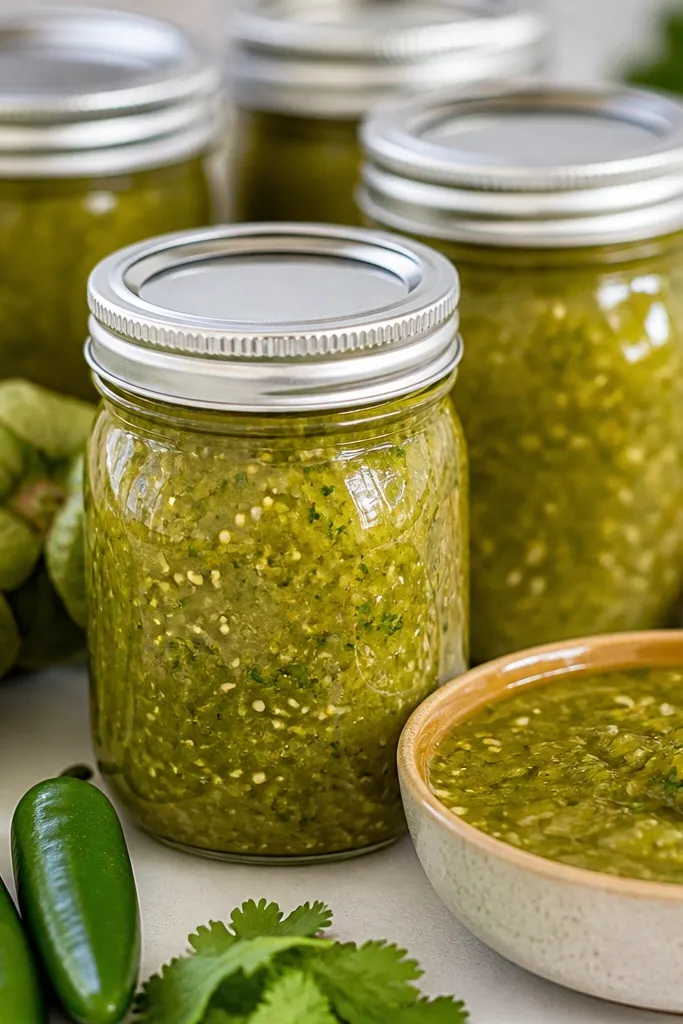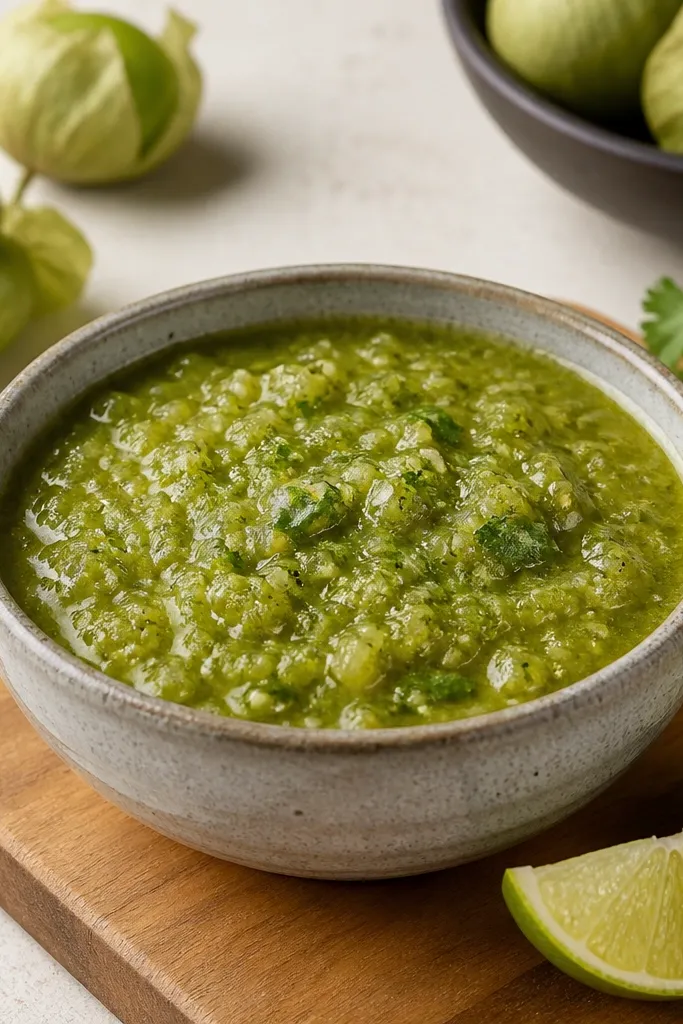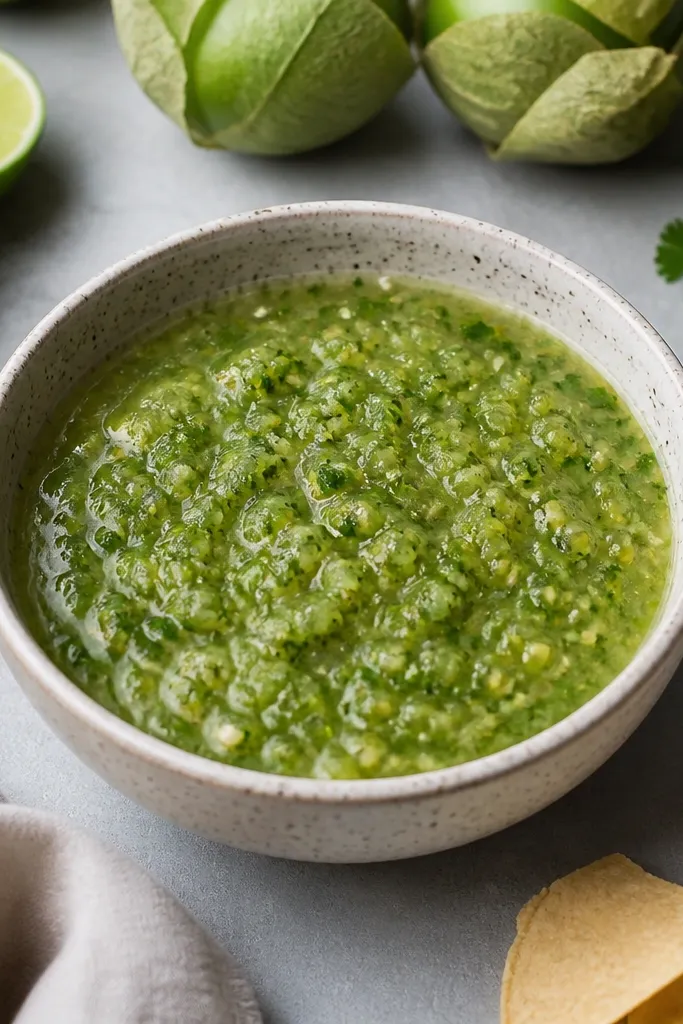
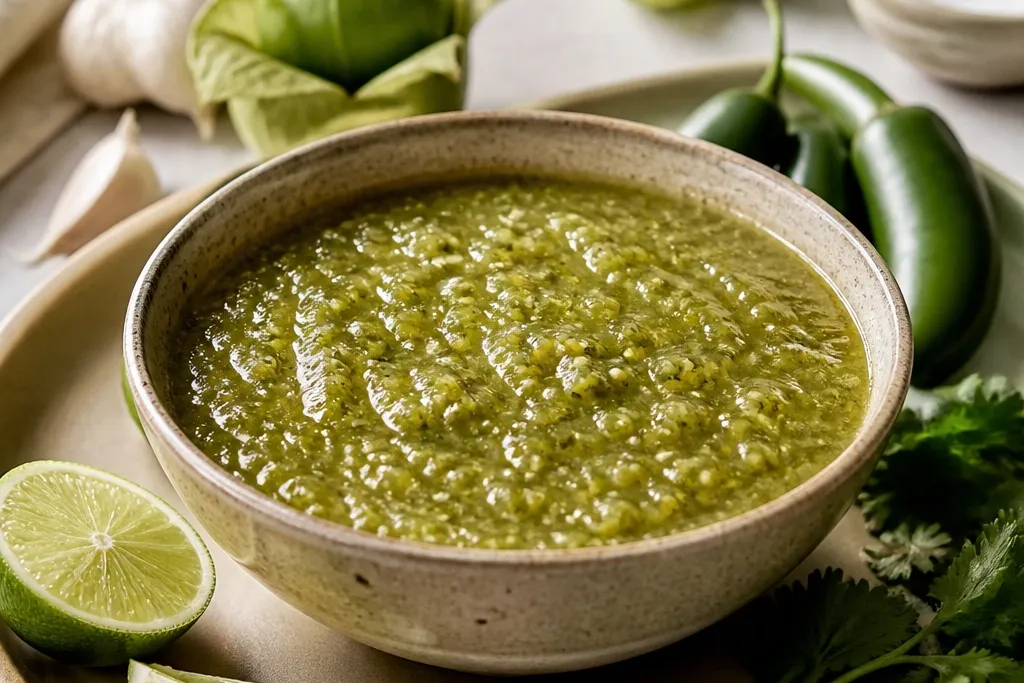
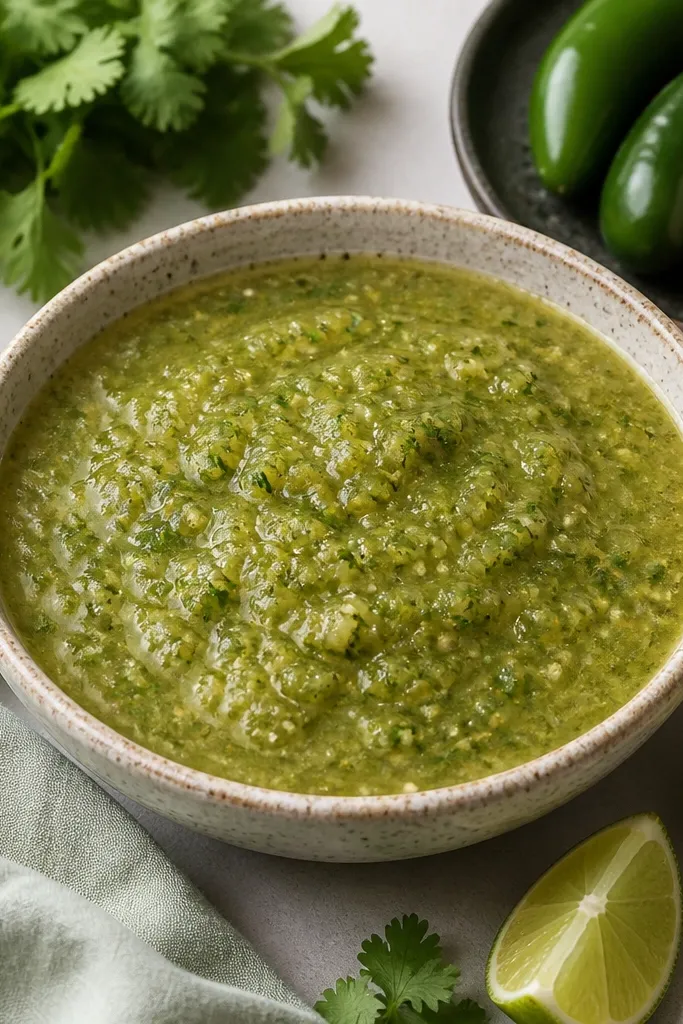
1. Charred Tomatillo Green Bowl With Cilantro Flecks
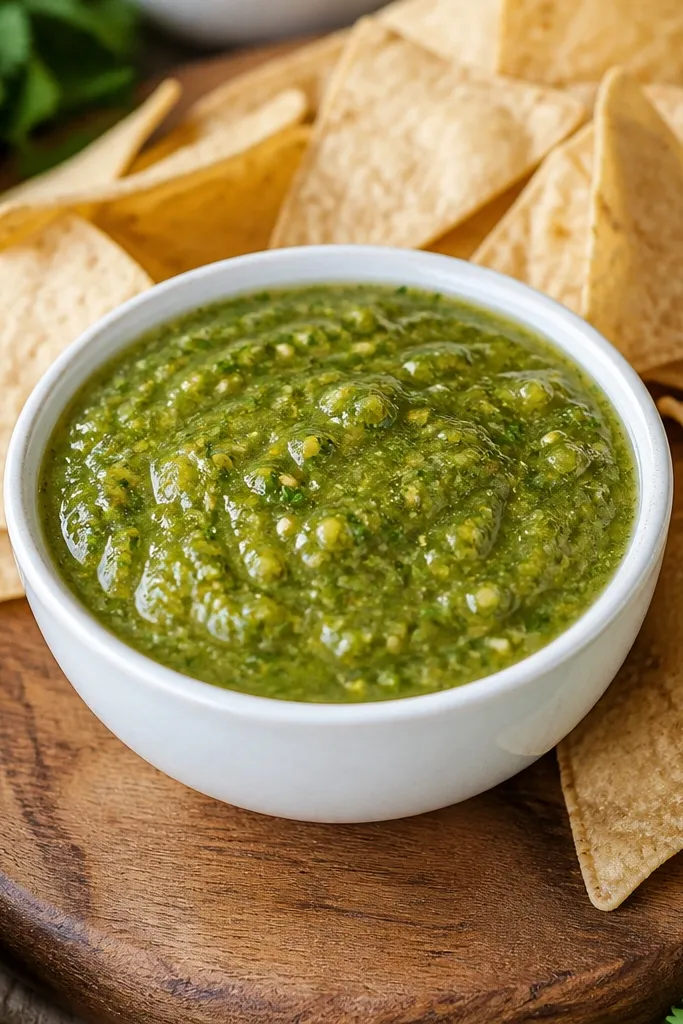
This look comes from keeping texture. When you roast tomatillos until the edges look slightly wrinkled and then blend in short bursts, you get a thick salsa that clings to chips instead of pooling. The cilantro flecks look lively because you blend most cilantro at the end, not at the start, so the color stays bright green.
Use 10 medium tomatillos, husked and rinsed, halved. Roast on a sheet pan at 450°F with cut-side down and space them out. Char 1 jalapeño alongside them, then add cilantro after blending so it doesn't turn dull. A 1/2 cup of water is plenty; add more only if it won't blend.
Try thisBlend 10-second pulses, scrape the sides, then stop. If it looks slightly chunky in the blender, that's the sweet spot.
One warningDon't boil or steam the tomatillos - that's the fastest route to watery salsa.
2. Smoky Jalapeño Starburst on Top
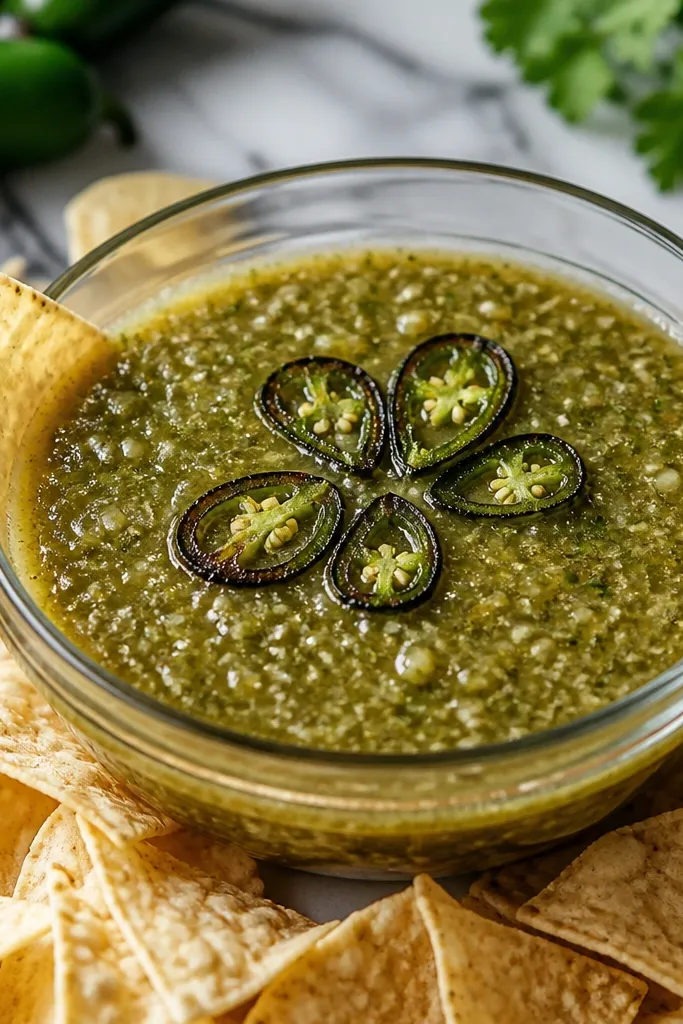
This is the easiest aesthetic upgrade: you keep a few jalapeño slices aside after roasting and place them on top. It reads as "fresh and handmade" because you can see the pepper char and shape. The smoky spots also change the visual from flat green to green with darker accents.
After roasting, peel the jalapeño if you want a cleaner look, then slice it thin. Spoon the salsa into the bowl and press 4-6 slices into the top. If the salsa is thick, the slices will stay put; if it's too loose, chill 10 minutes first.
Try thisSlice jalapeño while it's still warm so it cuts clean and glossy.
One warningDon't shred jalapeño into the salsa all at once - it can look messy and muddy the color.
3. Toasted Onion and Garlic Pearl Glint
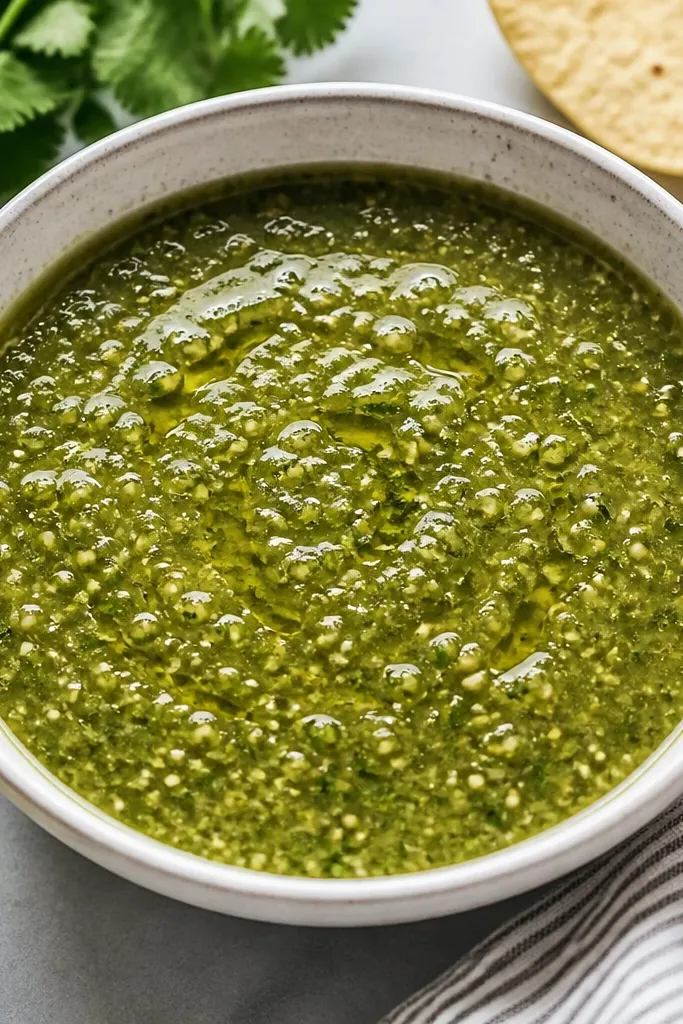
Onion and garlic add sweetness and aroma, but the look comes from how you add them. When you roast or char onion and garlic briefly, the bits stay small and glossy instead of disappearing into green mush. A tiny oil drizzle on top makes the salsa look shinier, like it came straight from a metal container at the taqueria.
Roast 1/4 of a white onion (cut into wedges) on the same pan as the jalapeños for 10-15 minutes. Add 2-3 garlic cloves to the pan for the last 8 minutes so they don't burn. Blend them with the tomatillos and charred peppers, then drizzle 1 teaspoon olive oil on top right before serving.
Try thisIf you want the "glint," drizzle oil only after blending and resting.
One warningDon't add raw garlic - it tastes sharp and makes the green look dull.
4. Cilantro-Leaf Crown With Lime Zest
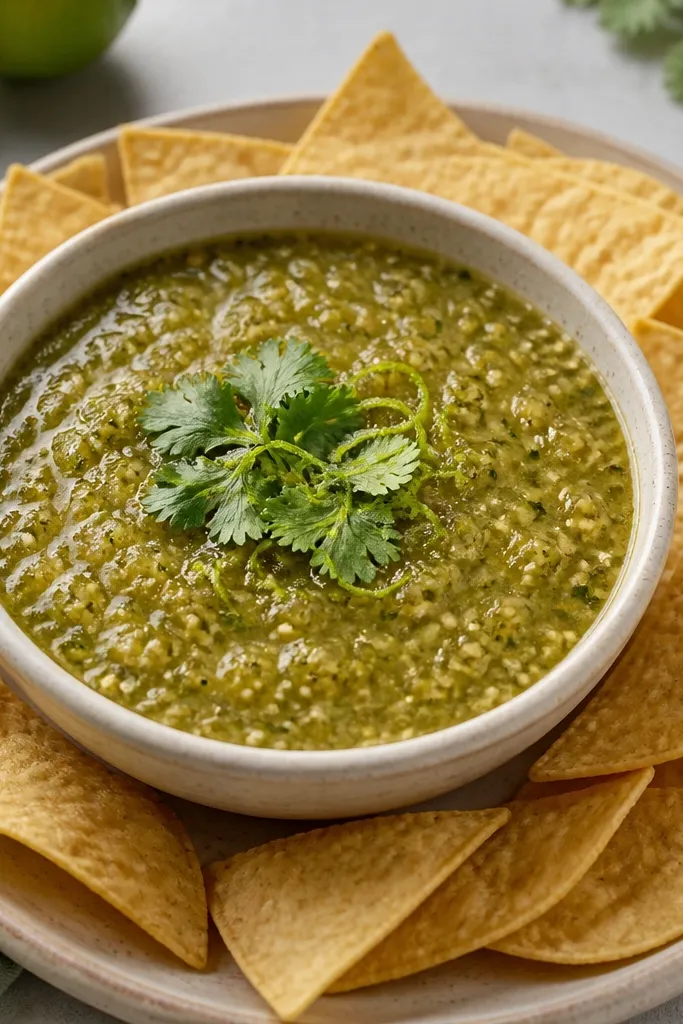
Whole cilantro leaves on top look fresh and intentional. Lime zest adds tiny yellow-green specks that pop against the salsa. This combination makes the salsa look brighter even if the base is thick and textured.
Blend cilantro into the salsa, then set aside 6-8 whole leaves for garnish. Zest 1/2 lime directly over the bowl using the fine side of a box grater. Place the cilantro leaves on top and serve immediately so the leaves don't wilt.
Try thisCut cilantro leaves by hand, not with a blender blade, so they keep their shape.
One warningDon't add bottled lime juice - it looks flat and tastes less punchy.
5. Blender-Pulse Texture in a Cast-Iron Spoon Dip
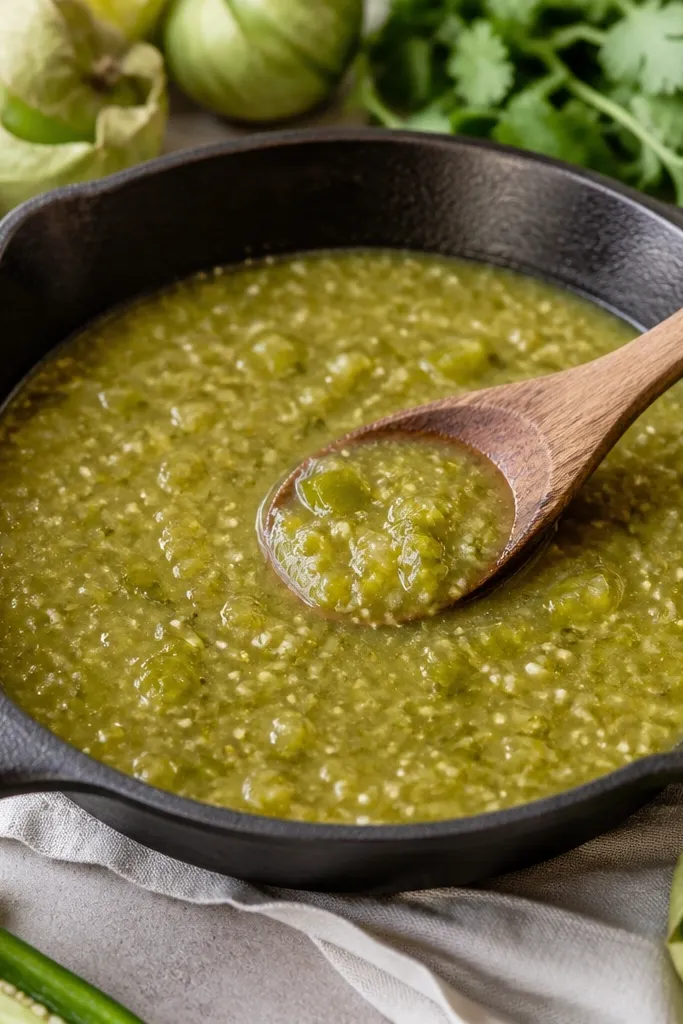
Chunky salsa reads "real taqueria" because it has body. The cast iron makes it look warm and rustic, and the sauce clings to the spoon instead of running. When you blend in pulses and stop while it still looks slightly uneven, you get that suspended texture.
Blend tomatillos and peppers in 10-second pulses. Aim for a consistency where chips leave a thick coating. Transfer to a small pre-warmed skillet or keep the bowl warm for 5 minutes before serving. Stir once right before serving to redistribute bits.
Try thisIf it's too thick, add water 1 tablespoon at a time and pulse again for 3-5 seconds.
One warningDon't overblend until smooth - it loses the taqueria texture and can look paste-like.
6. Green-Lime Drizzle Rim for a Clean Presentation
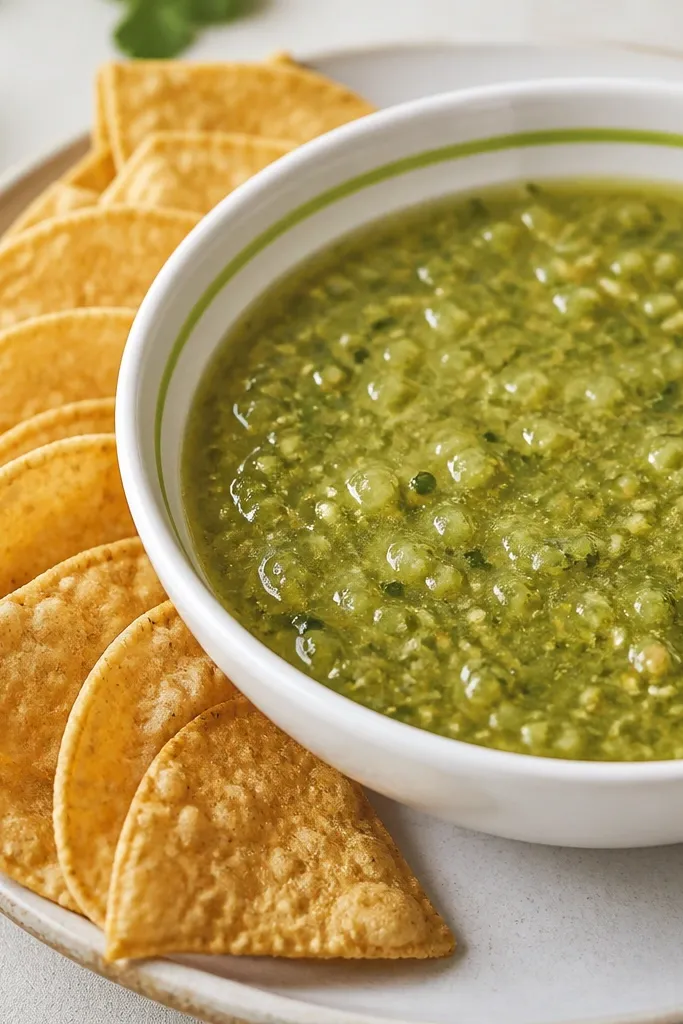
A thin rim drizzle makes the whole table look styled without changing the recipe. I use a slightly looser salsa from a second blend batch to create the drizzle - it spreads thin and looks glossy. It also helps the salsa look more "fresh" even when it's been sitting 20-30 minutes.
After the main salsa is done, reserve 1/4 cup. Add 1 tablespoon water and 1 teaspoon lime juice, then pulse for 5 seconds. Drizzle around the rim, then add the thicker salsa in the center.
Try thisUse a spoon to wipe drips off the rim so the bowl looks clean, not sloppy.
One warningDon't drizzle with hot liquid - it turns the garnish watery and messy.
7. Jalapeño and Serrano Two-Tone Heat Swirl
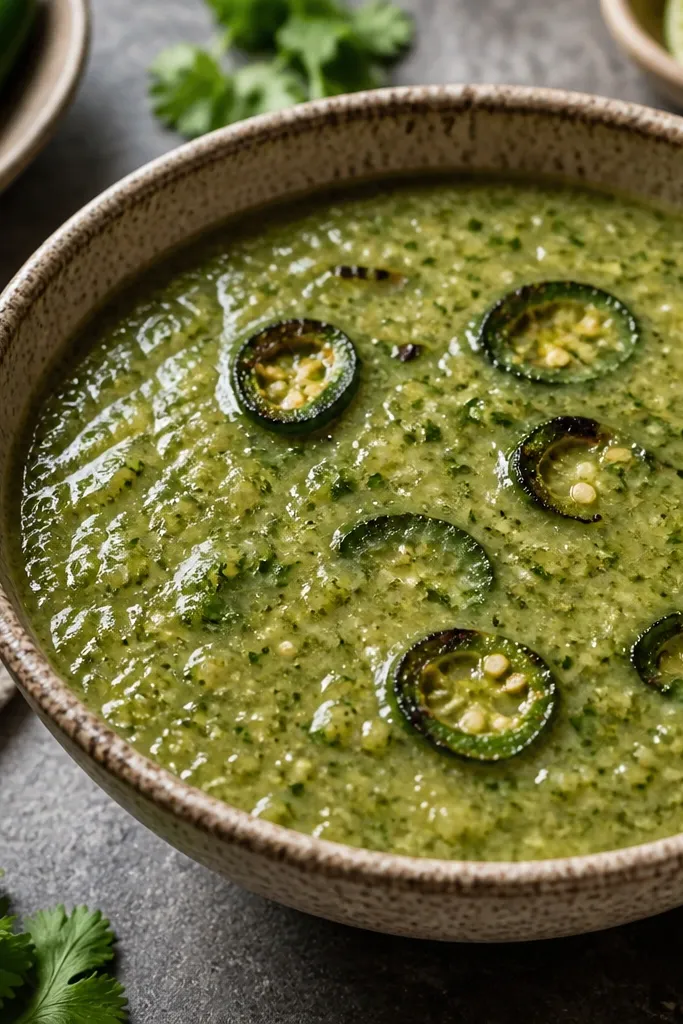
Two peppers roasted together create two tones: lighter green from tomatillos and darker green from extra pepper char. If you keep some serrano pieces intact and stir them in at the end, you get visible streaks. It looks like a taqueria blend where they tweak heat for each batch.
Roast 1 jalapeño and 1 small serrano. Blend tomatillos with jalapeño first, then add serrano in short pulses so it stays streaky. Garnish with 2-3 serrano slices on top.
Try thisIf you want a clean two-tone look, don't blend serrano longer than 8-10 seconds total.
One warningDon't seed everything - seeded peppers make the heat fade and the salsa looks one-note.
8. Chilled Salsa Verde With Glossy Surface
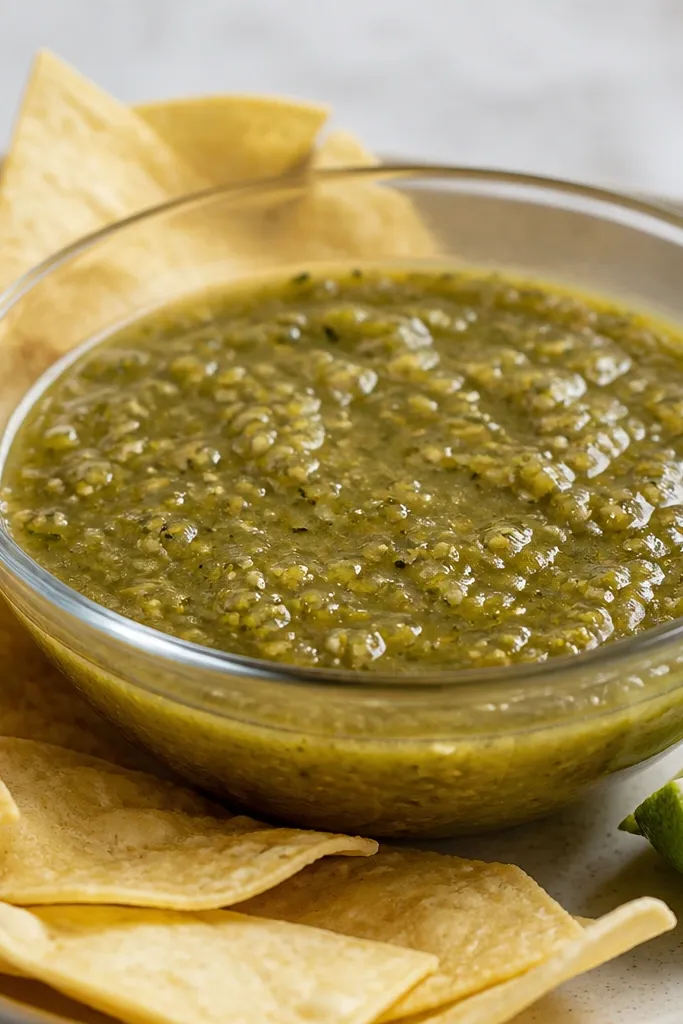
Chilling thick salsa makes it look restaurant-smooth on the surface while keeping texture underneath. The green darkens slightly, which looks richer under table lighting. This style is perfect if you're serving at a party and want it to look steady for guests.
Blend, then press plastic wrap directly onto the surface to prevent a skin. Chill 30-45 minutes. Stir once right before serving so the texture evens out. Serve with sturdy chips that won't shatter from cold salsa.
Try thisPress plastic wrap to the surface - it keeps the top bright instead of drying out.
One warningDon't leave it uncovered - the top oxidizes and gets dull fast.
9. Grilled Corn Side Pour for a Sweet-Savory Contrast
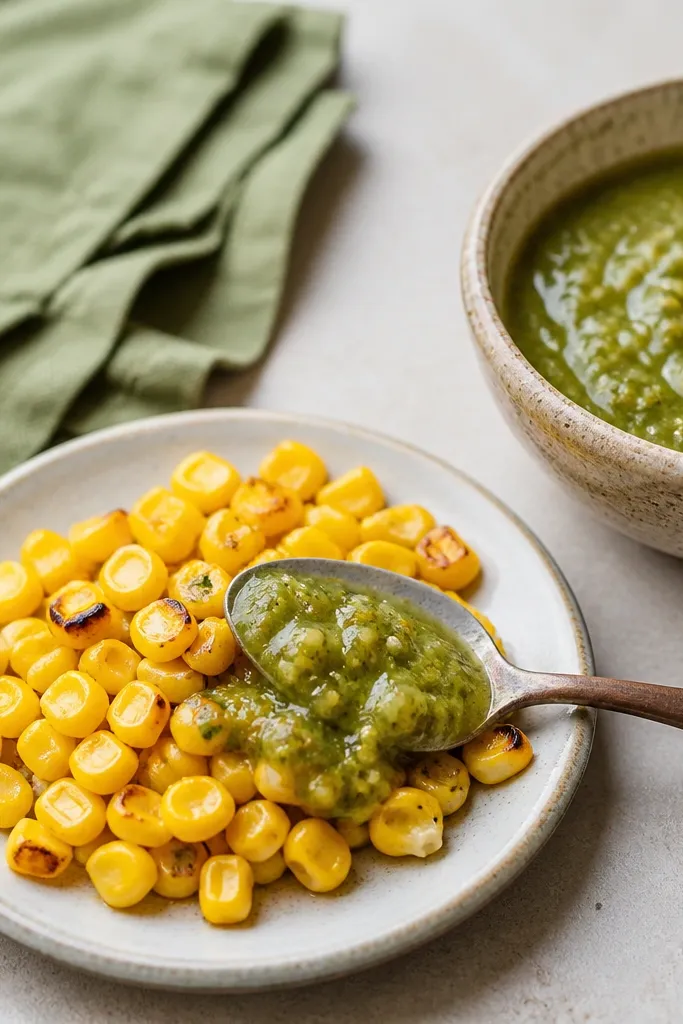
This is how I make salsa verde look like part of a full taqueria plate, not just a dip. The corn brings golden color next to the bright green, and the salsa clings to kernels so it looks thick and intentional. The sweet-savory combo makes the salsa taste more balanced too.
Grill 2 ears of corn until you see dark char spots, then cut kernels off the cob. Spoon salsa verde over the corn and add a pinch of cotija or crumbled queso fresco. Put the salsa bowl next to the corn so people can customize their heat.
Try thisSalt the corn right after grilling, not after adding salsa, so it stays bright and crisp.
One warningDon't drown the corn - use a few spoonfuls so the corn char still shows.
10. Taqueria-Style Serving Tray With Small Bowls
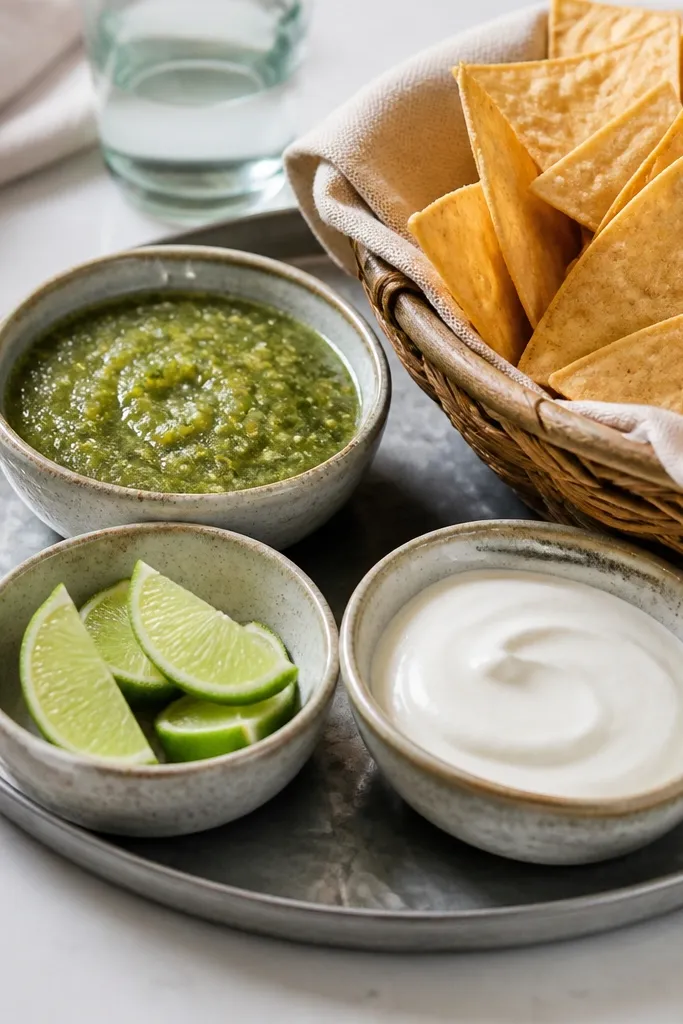
Aesthetic isn't just the salsa. When you serve in small bowls, it looks like you're doing it on purpose, the way taquerias handle toppings. Salsa verde looks brighter next to white crema and yellow lime. Guests also control heat and tang without messing up the main bowl.
Set out salsa verde in the center bowl. Put crema in a second bowl, and lime wedges in the third. Keep chips in a basket so they don't spill onto the tray. If you want it extra tidy, wipe the outside of the salsa bowl with a damp paper towel.
Try thisUse one spoon per bowl so the tray stays clean and the toppings don't blend together.
One warningDon't mix crema into the whole salsa - the color turns murky and looks off.