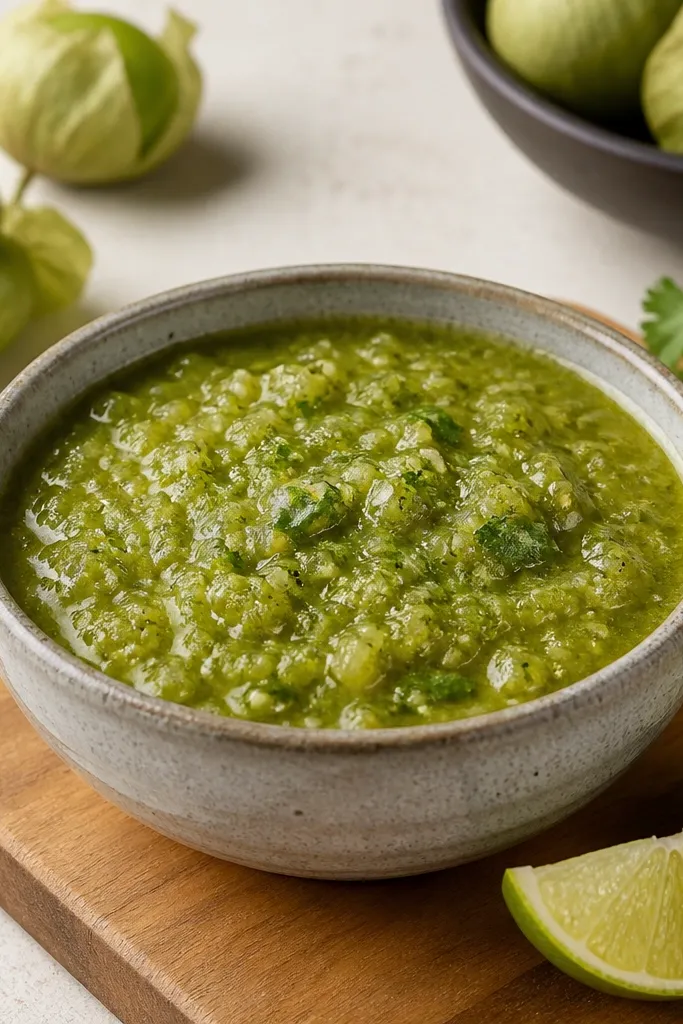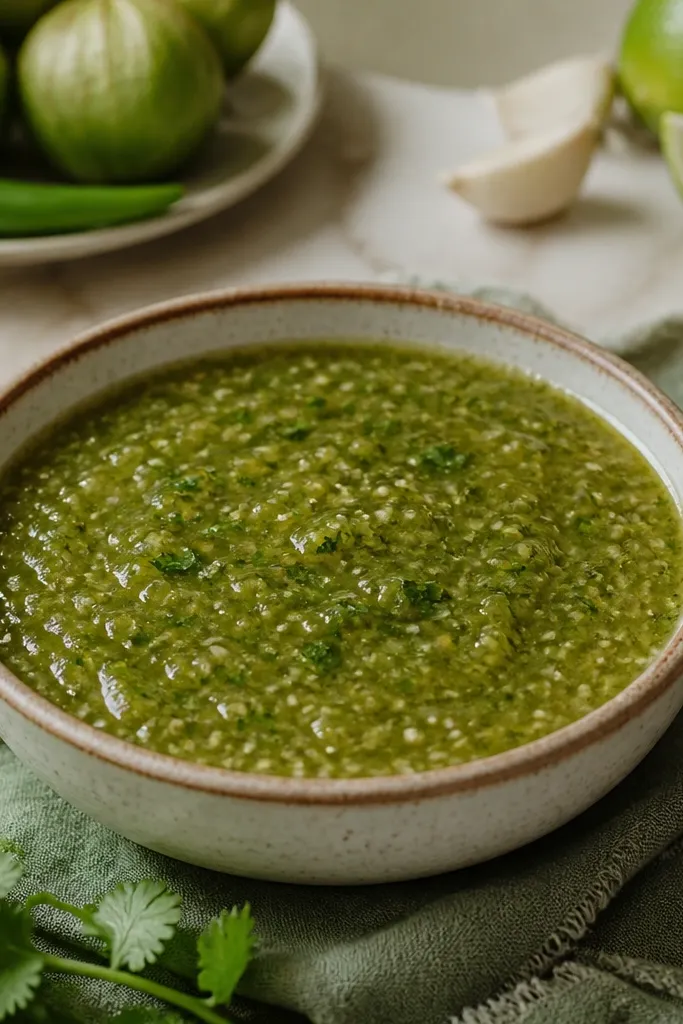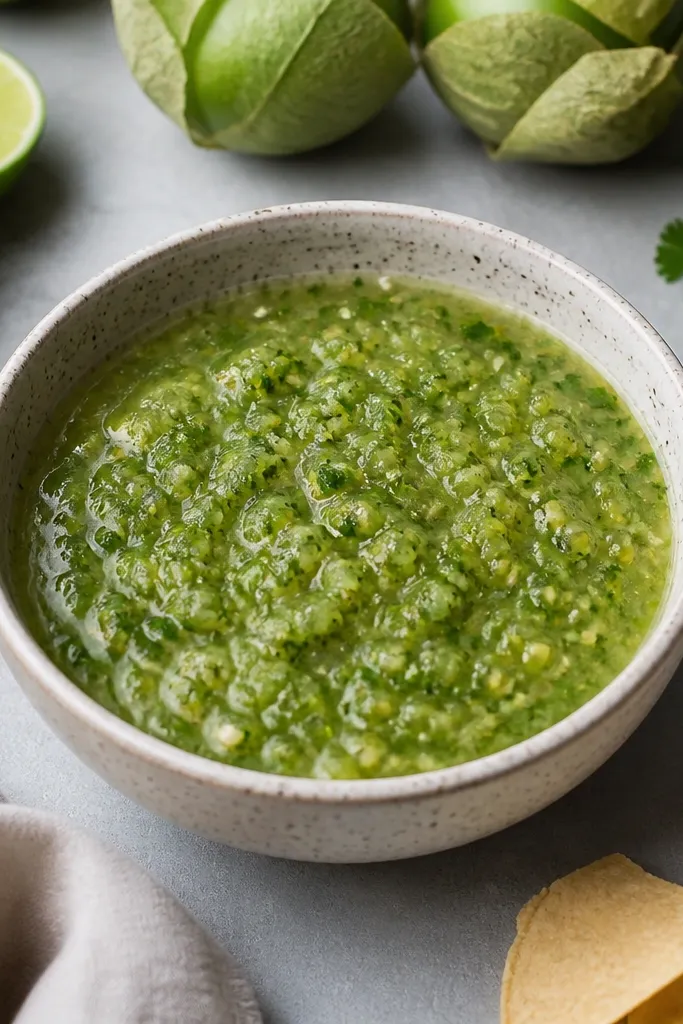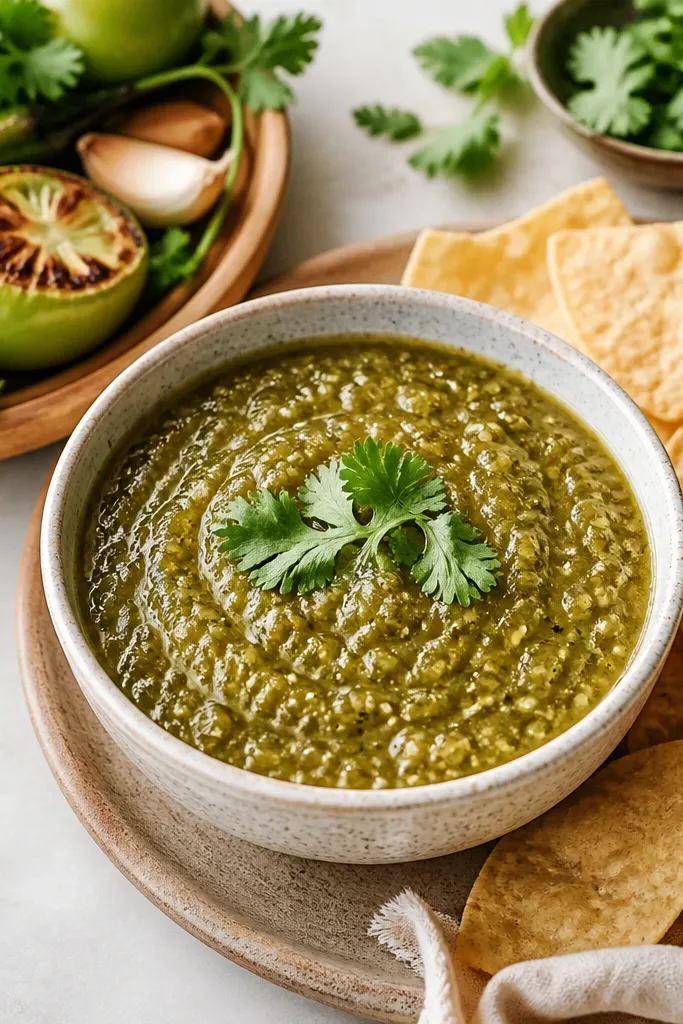
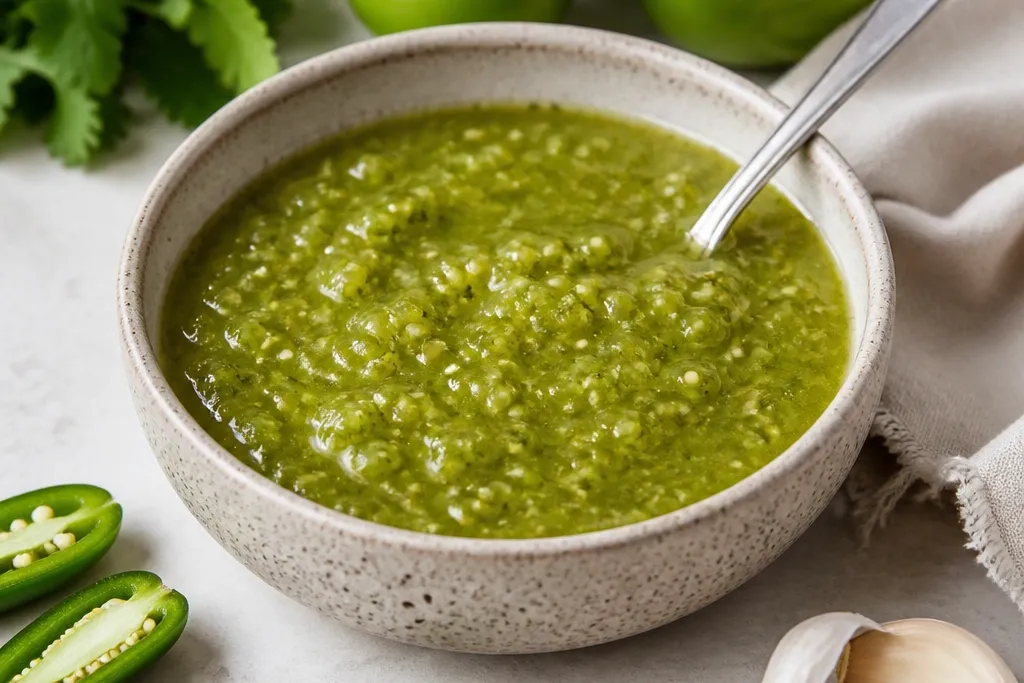
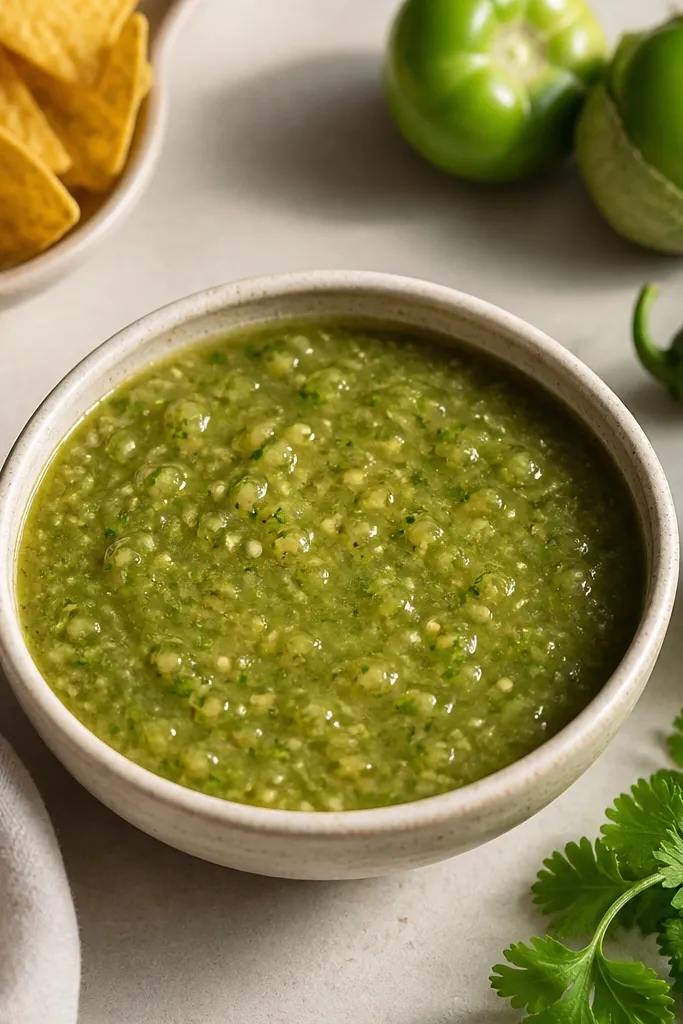
1. Glossy Broiler-Blistered Green
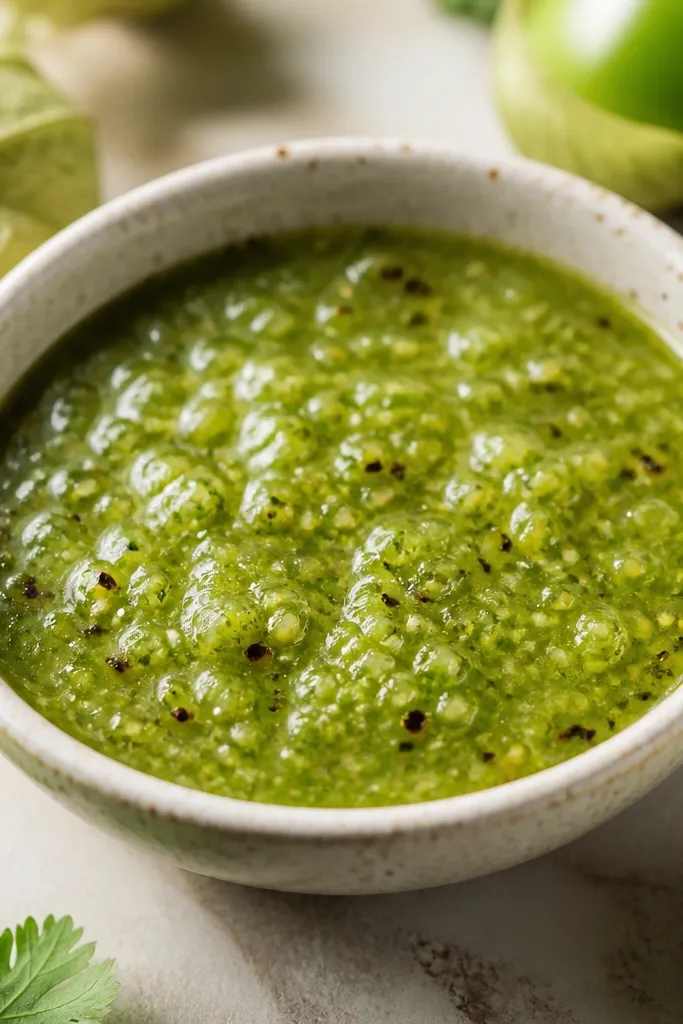
This look comes from roasting until the tomatillo skins blister and darken in spots, then blending just enough to break them down. The glossy surface happens when the hot tomatillos release juices and emulsify with the oil and water you add. You'll see flecks of green herbs instead of a uniform puree, which makes it look fresh on the table.
Use 1 lb tomatillos on a foil-lined sheet pan. Roast at 475°F for 12-18 minutes, turning once, until the skins blister and the fruit looks slightly collapsed. Blend with 1 jalapeño, 1/2 onion, and 2-3 tablespoons water, pulsing 8-10 times.
Try thisAdd 1 tablespoon olive oil while blending for a shinier surface that clings to chips.
One warningSkip blending continuously - it makes the salsa look dull and turns the texture watery.
2. Fresh-Fleck Herb Speckle
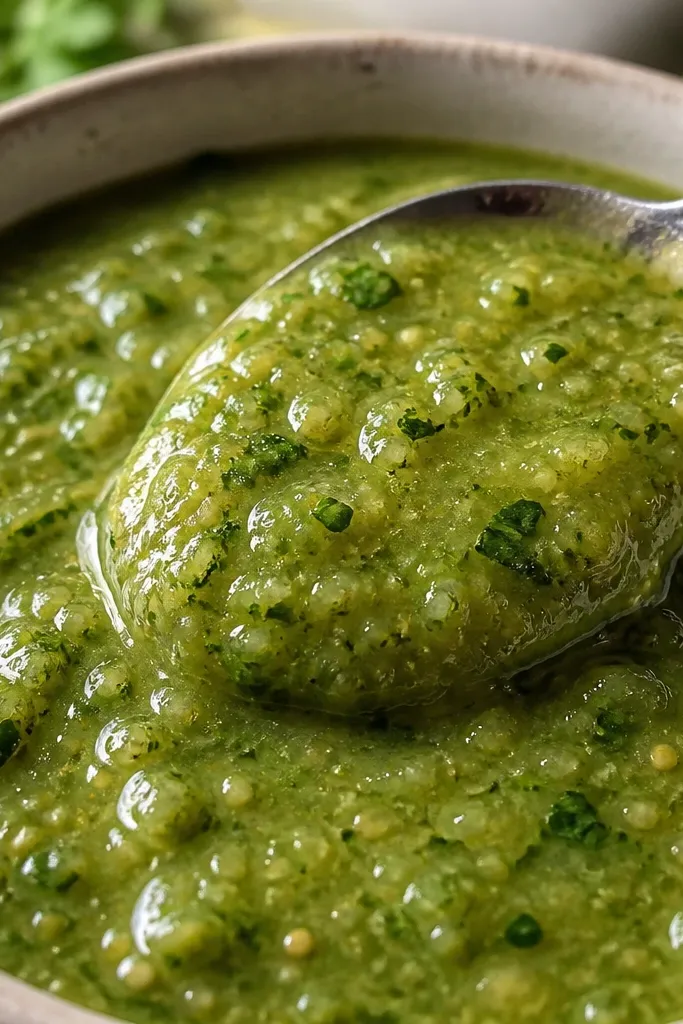
Herb flecks make salsa verde look alive. I use cilantro stems plus leaves, and I add them in two steps: stems in the blender, leaves stirred in after. That keeps the color greener and avoids the browned cilantro look that happens when you overblend.
Pull cilantro stems into a blender first with the roasted tomatillos. After blending, stir in 1/3 cup cilantro leaves by hand. If your salsa is too thick, loosen with 1 tablespoon water at a time.
Try thisKeep the cilantro leaves cold. I store them in a paper towel in the fridge so they stay bright.
One warningDon't blend all cilantro too long - it turns the salsa a muted green.
3. Charred Jalapeño Edge Tint
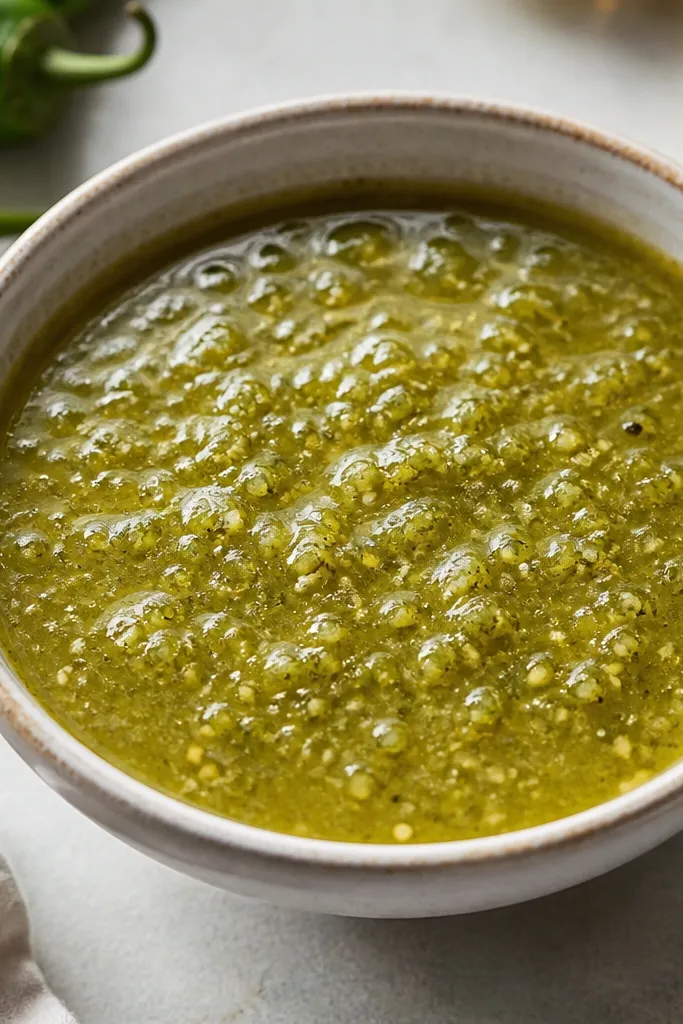
A little char gives depth without making the salsa look brown. The jalapeño should have blistered skin, but the inside should stay green. When you add it, the salsa gets those tiny dark flecks that look intentional instead of messy.
Roast jalapeño on the same pan for 6-10 minutes after the tomatillos start blistering. Add the jalapeño with seeds for medium heat, or remove seeds for a milder look. Blend in pulses so the char specks stay visible.
Try thisIf it looks too pale, blend in 1 roasted jalapeño strip at a time until you like the color.
One warningAvoid adding raw jalapeño - the salsa looks flat and smells sharp.
4. Chunky Spoon-Stand Texture
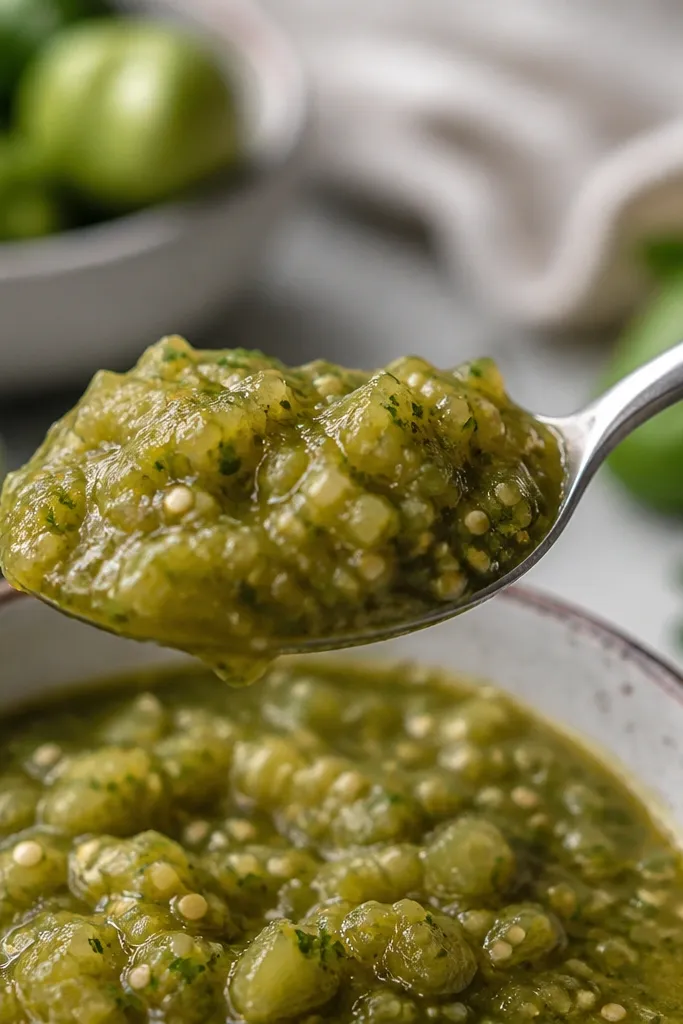
Chunky texture looks better on tacos because it clings instead of running. It also keeps the salsa from tasting cooked. This texture comes from pulsing and adding water slowly so you don't over-thin it.
Blend roasted tomatillos in 6-8 short pulses, then stop while it still looks slightly chunky. Add water only 1 tablespoon at a time until it looks like thick yogurt. Let it sit 10 minutes - it thickens as it cools.
Try thisFor serving, spoon into a shallow bowl. Thicker salsa spreads less and looks more styled.
One warningDon't add a full cup of water at once - thin salsa verde looks gray and watery.
5. Toaster-Oven Small-Batch Look
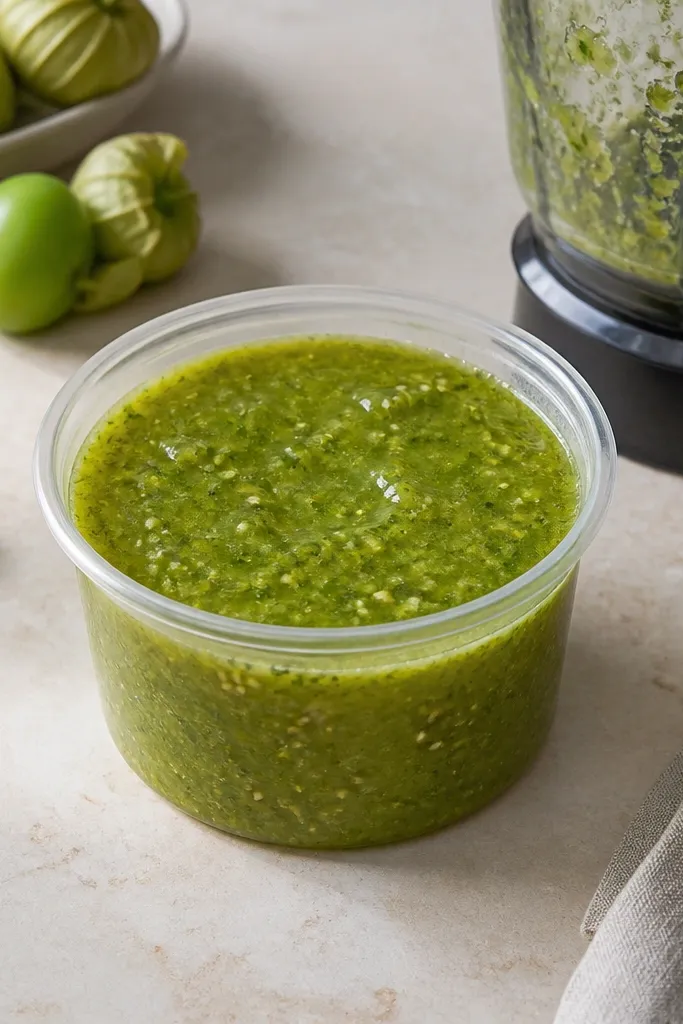
Renters need a method that works with limited counter and heat. In a toaster oven, smaller pieces roast faster and you get consistent blistering. The salsa ends up bright because you're not overcooking on a crowded sheet pan.
Cut tomatillos in half so they roast evenly. Roast at 450°F for 10-14 minutes until blistered. Blend with 1/4 onion, 1 jalapeño, and 2 tablespoons water for a small batch.
Try thisLine the tray with foil and press it tight - small toaster ovens cause uneven scorching.
One warningDon't crowd the tray. Crowding steams the tomatillos and kills the char.
6. Lime-Sparkle Finish
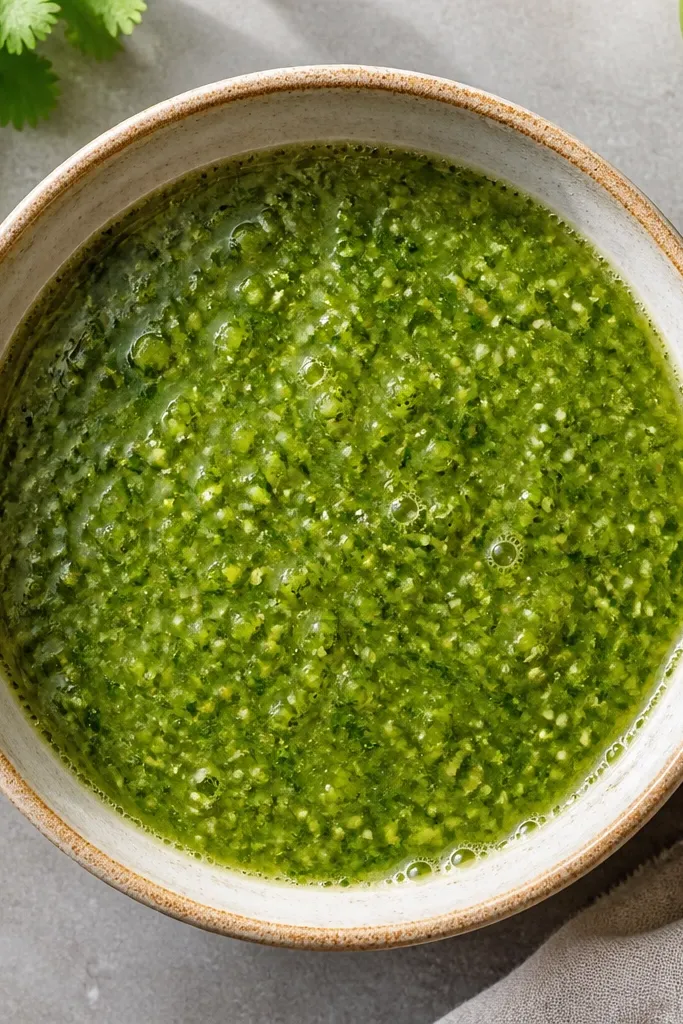
Lime makes the color pop and the flavor feel lifted. I add lime after blending so it doesn't get muted by heat. The "sparkle" look is from the salsa cooling slightly and then reacting with the acid.
After blending and salting, stir in 1 tablespoon lime juice. Taste, then add another teaspoon if you want it sharper. Chill 15 minutes before serving for the best sheen.
Try thisUse fresh lime. Bottled lime juice makes the salsa look flatter and smell more metallic.
One warningSkip adding lime before roasting - the flavor dulls during blending and cooling.
7. Roasted Onion Soft Glow
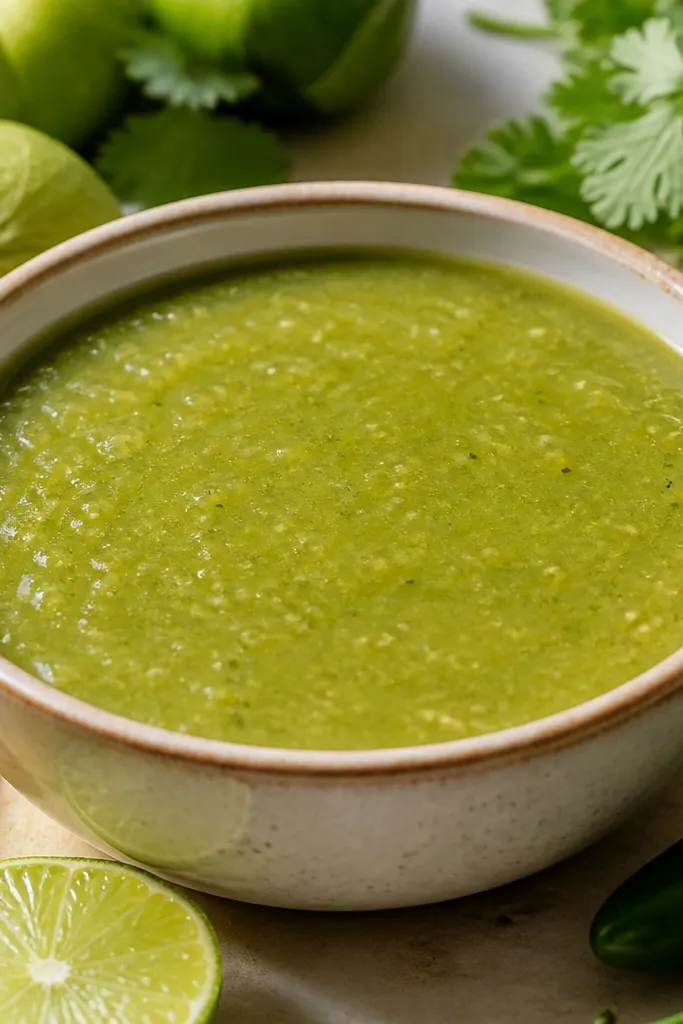
Roasted onion makes salsa verde taste round instead of sharp. You don't see onion chunks because they break down during pulsing, but you do taste the sweetness. The visual cue is a smooth body with fine flecks, not stringy bits.
Use 1/2 onion, cut into thick wedges. Roast alongside tomatillos so the edges char. Blend with the roasted onion so it disappears into the salsa.
Try thisIf you're sensitive to onion, use yellow onion for sweetness instead of white.
One warningDon't add raw onion - it makes the salsa look speckled with pale bits and tastes harsh.
8. Smoky Tomatillo Depth
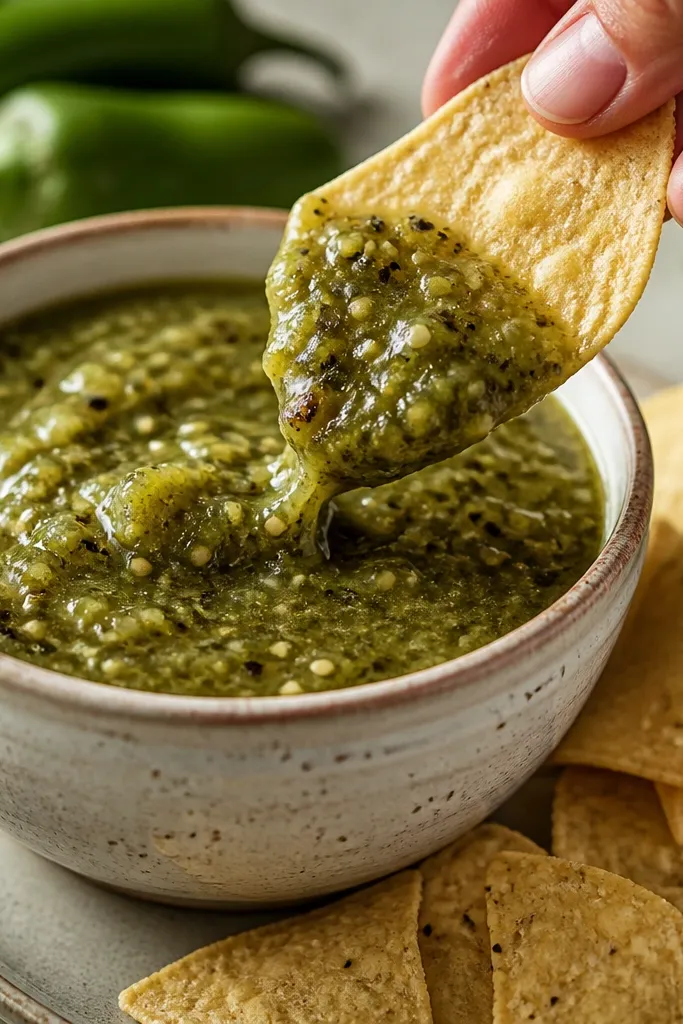
Smoke gives depth even when you're not using a grill. The depth comes from the blistered tomatillos and the small amount of fat from olive oil. The result is a darker green that still reads fresh, not brown.
Roast until you see dark spots on the tomatillos, not just pale blistering. Blend with 1 tablespoon olive oil and 2 tablespoons water. If it looks too dark, add 1 teaspoon honey to brighten without adding sweetness overload.
Try thisIf your broiler runs hot, watch at the 8-minute mark. You want char spots, not blackened fruit.
One warningDon't over-roast. Burnt tomatillos make the salsa smell like ash.
9. Jarred-Tomatillo Rescue Batch
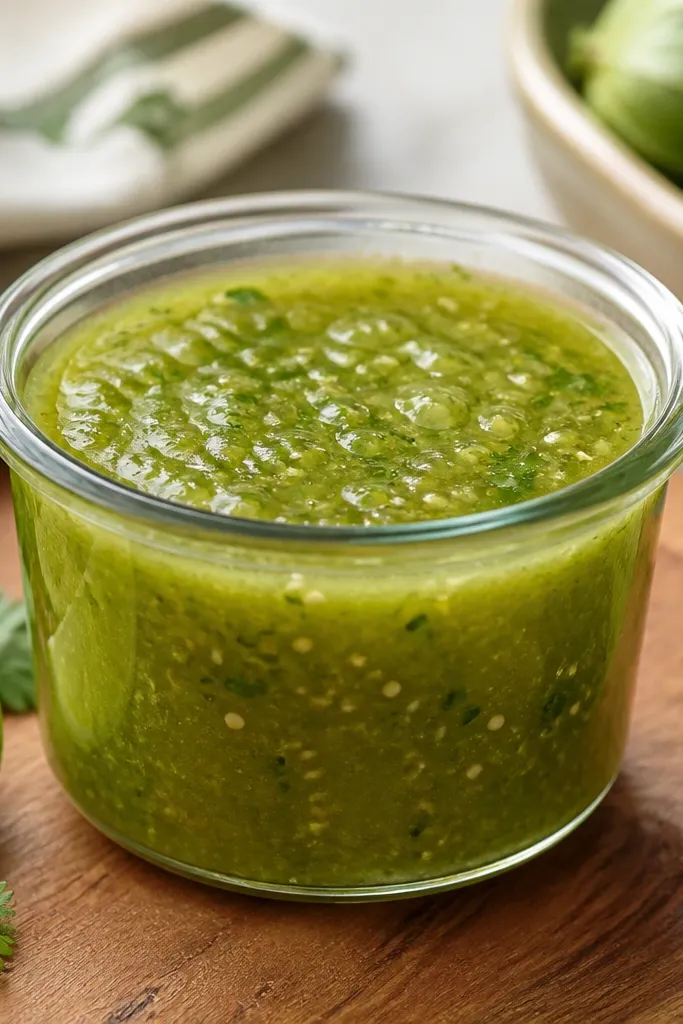
Jarred tomatillos can taste flat if you blend them straight. Roasting drained tomatillos for 10 minutes fixes that by driving off excess liquid and adding browning. The visual result is a brighter green with fewer watery streaks.
Drain jarred tomatillos thoroughly and pat dry with paper towels. Roast at 475°F for 10 minutes on a foil-lined pan. Blend with jalapeño, onion, cilantro stems, and 2 tablespoons water.
Try thisTaste after roasting before you blend. If it's still sharp, add a pinch more salt, not more lime.
One warningDon't skip draining. Watery jarred salsa makes the color gray fast.
10. Apartment-Friendly Serving Bowl
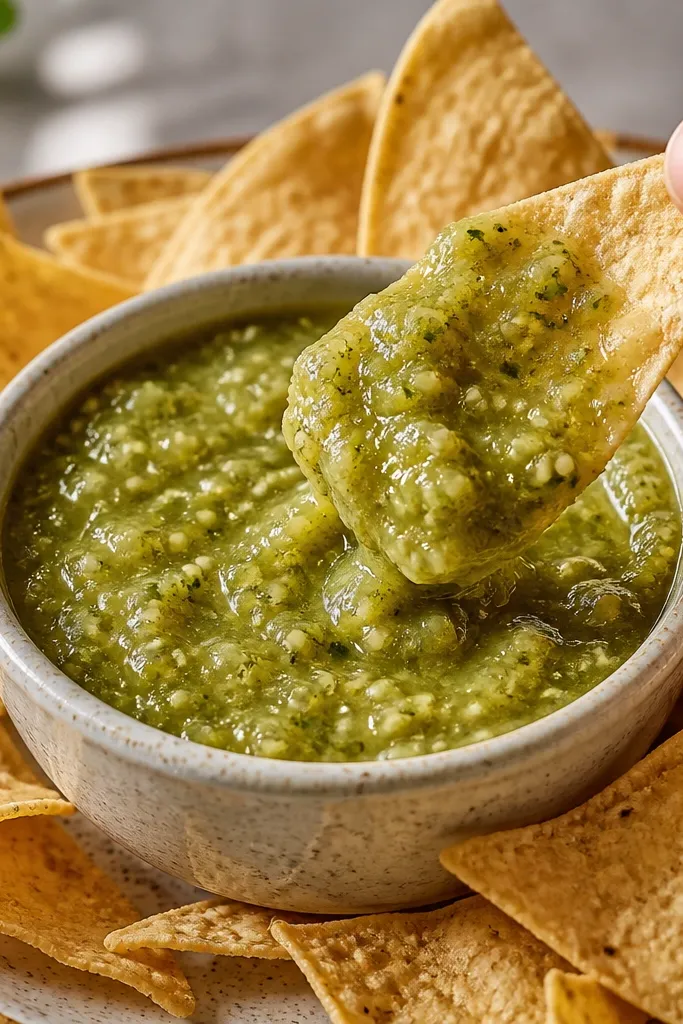
How it sits matters. A small bowl makes the salsa look intentional and keeps it from drying out at the edges. The salsa's thickness and gloss show up better in a wider, shallow bowl under kitchen light.
Use a bowl that's about 6 inches wide. Stir salsa and pour slowly so the surface looks level. Serve with thicker chips so the salsa doesn't slide off.
Try thisWipe the rim with a damp paper towel so it looks clean even after one chip spill.
One warningDon't serve in a deep mug - it looks like leftovers and the salsa warms unevenly.